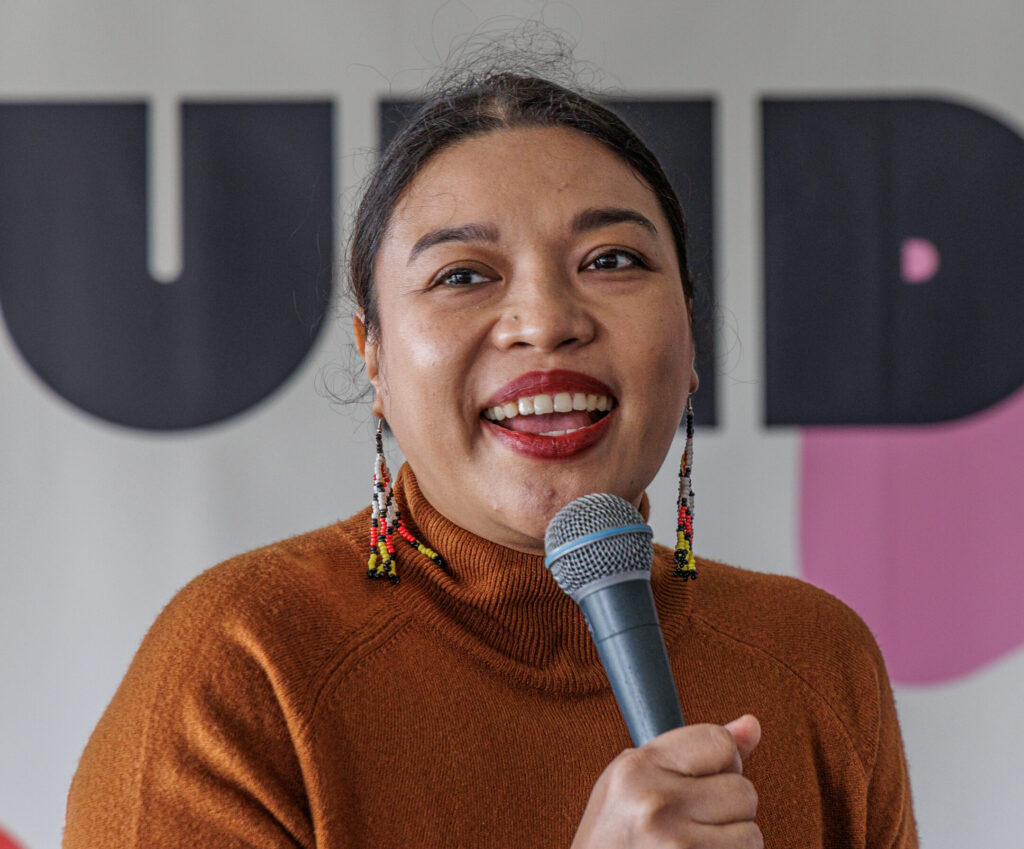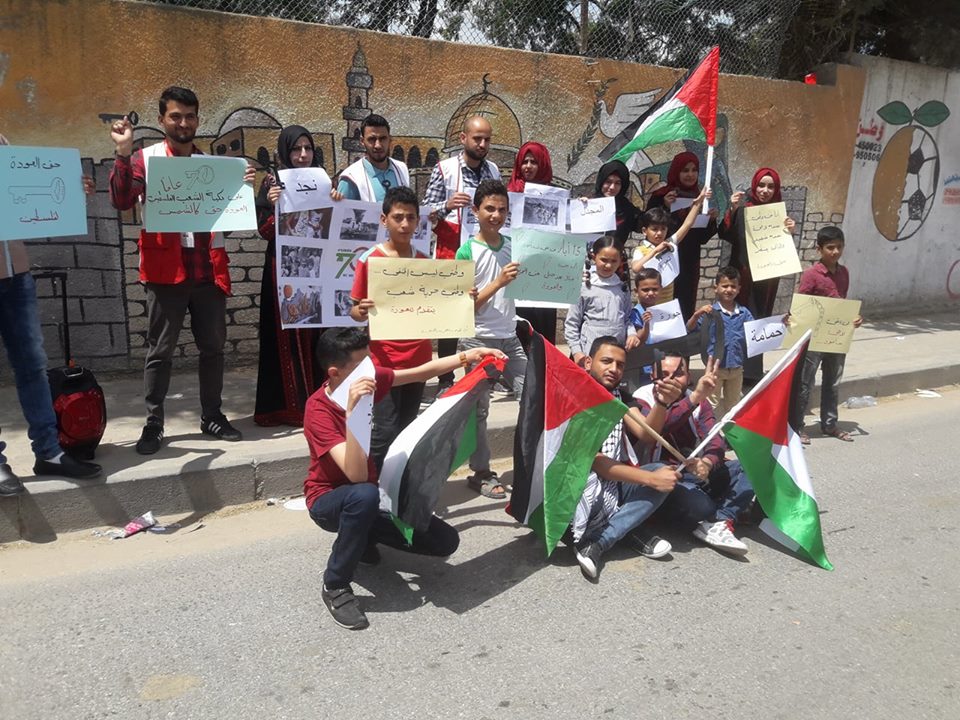
Asrar provides psychosocial support to Palestinian children, young people and women. As part of our ‘Only Fighters Win’ campaign, she came to Belgium to testify to the psychological impact of the occupation and the importance of social movements against the violence of the occupation. It was an inspiring tour filled with fascinating exchanges with student movements, young nurses, solidarity groups, and more.
Many psychosocial problems among Palestinians have the same cause: occupation and colonisation. That is why we must tackle the root cause of these problems collectively.
Why do you think it is important to tell the story of Palestinians in Belgium?
Asrar: «I think it's important to talk about the impact of occupation and colonisation on the psychological health of Palestinians. It's also important to reflect with activists and health professionals in Belgium on the role they can play in this regard. For example, by putting pressure on their government or boycotting products. Apartheid and the ongoing colonisation of Palestinian land and resources will continue as long as Israel is treated as a normal state.
I don't like to talk about myself and my own role as an activist, but rather about my people and our common struggle. I understand that personal stories help to explain a broader history, but it goes against my principles. Palestinians suffer from numerous psychological traumas and face the same practical obstacles on a daily basis. This is a collective trauma. The same is true of our resistance, which we have waged and developed together, generation after generation. That is why I think it is important to talk about our people as a collective and not about me as an individual. Collectivity is rooted in Palestinian tradition. Solidarity and community work are always present, for example during the olive harvest season or when we rebuild houses that have been destroyed by the Israeli occupation army.»
However, numerous obstacles make collective action difficult or impossible in Palestine. Today, social media also contributes to people spending a lot of time in a virtual world. Does this also have an influence on community spirit?
«Like everywhere else in the world, Palestinians spend a lot of time on social media. However, social networks are also very important for Palestinians to reconnect with their community. Members of the same family who have been separated for years now have daily contact via social media. What's more, it's also a way to prepare and organise actions together, to exercise our «community» and put it into practice. That's very important. I see young children in the West Bank connecting with children in Gaza. It's incredible to see. Social media is bringing us together again against division. Even though Israel also uses social media as a weapon to control and thwart us. It is becoming increasingly difficult to share opinions.»
What did the meetings in Belgium mean to you? What are you taking back with you to Palestine?
« I learned a lot during the various meetings. For example, I think of the discussion with people from Médecine pour le Peuple about their working methods. Our approach has similarities, but what I learned from it is the role that services can play. By offering services that people need, we may be able to reach more people than we do today. In Palestine, many people are primarily concerned with survival. Paying the rent and providing for their families keeps them awake at night. Engaging in political action to improve their situation is not their top priority. Through services, we open a door to talk about it. Furthermore, it is also important to provide people with the services they deserve. When I think about my own field of work as a psychologist, I see that many services are based on individual treatment, whereas many of the psychological and social problems faced by Palestinians are inextricably linked to the context of occupation in which they live.»
Can you give an example?
«When I was working as a psychologist in schools, I had to support a boy because he was violent. He casually showed me the injuries on his back. On his way to school, he had been beaten up by settlers. He talked about it as if it were perfectly normal. I found that very shocking.
To get to school in Shuf'at, a neighbourhood in annexed East Jerusalem, children from other neighbourhoods have to cross the old city centre of Jerusalem. More and more settlers are taking over Palestinian homes and hiring armed guards who physically threaten Palestinians. Palestinians who live there no longer dare to leave their homes unattended, for fear of finding settlers living in their homes when they return. They have organised their lives so that at least two people always remain at home.
The fact that this boy talked about it as if it were normal is actually completely crazy. People need basic control over their lives. If you are no longer sure that you will not be beaten up on your way to school or work, or if your house will be occupied by someone else when you return, then you have lost control. When repression is so strong that you cannot respond to it, you absorb it. As soon as you find yourself in a situation where you still have some control, you will also be able to use it.
And that is exactly what happened with this boy. It makes no sense to treat him as an individual for his violent behaviour if the cause of the problem is linked to the context in which he lives. A collective group approach has much more impact and produces better results thanks to a better understanding of the context, but also by thinking together about the impact you can have on reality. That's why it's important for people to see the link between their personal problems and the context in which they live.»
Health is a fundamental right. Like Asrar, people around the world must defend it, often under difficult conditions. It is only when people unite in social movements that they can assert their rights and bring about change.
Viva Salud supports them in their fight for the right to health. #OnlyFightersWin