Poverty, hunger, disease, war – these are the ingredients of a deadly cocktail in eastern Congo. Perhaps you have heard about the Ebola virus, which is claiming hundreds of victims in this region? Fortunately, local organisations are there to help, including the health committees of our partners Etoile du Sud (EDS) and CODIC.
Addressing the root causes of the problem and mobilising the population: this is the mission of our partners EDS and CODIC.
Ebola is a viral and contagious disease that causes death in just a few days. Sufferers literally bleed to death. Fortunately, this disease is rare, but in Congo it reappears regularly. Poverty and hunger create conditions conducive to the spread of the virus. In eastern Congo, the ongoing armed conflict further complicates the situation as it threatens even medical aid.
Since May 2018, the Ebola epidemic has broken out in North Kivu, and during the same period, a second wave of the epidemic has broken out on the other side of the country, in Equateur Province. Epidemiologists are currently investigating the transmission of the disease and possible causes. However, the link between North Kivu and Equateur cannot be ruled out. In short, it is not clear exactly how and where the epidemic started. This lack of clarity regarding the spread of the Ebola virus in Congo has given rise to rumours. Opponents and various religious sects have launched a campaign of agitation. Ebola is allegedly a government strategy, which the government is using to fuel the conflict in North Kivu and make it impossible to hold elections. According to opponents, the vaccinations themselves are already infected with the Ebola virus. As a result, many adults and children are fleeing the vaccination campaigns implemented by humanitarian actors. Meanwhile, many civil society organisations and the government have taken initiatives to raise awareness among the population about the reality of the Ebola virus. The Bishop of Butembo-Beni strongly criticised the campaign of agitation and called on the population to welcome the vaccinations by getting vaccinated himself. He organised an awareness-raising training session so that priests in the diocese of Beni-Butembo could in turn spread the message within their parishes. Our partners have also organised actions to tackle Ebola.
Cooperation with the provincial government of North Kivu
After the Ebola epidemic began, our partners became involved in the health cluster in North Kivu province. Our partner EDS in Goma was invited by the provincial Minister of Health to join a committee responsible for disseminating information on the fight against Ebola in a coordinated manner. The government launched nine measures against the Ebola virus, including monitoring the epidemic, monitoring provincial and national border posts, prevention measures, vaccination, psychosocial assistance, psychosocial awareness-raising, the establishment of three centres for the treatment of Ebola, free healthcare throughout the Ebola-affected area, and the transfer of all equipment to the Mangina health zone, where the first case of Ebola was diagnosed. Our partners are being trained through the health cluster to carry out prevention and psychosocial awareness-raising activities.
Tackle the problem at its root
Addressing the root causes of the problem and engaging the population: this is the mission of our partners EDS and CODIC. EDS is working to raise awareness among the population about Ebola, encourage them to take the necessary preventive hygiene measures, and ensure that humanitarian workers can carry out vaccination campaigns. In practice, activists from our partner EDS's popular health committees are raising awareness among communities in Beni, Butembo and Goma about the health and social dangers of the Ebola virus.
Thanks to health committees that are well established and close to the population, EDS and CODIC have already carried out several actions in numerous schools and popular health committees in North Kivu to combat the Ebola virus.
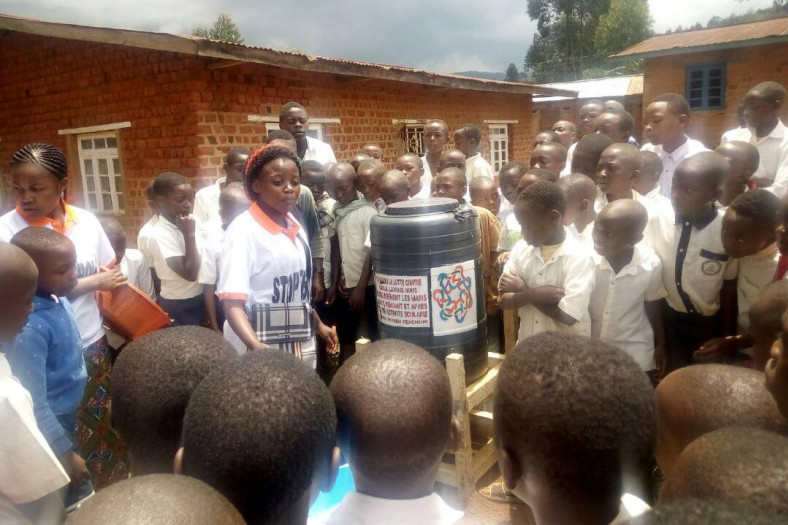
In Beni, the EDS children's group took the initiative, under the guidance of the community health committee, to raise awareness in schools about the fight against Ebola. Parents had asked their children to avoid humanitarian workers and refuse to be vaccinated. That is why the children's group began by explaining to their peers in several schools in Beni the hygiene measures to be taken against Ebola.
In Butembo, young people in the local community health committee have also committed to fighting Ebola. They have explained the dangers and provided schools with chlorinated water, soap and disinfectants so that pupils can wash their hands regularly. Teachers have already ensured that hygiene measures are being followed.
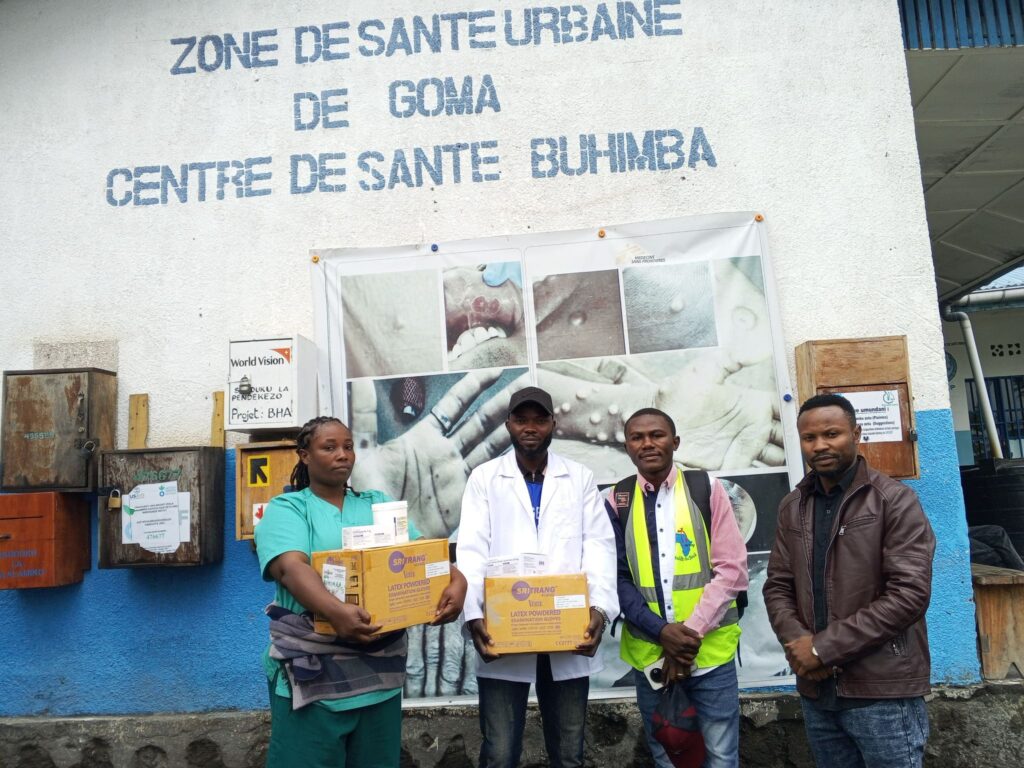
In Goma, three community health committees were formed to conduct an information campaign on Ebola and to raise awareness among the population about the dangers and the need to take preventive measures. EDS also donated soap, chlorine, empty containers and disinfectants to the North Kivu Provincial Health Division.
A bottom-up approach
Together with provincial and national health actors, our partners want to implement a policy by and for the community. The central question our partners are asking is how they can support the actions of the government and humanitarian actors among and with the population.
CODIC strives to raise awareness among health organisations of the need for community participation and involvement by organising training sessions for local health organisations fighting Ebola. EDS gathers feedback and perceptions from the community on Ebola by mobilising them through community health committees. The partners will jointly formulate recommendations against the spread of the Ebola virus in the ‘health’ cluster.
In short, our partners are striving to take ownership of the Ebola response, participate more actively in the debate on Ebola, and build bridges between the population on the one hand and humanitarian organisations and local authorities on the other.