Never before have so many people taken to the streets to demand climate justice. Yet this has not stopped our four climate ministers from continuing to argue over a coherent climate plan. Cuba, on the other hand, does have a climate plan: the «Tarea Vida» («Plan for Life»). Planned to span the next 100 years, it includes several measures to protect Cuba from the consequences of climate change.
Cuba's long-term vision contrasts with the policies of capitalist countries, which are too often dictated by multinational corporations that prioritise short-term profit.
Cuba is already being hit by coastal erosion more severely than scientists had predicted. The Caribbean Sea is eating away at Cuba's southern coast at a rate of more than one metre per year. By 2050, at least five coastal villages in the south of the island are expected to be wiped off the map. By 2100, that number is expected to rise to 122. The number of severe hurricanes hitting Cuba is increasing. Hurricanes push seawater further inland, causing the salinisation of freshwater and fields.
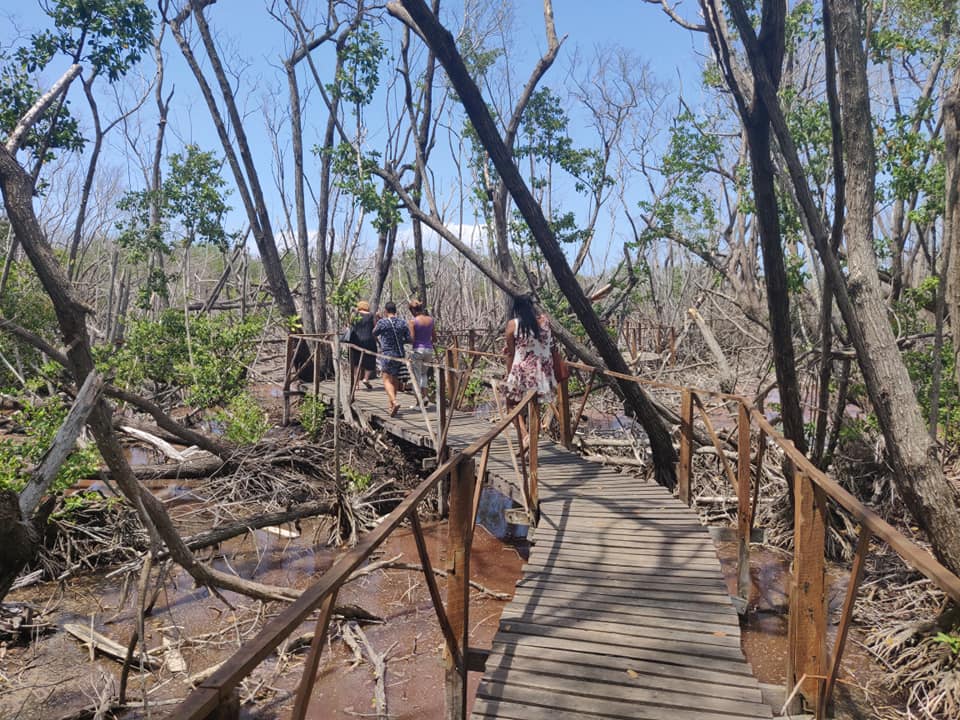
One of the most urgent measures is the reforestation of mangroves, which act as a natural buffer zone for the Cuban coastline. However, mangrove wood is often used as fuel by the local population, who also believe it has medicinal properties. Efforts must therefore be made to change the mindset of local authorities in order to preserve Cuba's coastline. Planting mangroves takes time and is done on a piecemeal basis. In 2018, Cuba mobilised several brigades to plant new mangroves, resulting in the reforestation of some 36,000 hectares.
A 100-year vision
Cuba has long been a pioneer in sustainability. The Cuban urban organic farming system is one of the most advanced in the world: it prohibits the use of chemical pesticides and manages to meet 70% of the demand for vegetables in Cuba's major cities. The Cuban climate plan, launched in 2017, aims to prepare the Caribbean island for the consequences of climate change in the 21st century.
The plan prohibits all new construction in threatened coastal areas, but also takes into account the needs of local communities. The Cuban government is relocating residents of threatened coastal villages to safer areas. However, the first step is to raise awareness among villagers: to better inform them of the specific consequences of climate change and, above all, to involve these populations forced to leave their submerged villages in the planning and implementation of their move to their new place of residence.
Cuba's long-term vision contrasts with the policies of capitalist countries, which are too often dictated by multinational corporations that prioritise short-term profits. Property developers on our coastline are well aware that the coast is threatened by global warming and that coastal preservation plans do not serve their interests. In Cuba, on the other hand, policy is determined by the needs of the population, not by profit.
Easter campaign for coastal communities
The Centro Felix Varela, the Cuban partner of Viva Salud and Cubanismo.be, has been active for many years in the most vulnerable communities. With this year's Easter campaign, we are supporting the educational work of the Centro Felix Varela in Cuban coastal communities that will have to relocate in the medium term due to rising sea levels. Thanks to its expertise and good relations with the population, the local authorities are working closely with the Centro Felix Varela to implement the national climate plan.
The money raised during our annual Easter campaign for Cuba will go to the Centro Felix Varela.