A Cuban antiviral drug has proven effective in China in treating patients with coronavirus. What exactly is it? How has Cuba managed to be a pioneer in biotechnological innovation for decades? Here are some insights...
What medicine is it?
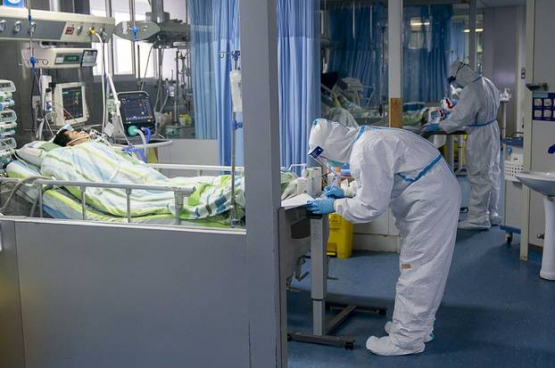
Among the 30 medicines selected by the Chinese National Health Commission to combat coronavirus is a Cuban antiviral: Interferon Alfa 2b. This medicine has been produced in China since 2003 by the Cuban-Chinese company ChangHeber.
Over 1,500 Chinese people have been successfully treated with this product.
Interferon Alfa 2b has proven effective against viruses with characteristics similar to those of Covid-19. This drug helps prevent complications and the worsening of symptoms in patients. It is therefore not a vaccine, but a drug used to reduce the severity of the disease. To date, more than 1,500 Chinese people have been successfully treated with this product. More than 15 countries have already asked Cuba for the right to use this drug, which is already being used in Venezuela, Panama and Costa Rica.
How did Cuba manage to develop such a medicine?
The drug developed in Cuba demonstrates the progress made by the island's biotechnology industry. In 1981, Cuba developed and used interferons (proteins naturally produced by the cells of our immune system) for the first time to stop a deadly dengue virus epidemic. Following this positive experience, Cuba has implemented a world-class biotechnology industry.
Interferons were first identified in a London laboratory in the late 1950s. In the 1970s, American oncologist (cancer specialist) Randolph Clark Lee resumed research on the subject. When relations between the US and Cuba warmed slightly under President Jimmy Carter, Dr Clark Lee travelled to Cuba, where he met Fidel Castro and convinced him that interferon was a promising new drug. The Cubans quickly learned how to produce it themselves in large quantities.
Just in time... Because a few weeks later, Cuba was hit by an epidemic of dengue fever, a potentially fatal disease transmitted by mosquitoes, which had not previously been seen on the American continent. The epidemic affected 340,000 Cubans and claimed the lives of 180 people, including 101 children. The Cuban Ministry of Health immediately used locally produced interferon to try to stem the dengue epidemic, which led to a drastic drop in the number of deaths. The country immediately launched the world's largest antiviral interferon campaign.
Why is Cuba so effective in biotechnology?
From the outset of the Cuban revolution (1959), the government invested heavily in healthcare and education. Given the increasingly harsh US blockade against Cuba, it was a priority to provide the Cuban population with as many medicines as possible produced in Cuba. In the new laboratories and research centres, priority was given to projects aimed at finding treatments for diseases affecting the Cuban population. This is how the Cuban pharmaceutical and biotechnology industry took off. Today, 569 of the 857 products on the Cuban list of medicines approved for use in the national health system are manufactured in the country itself.
Cuban researchers faster (and more efficient) than GlaxoSmithKline (GSK)
Let's return to Cuban interferon. Once the dengue epidemic was under control, Cuba organised numerous conferences that quickly attracted international attention. Convinced of its ability to contribute to strong public health and of the strategic importance of scientific innovation in the medical field, the Cuban government created the Frente biológico (Biological Front) in 1981 to develop this sector. Cuban scientists went abroad to study, mainly in the Soviet Union, but also in Western countries. In their research, they turned to innovation by conducting experiments in interferon cloning. In the late 1980s, Cubans were the first to discover an alternative method of producing interferon that could be adapted for mass production. Interferon Alfa 2b was born. This was much to the chagrin of the North American firm GlaxoSmithKline (GSK), which was also conducting research on the subject.
How is the Cuban biotechnology industry organised?
In 1960, all pharmaceutical companies in Cuba, both foreign and domestic, were nationalised. The new government took control of the properties, land and assets of the pharmaceutical industry, which has undergone a number of transformations over the years. In 2012, BioCubaFarma was created as a coordinating agency overseeing 31 production and research and development (R&D) sites in the pharmaceutical and biotechnology sectors.
The Cuban government opened the internationally renowned Centre for Genetic Engineering and Biotechnology (CIGB) in the 1980s. This research centre covers the entire scientific cycle, from initial research to the production and marketing of medicines. Its primary aim is to create affordable medicines for the Cuban public health system. However, some products are marketed to enable the centre to finance its own research. Cuba currently exports pharmaceutical and biotechnology products to around 50 countries. The biotechnology industry contributes more than $500 million a year to the Cuban economy. The CIGB has earned more than $100 million from the export of its products and expertise.
Health first, not profit
In the West, it is the commercial interests of multinational companies that determine the development and production of medicines. Or their discontinuation if they do not offer prospects for direct profit. In Cuba, on the other hand, products are only developed if they meet the health needs of Cubans.
Profits are invested to maintain free, high-quality public healthcare for all in Cuba.
This has an added benefit: what Cuban scientists develop for their domestic market also benefits the more than five billion people worldwide who simply cannot afford most of the medicines produced by conventional pharmaceutical companies. Even for commercial sales of high-quality pharmaceutical products abroad, Cuba applies solidarity prices. The profits that accrue to Cuba do not end up in the pockets of CEOs and shareholders, but are invested to maintain free, high-quality public healthcare for all in Cuba.
The world-renowned Cuban biotechnology sector is playing an increasingly strategic role, both in public health and in Cuba's national economic development plan. And, as we are seeing with the current coronavirus crisis, it also has a key role to play in the fight against the coronavirus pandemic (an epidemic affecting one or more continents), in China as elsewhere.
Isabelle Vanbrabant, chairperson of Cubanismo.be
Source: Solidaire