At the moment, the whole world is trying to limit the spread of the Covid-19 virus, thanks to a number of measures aimed at limiting the risk of contagion, the main one being containment within households. Industrial countries are also announcing their intention to deploy extensive measures to support the economy. In Western Europe, a series of social measures are also being taken to compensate (in part) for the loss of income for those who can no longer work because of the circumstances, whether self-employed or salaried, although this must be qualified because some of the most vulnerable groups are finding themselves in great difficulty.
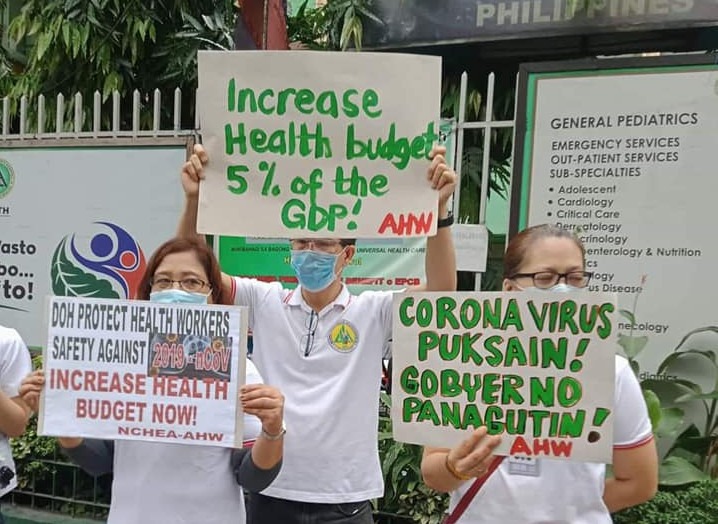
Naturally, healthcare is receiving a great deal of attention in this context. Are the healthcare systems in each country ready to cope with the tidal wave of sick people? Measures are more than necessary to deal with the shortages and expand care capacity, because even in some wealthy regions that have been hard hit by the virus, such as northern Italy and the Madrid region, the situation is alarming. In countries such as Belgium, where major budget cuts have been made in the health sector (reducing staff, treatment equipment, ambulances, etc.), it is the people who are now paying the highest price.
Every year, almost 100 million people fall into extreme poverty (less than $1.9 a day) because of health costs they cannot afford themselves.
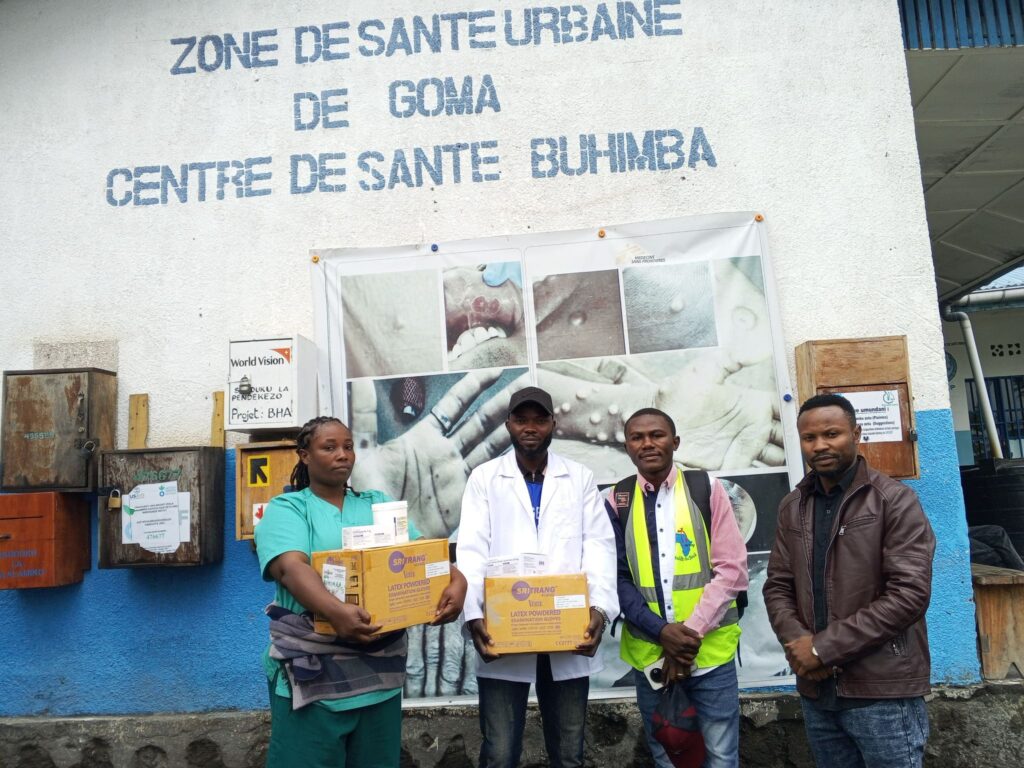
There is also growing concern about the spread of the virus in low- and middle-income countries. Indeed, many countries are sounding the alarm that their health and social protection systems are not in a position to manage such a pandemic. Worldwide, almost 40% of the population has no access to any form of health insurance or public healthcare services. Every year, almost 100 million people fall into extreme poverty (less than $1.9 a day) because of health costs they cannot afford themselves. This means that they will simply not be able to afford treatment if they are infected with Covid-19.
In many African countries, mutual health insurance schemes have been in place for around twenty years, based on solidarity contributions. These mutuals are aimed in particular at those who work in the informal economy or live in rural areas. As well as providing health «insurance» for the population, the mutuals play a role in raising awareness and educating the population, so that people know how to avoid contamination. More recently, the governments of these countries have also assumed their responsibilities by investing more in the system, subsidising the contributions of the poorest groups and reinforcing the provision of health services. The aim is to work together to achieve universal health coverage.
In Senegal, the coverage rate currently stands at 50% of the population. Half of that is far from enough. Especially in the light of the current emergency, which is calling into question the progress that has been made. Humanitarian aid will therefore be needed in many countries to deal with the pandemic. At the same time, we need to ensure that this humanitarian aid reinforces the social protection system and is not simply organised through parallel structures. Mutual societies have an important role to play in this context by ensuring that, beyond the current crisis, universal social protection systems develop greater capacity for support and resilience in the face of future disasters (health, climate, other, etc.).
Social distancing is not an option
As in our own country, the Covid-19 pandemic is causing many underlying problems for the poorest population groups in low- and middle-income countries, in addition to difficulties with healthcare.
«Stay at home» is a simple slogan that works well in Belgium. But for hundreds of millions of people living in shantytowns or working-class districts of megacities, this injunction has a completely different echo. When your neighbour's front door is fifty centimetres from yours, when your sanitary facilities and water supply are shared with the whole neighbourhood, when you don't have electricity, let alone a fridge, social distancing, even if you stay at home, is a totally unrealistic measure.
No social protection
Up to 90% of the population lives mainly in the informal economy in Africa or South Asia without having the opportunity to work from home. An overwhelming majority of workers∙euse∙s daily∙e∙s, rickshaw drivers, dustmen∙euse∙s, domestic helpers, street vendors∙euse∙s, agricultural workers and small farmers cannot afford to stay at home for several days, let alone several weeks or months, and must, by necessity, risk their health and that of the people they live with in order to survive. A day without work means a day without a meal for these workers∙s and their families. An overwhelming majority of workers∙euse∙s in the world do not even have reserves or replacement income in case of illness or to be able to cope with unforeseen situations. If they fall ill, it is not possible for them to think first about their own health or that of those around them.
But for those in formal employment, the outlook is just as negative as it is here. 80% of the world's workers∙euse∙s cannot count on unemployment benefits, while according to the ILO, 5 to 25 million jobs are under threat. Temporary unemployment schemes, like the one we have in Belgium, are even rarer. Today, 55% of the world's population - around 4 billion people - have to get by without any form of social protection. Many countries rely on commercial insurance to fill the gaps, while only a small minority can afford it. It's not just the poorest and most vulnerable who suffer. It is also a threat to the well-being of our societies as a whole.
Any positive spin-offs from this pandemic?
In the end, could the pandemic not have a positive effect? Who knows, perhaps this situation will convince governments and international donors to invest more in accessible, quality healthcare, sick pay and unemployment benefits. After all, studies show that such measures not only prevent poverty, but also have a much greater positive multiplier effect on the economy than measures such as tax cuts. They are also a vehicle for social and political stability. The 2008 crisis should have been a wake-up call in this respect, yet despite some fine government statements in 2009, austerity policies resumed with renewed vigour immediately afterwards.
In the fight against COVID-19, organisations in the South have redoubled their efforts to promote universal social protection systems. Mutual societies contribute to health systems that are more solid and financially sustainable. A health organisation in Bangladesh produces affordable test kits for the virus. Patients' rights associations are conducting surveys on the quality of care. Networks of civil society organisations are calling on their governments to provide social measures for the most vulnerable. Trade unions are informing and raising public awareness, and negotiating with employers and governments to ensure that workplaces are designed to be safe and that workers benefit from social measures. Many governments in the South are also taking social measures, but our official development cooperation has not yet followed suit.
The international community also has a responsibility in this respect. In the short term, through humanitarian aid. But also, and above all, in the longer term. We cannot continue to chase after disasters. Universal social protection is achievable and affordable, provided there is greater international cooperation between all the relevant players.
Once this pandemic is behind us, we ask, as the House of Representatives∙e∙s already done in a 2016 resolution, to effectively give social protection a more central place in Belgian international cooperation. Belgium should also defend this theme more resolutely in international institutions.
The texts on which Belgian policy can be based to strengthen social protection in its cooperation are ready. And they are widely supported by all the players involved. They just don't have official status because of our political context. And this is necessary, so that Belgian representatives in partner countries and in international organisations know what principles they have to defend. Everyone knows that we cannot transpose «our model» as if it were the only example; it doesn't work. But as the conclusions of the «Universal Social Protection, What Commitment for Belgium?» conference on 4 November suggest, we can defend a number of underlying principles, such as solidarity, redistribution and, perhaps most importantly, participation and co-management by social movements. Without effective and structural dialogue with relevant and representative civil society organisations, social protection cannot acquire the broad base and sustainable funding it needs to prevent poverty and give societies the capacity to defend themselves in difficult times like the present. Our partners are already taking initiatives; it is now up to the international community and Belgium to support them.
Carte blanche from the Universal Social Protection civil society working group. The Universal Social Protection working group is made up of NGOs, trade unions and mutual societies that are committed to strengthening social protection systems through international cooperation: WSM, SolSoc, FOS, Oxfam, 11.11.11, CNCD-11.1.11, Viva Salud, Louvain Coopération, CSC, FGTB, CGSLB, Mutualité Chrétienne, Mutualités Socialistes, Mutualités Libres.