The injustices suffered by poor communities and communities of colour around the world will not be corrected by mere superficial policy changes, but will require a radical restructuring of systems that have been built up over centuries. But this will not happen on its own. Social movements are needed to apply pressure. This is the view of several prominent human rights defenders, including Tinay Palabay, director of our Philippine partner organisation Karapatan.
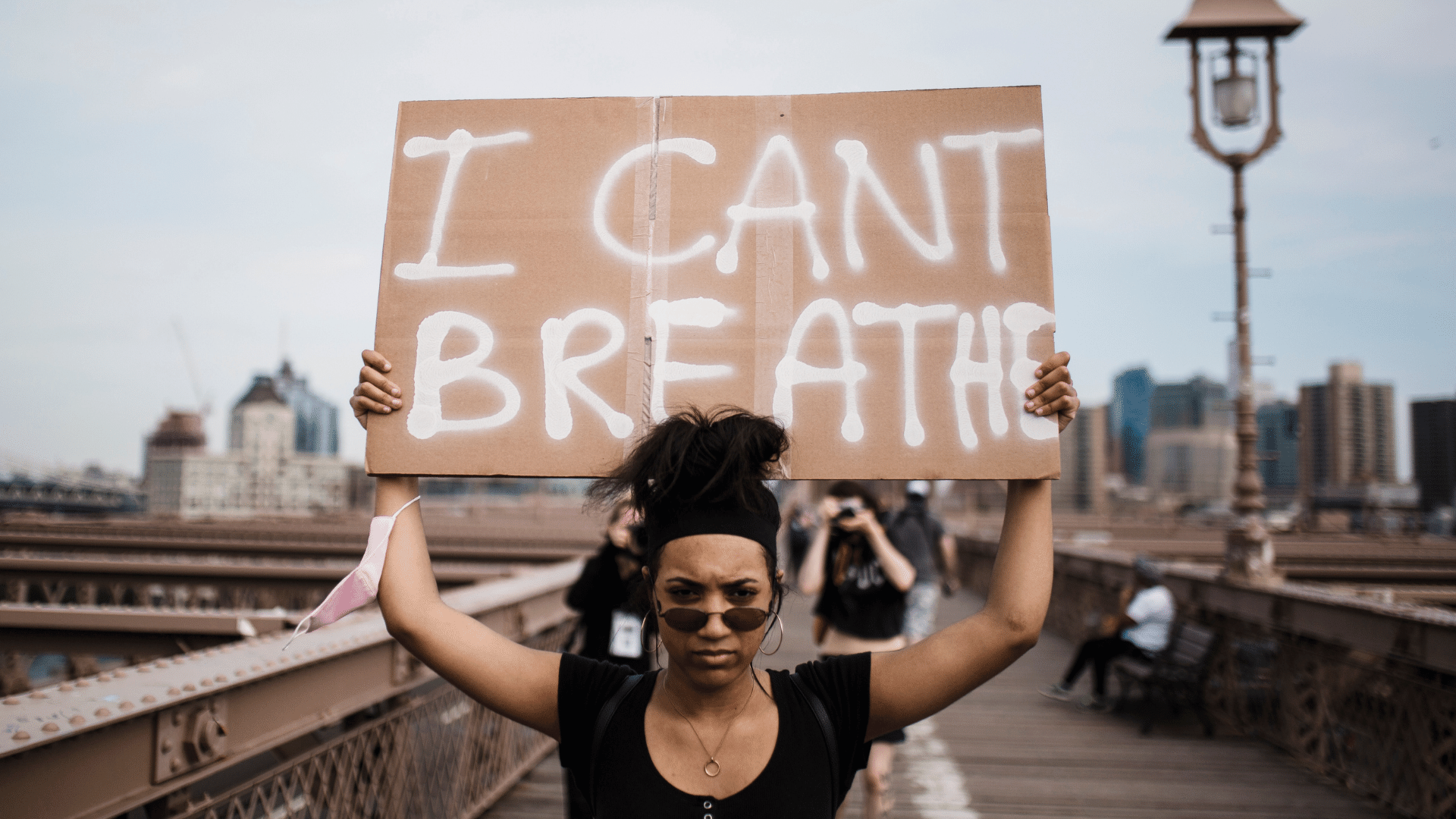
The outrage sparked by the recent murders of George Floyd, Breonna Taylor, and Ahmaud Aubrey in the United States, along with massive nationwide protests and solidarity actions around the world, have forced a global debate on systemic racism and state violence.
These recent events are part of a brutal and well-documented pattern of systemic racism and disregard for Black lives in the United States, where Black communities have long suffered state violence through slavery, legal segregation, police brutality, and mass incarceration.
However, systemic racist violence and ethnic discrimination are not phenomena unique to the United States. In the first four months of 2020, according to its own records, the Brazilian police in Rio de Janeiro alone killed 606 people, three-quarters of whom were young black men from the favelas. In Palestine, Israel's excessive use of force and «shoot-to-kill» policy against Palestinians continues, as recently demonstrated by the killing of the young Iyad Hallaq and others. In South Africa, the black inhabitants of the informal urban dwellings face the legacy of apartheid, as their leaders are frequently killed when they attempt to mobilise their communities. In Guatemala, the Mayan healer Domingo Shock was accused of witchcraft, tortured and burned alive by a mob.
Systemic racism and state violence are intimately linked and mutually reinforced by capitalism. Thus, when examining and critiquing systemic racist violence, it is essential to examine and critique the structural causes of poverty and dispossession. It is essential to examine the dominant economic system and whom it serves.
Historically, racism has been a tool of control and has deep roots in colonialism and imperialism. Racism has played a key role in enabling small elites to remain in power through a «divide and rule» tactic aimed at dividing Black, Brown, Indigenous, and dispossessed White communities. Similarly, it supports a narrative that portrays communities of colour and poor communities as criminal, lazy, morally degenerate, and ultimately responsible for their own marginalisation and poverty.
Smear and denigration campaigns are well-known tactics used against those who dare to challenge existing power structures, whether they are indigenous activists criminalised and stigmatised as «anti-development» for resisting megaprojects and development-related aggression around the world, of activists being labelled as terrorists in the Philippines, or from women human rights defenders in Central America challenging patriarchal structures whose reputation is tarnished. These discourses justify the use of state violence, embodied and implemented by the police and the army.
The use of state violence is intimately linked to broader patterns of systemic exclusion and dispossession. In many poor and communities of colour around the world, the state is only present through violence. This has been highlighted by the COVID-19 pandemic. Around the world, poor communities are disproportionately affected by COVID-19 due to pre-existing disparities in wealth, access to healthcare, and the widespread absence of the state in terms of fulfilling its human rights obligations, including economic, social, and cultural rights. These are the communities affected by state violence.
At the same time, state violence is a means of protecting the interests of the elite. Members of ESCR-Net have highlighted a pervasive global trend towards state control and its institutions by a small commercial elite that exerts undue influence on democratic and judicial institutions to the detriment of human rights and the environment. When states serve a small corporate elite, the The violent powers of the state are also at the disposal of these elites' interests.
This demonstrates the existence of a political economy of violence, where those who benefit from capitalism and those who suffer its consequences are the same people who benefit from and suffer the consequences of racism and state violence.
The political economy of violence is evident whenever dispossessed and impoverished communities dare to protest against their conditions, demanding a future for their children, and are met with defamation, threats and murder. Similarly, the current extractive model – with its insatiable appetite for natural resources and wealth accumulation – is a key driver of conflict, violent dispossession, and the indirect violence of climate change disproportionately affecting the poor and marginalised.
Understanding the political economy of violence means understanding how our dominant economic and political systems were born out of dispossession and genocide, rely on police and military brutality to maintain massive inequalities and ongoing imperialism, and ultimately generate violence at all levels.
The injustices suffered by poor communities and communities of colour around the world will not be corrected by mere superficial policy changes, but will require a radical restructuring of systems that have been built up over centuries. To truly address the political economy of violence and the structural injustices it perpetuates, we must deepen solidarity within our struggles and formulate inclusive demands for systemic change, coming together across divisions that are often reinforced and manipulated by a small elite that profits from the current systems.
To this end, through the Joint charter for collective action, members of the ESCR Network in the form of movements of African descent, peasants, poor urban dwellers and indigenous peoples are beginning to identify emerging points of unity by examining the common conditions or systemic injustices that communities face in each region as a result of the legacies of colonialism, imperialism and the dominant capitalist system. This process has recently continued with a global call to action in the face of the ongoing pandemic, reinforcing the need for a «new normal» of systemic alternatives, guided by resistant movements and communities, to make human rights and social justice a reality for all.
Cristina “Tinay” Palabay (Philippines) is Secretary General of Karapatan Alliance for the Advancement of People's Rights. She is also a member of the Regional Council of the Asia-Pacific Forum on Women, Law and Development.
Francisco Mateo Rocael Morales (Guatemala) is the general coordinator of the Consejo de Pueblos Wuxthaj and the Consejo de Dirección del Consejo del Pueblo Maya (CPO). He was president of the international council of the ESCR-Net. He is a member of the provisional coordination of the Movement of People Affected by Dams in Latin America (MAR).
Miguel Martín Zumalacárregui is head of the Brussels office of the World Organisation Against Torture (OMCT) and human rights adviser to the Observatory for the Protection of Human Rights Defenders.
Ruben Kondrup, is the coordinator of solidarity and membership for the ESCR-Net.
The first publication of this article can be found at Open Global Rights