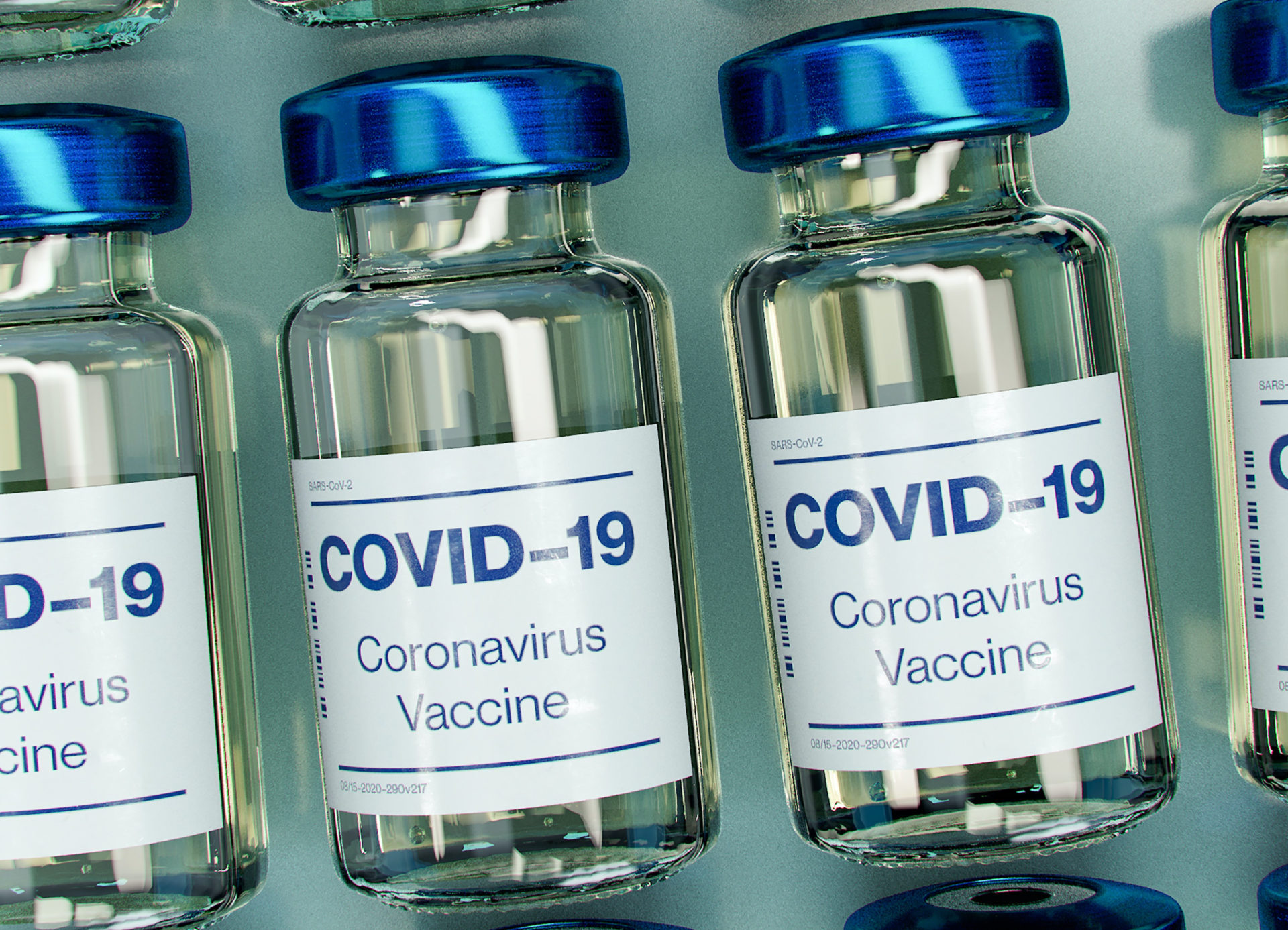
In recent weeks, we have been inundated with promising news from the pharmaceutical sector. Moderna, Pfizer and BioNTech have announced in a press release that the results of their clinical trials for a vaccine against COVID-19 are more than promising. Their figures indicate an efficacy of 90 % or more. AstraZeneca also reported encouraging results. We therefore hope that a vaccine will soon be available to protect us against the coronavirus.
While we welcome this good news, we are also mindful that the health crisis will only end if every human being, everywhere in the world, has access to a vaccine. So, above all, we need a sufficient number of vaccines that are equitably distributed. But this is still the big unknown today. Pharmaceutical patents remain a major obstacle to large-scale vaccine production, and international cooperation is too weak to guarantee equitable distribution.
Unfair competition for vaccines
Wealthy countries are already racing to obtain as many vaccines as possible, beyond international pledges and before vaccine production has even begun. Several organisations and health experts have pointed out that the majority of the expected vaccines have already been purchased by the world's richest countries. For example, up to 80 % of Pfizer's planned supply is reserved for countries accounting for just 14 % of the world's population. Similar figures apply to Moderna's vaccines. AstraZeneca's vaccine project is aimed more at developing countries, but there is still a risk that the poorest countries will be unable to obtain a vaccine, and that the pandemic will last much longer than it should.
Without an international approach and public control, the virus will continue to spread where access to the vaccine remains limited. This is not only ethically unjustifiable, but also epidemiologically and economically irresponsible. The consequences of disrupting world trade and maintaining border controls, travel restrictions and quarantines would be considerable. Consequently, if the disease continues to rage in countries that do not have access to treatment or a vaccine, even countries with high vaccination coverage will remain vulnerable. Sooner or later, the virus will reappear.
No country is safe and healthy until all countries are safe and healthy (António Guterres, Secretary General of the United Nations)
In addition, the health of millions of people would be unnecessarily put at risk, and the international solidarity that we so desperately need at this time would be broken. It's also about tackling other global challenges. After all, how can we find a solution to climate change if there is no trust between countries that can vaccinate their populations and those that cannot?
It is probably this unequivocal statement by António Guterres, Secretary General of the United Nations, that says it all: «No country is safe and healthy until all countries are safe and healthy». It is encouraging to see that a number of countries are taking this statement as a guideline for their diplomatic efforts regarding access to the COVID19 vaccine.
The patent obstacle
At the beginning of October, India and South Africa submitted an important proposal to the World Trade Organisation (WTO). The two countries are calling for all states in the world to be authorised not to grant or enforce patents on medicines, vaccines, test materials and other crucial technologies needed to combat COVID-19. The United States, Japan, Norway, Brazil and the European Union quickly objected, arguing that patents are not an obstacle to the fight against the pandemic.
Nothing could be further from the truth. Patents really do form a wall between new treatments for COVID-19 and the people who desperately need them. Pharmaceutical companies holding patents can determine the price of their products themselves. As a result, treatments are sometimes exorbitantly priced. Although some companies, such as AstraZeneca, have promised to market their COVID-19 vaccine at cost price, there is not enough transparency to be completely sure.
In addition, patents are an obstacle to the large-scale production of a vaccine. They restrict production to a certain number of suppliers who are unable to meet the urgent, large-scale global demand. These suppliers could also give priority to rich and powerful states to the detriment of the rest of humanity.
Global public good
Although billions of euros in public funds are given to pharmaceutical companies around the world to improve vaccine development, the logic of «business-as-usual» still seems to apply. Today, despite the scale of the public funding they have received, pharmaceutical companies can still claim rights to vaccines under development, acquire a monopoly on the end result and privatise the profits from its sale. These procedures jeopardise the universal availability of the COVID-19 vaccine, at a time when the pandemic has demonstrated the urgent need for a model that places public health and international solidarity at the forefront.
The coronavirus pandemic can only be resolved if we transform a future COVID-19 vaccine into a global public good based on solid international agreements promoting equitable distribution. According to the IPSOS poll commissioned by the CNCD-11.11.11, eight out of ten Belgians are in favour of this. Belgium must show ambition and play a leading role in this undertaking, because the right to health of billions of people is at stake.
Carte blanche by Viva Salud, 11.11.11, CNCD-11.11.11, WSM, FOS, Oxfam-in-België en Dokters van de Wereld.
Wim De Ceukelaire, Director of Viva Salud
Michel Genet, Director Doctors of the World
Arnaud Zacharie, General Secretary CNCD-11.11.11
André Kiekens, algemeen secretaris WSM
Eva Smets, Director Oxfam Belgium
Véronique Wemaere, Director SolSoc
In collaboration with Médecins du Monde, FOS, CNCD-11.11.11, WSM, Oxfam Belgique and 11.11.11, Viva Salud has drawn up the following documents a note to explain the main obstacles to the distribution and availability of the corona vaccine worldwide. Find out why the vaccine must become a global public good if we are to defeat the coronavirus pandemic.