Sumifru's slogan on its website is «Bringing safe, quality food into your home». Healthy, quality working conditions for the employees of the Japanese multinational seem less important. The use of chemicals exposes workers to serious health problems, according to an investigation by the Philippine agricultural union UMA, which works closely with Viva Salud's partners. When workers defend their rights, they are severely punished.
About Sumifru
Sumifru is part of Sumitomo Corporation, a Japanese conglomerate. Sumifru buys, produces, ships and distributes sells various types of fresh fruit. It has markets in China, Korea, the Middle East, New Zealand, Russia and Japan. In February 2017, Sumifru acquired Irish company Fyffes, which operates in Europe, the US, Canada and Latin America. Subsequently, the company has only grow. It even has its own port in the Philippine town of Davao City.
Use of dangerous pesticides
Sumifri workers are complaining about headaches, of dizziness, of upset stomach and’tightness in the chest due to constant exposure to chemicals. Workers have revealed that every part of the banana plant is sprayed with pesticides to maintain the «export quality» of the products. The composition of the various pesticides is changed every week so that insects cannot develop immunity. South Korea has even imposed a ban on Sumifri bananas in 2017 for exceeding pesticide use guidelines.
Unhealthy working conditions
Sumifru is also violating its own policies on pesticides, to the detriment of farmers which are regularly found under a rain of toxic substances. One participant in the UMA survey said that he does not receive no mask or protective equipment during their work. Worse still, others explain that they only receive protective equipment when the plantations are visited by outsiders or government agencies.
To reduce costs, Sumifru is pressure on its workers to prop up up to 130 banana plants per person per day. However, the tools provided for this purpose are inadequate, so the banana bunches are regularly damaged because they fall. One worker even lost his life by falling from a broken ladder. The workers were asked to provide their own equipment. Broken equipment is therefore not sufficiently repaired.
Workers defend their rights
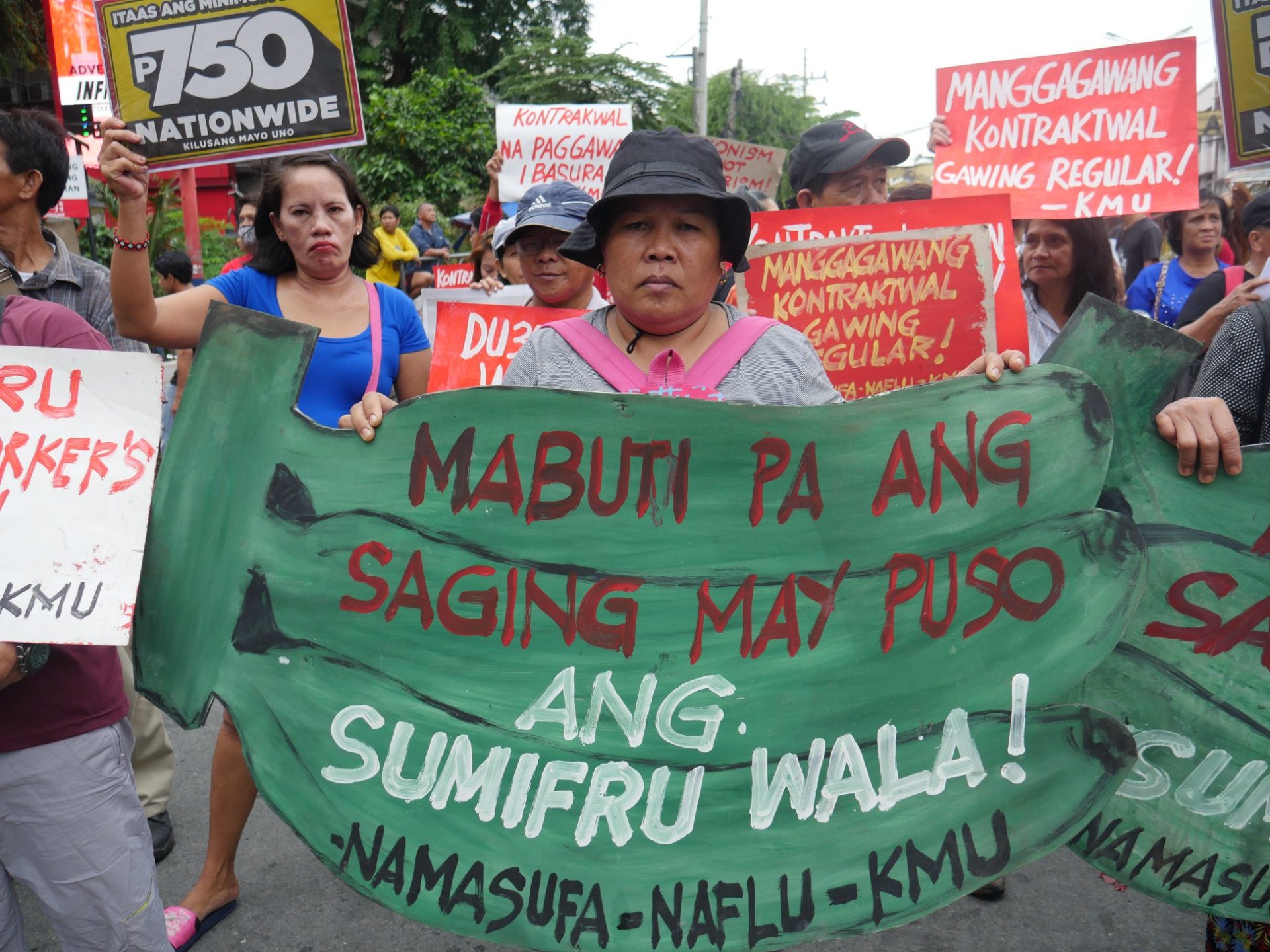
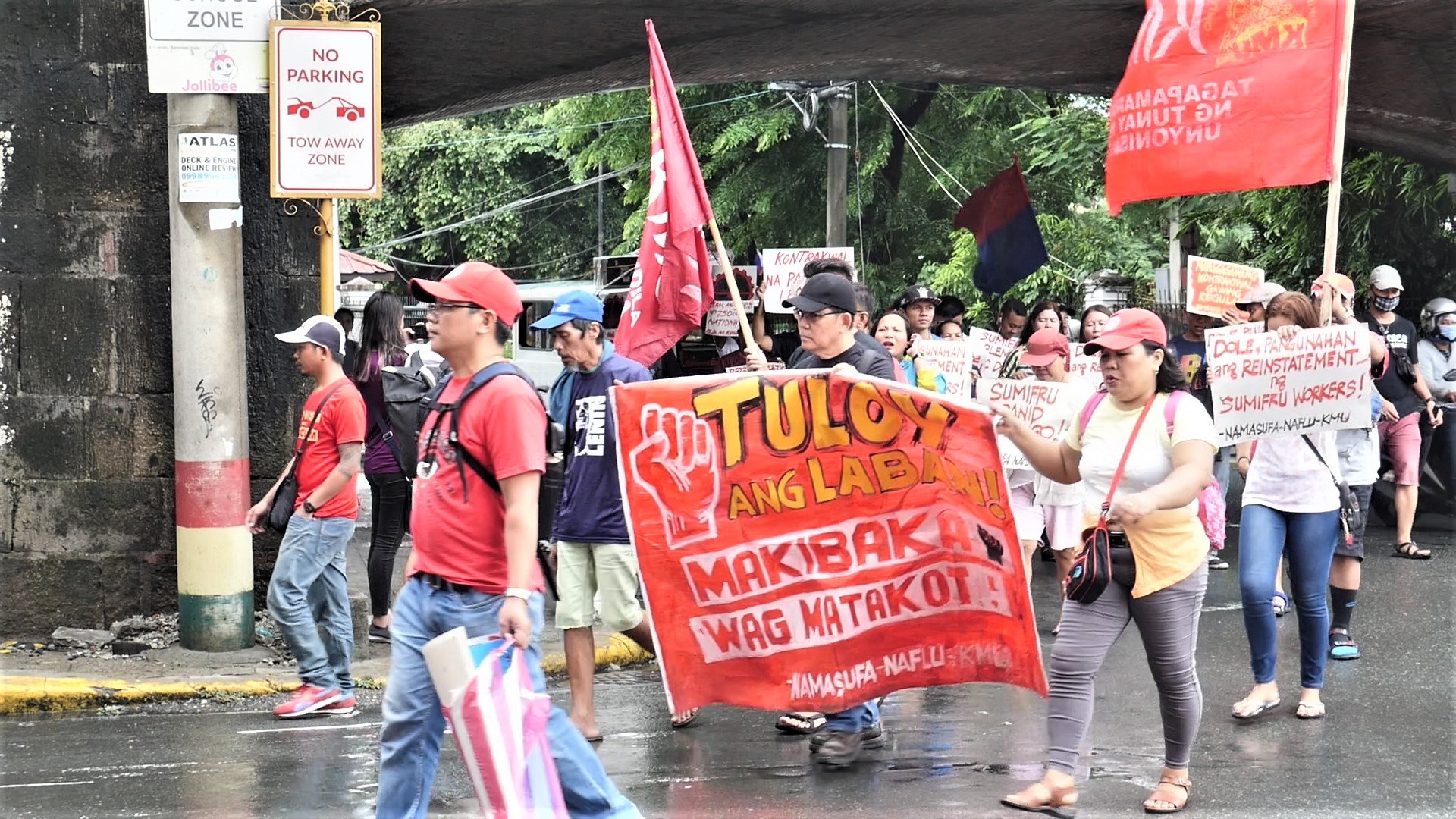
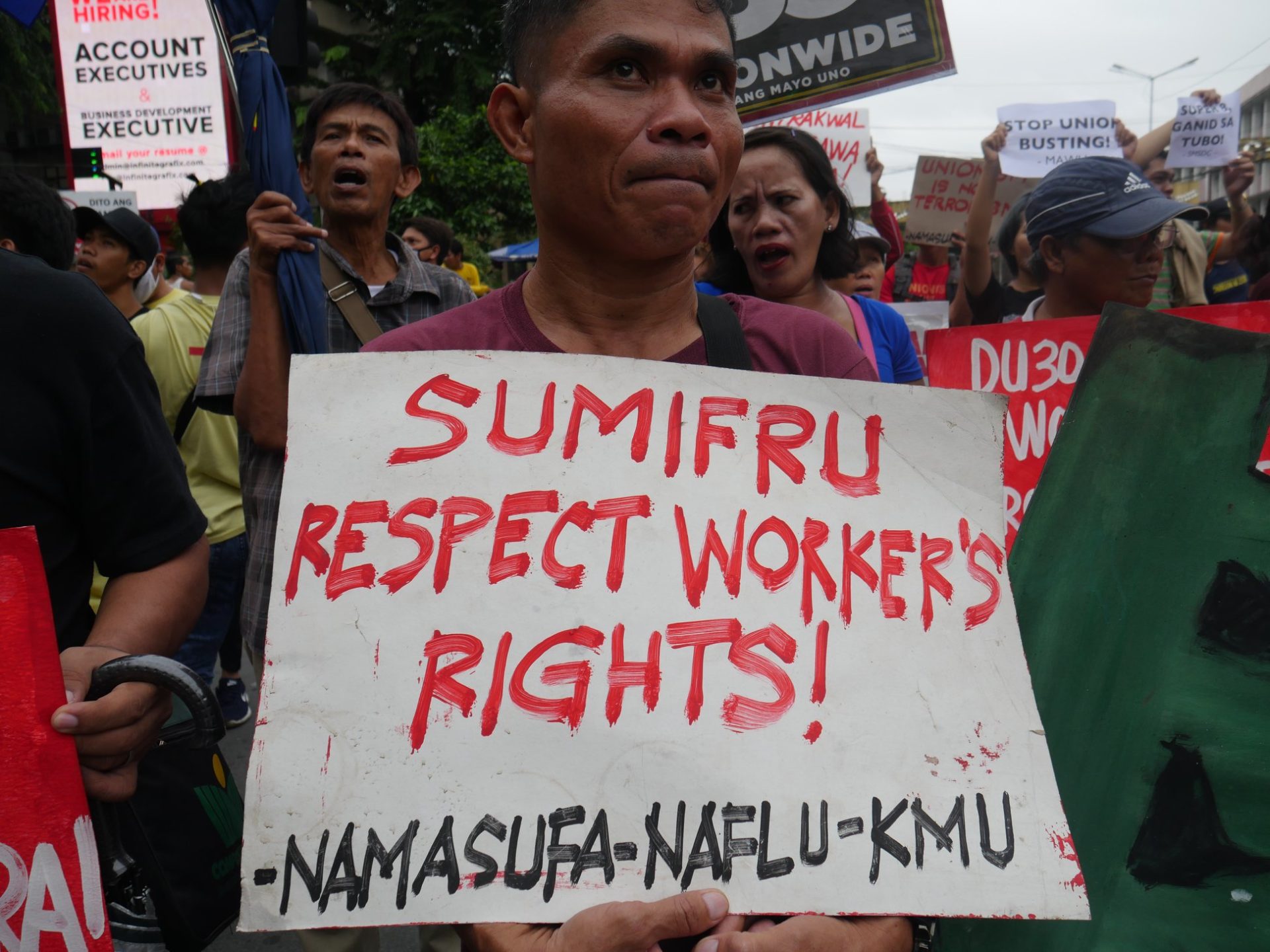
When workers want to assert their right to a fair income and safe and healthy working conditions, They are facing threats, intimidation and even murder. On 1 October 2018, a strike was organised by 700 workers from 7 different packaging plants to demand the formalisation of their work and a collective agreement. The strike lasted 11 days before being called off. violently interrupted by the police. That same month, the leader of the protests was killed. A month later, another union leader was shot dead. In the aftermath of these tragic events, 300 workers filed a complaint against the police. complaint and are still awaiting a verdict.
The importance of national and international legislation
The abuses committed at Sumifru demonstrate the importance of international legislation and regulations which oblige multinationals to respect human rights and the environment throughout the production chain.
A law on the duty of vigilance would require companies like Sumifru to respect the rights of their employees and make them managers cases of violation of these rights. They should pay them compensation. Find out more about the campaign for a duty of care law at www.devoirdevigilance.be.
Deadly pesticides banned in Europe are exported to low-income countries, where they destroy the health of farmers and the environment. Let's get together to call on Belgium to ban this toxic and immoral trade by signing and sharing our petition on stop-pesticides.be !
Find out more :
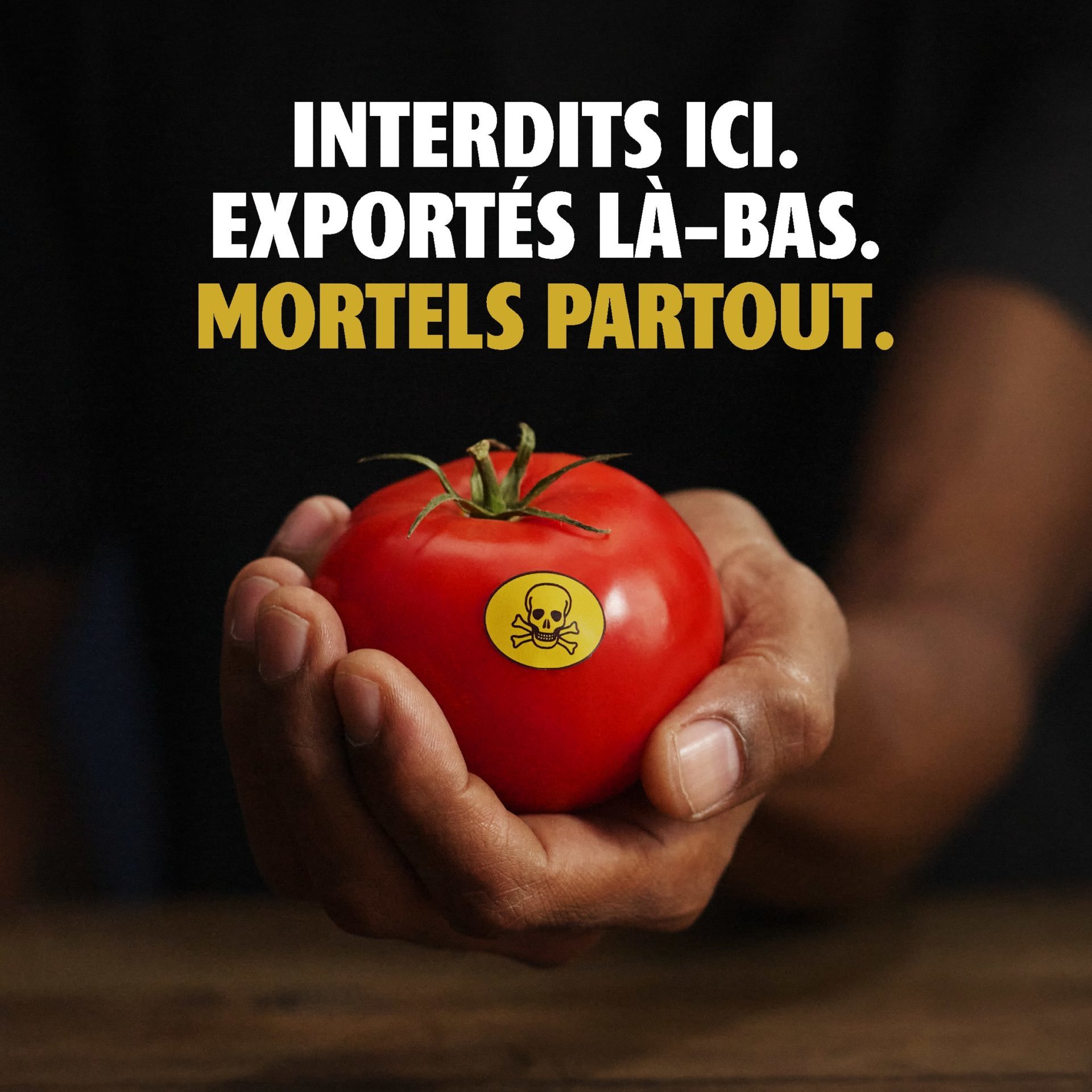
Pesticides: banned here, exported there. Deadly everywhere.
Deadly pesticides banned in Europe are exported to low-income countries, where they destroy the health of farmers and the environment. Ironically, these same pesticides end up on our plates in the food we import.