For the first time in two years, the Member States of the World Health Organisation (WHO) are meeting in Geneva. This is where the 75th World Health Assembly is taking place. In order to improve global health, Member States must strengthen the WHO.
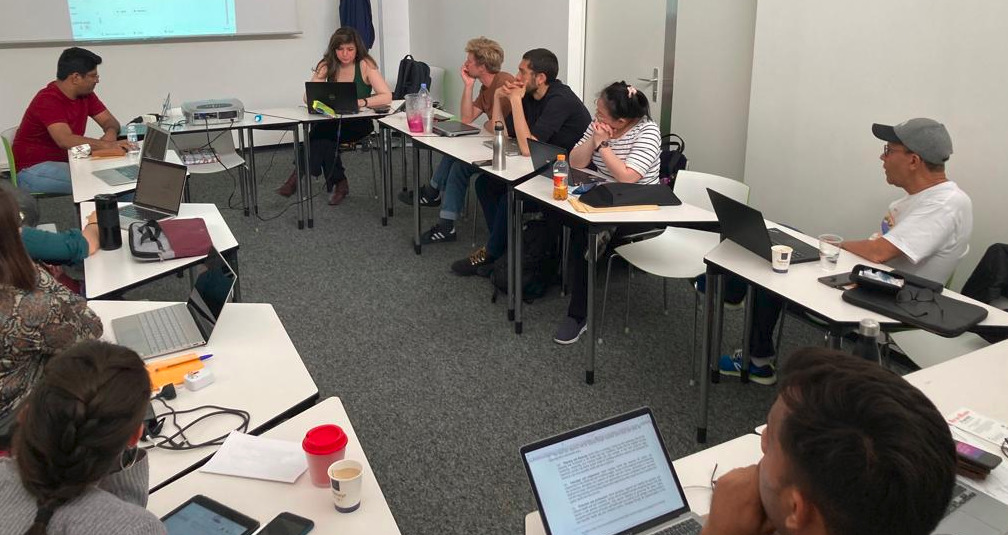
The 75th World Health Assembly (WHA) is taking place from 22 to 28 May. For the first time since the start of the pandemic, Member States are meeting in Geneva. They will discuss the world's biggest health challenges. Managing the coronavirus pandemic and future health crises is a key issue. But Member States will also focus, for example, on the fight against non-communicable diseases such as cardiovascular disease, diabetes and cancer. Finally, Member States will consider the financing and strengthening of the WHO. The WHO Watch team of the People's Health Movement (PHM) is closely following the meetings. In this article, members of the team take a closer look at the meeting.
Health crisis management
In April, an independent bodyi has published a report on the WHO's work during the pandemic. The report is positive about the WHO's work over the past year. It emphasises that the WHO must continue to play a leading role in health crises. It is the main organisation responsible for guiding global health policy.
The report also highlights certain challenges.ii. The WHO's health crisis management programme is under severe pressure. It lacks staff and financial resources. This undermines the programme's effectiveness and particularly affects vulnerable countries.
The report clearly addresses the role and responsibilities of the WHO. But it remains silent on the role of countries in combating the pandemic. This leaves a number of fundamental questions unanswered. For example, the COVAX initiative, which was supposed to improve access to vaccines worldwide, has yielded too few results. Rich countries have protected the patents of big pharmaceutical companies. They have put the greed and profit-seeking of Big Pharma before the health of the world's population. This has cost many lives.
Furthermore, some countries have faced difficulties in accessing resources essential to combating the coronavirus. For example, the United States maintained economic sanctions against Iran, Venezuela, Cuba, and North Korea during the pandemic. Instead of promoting solidarity, they made it more difficult to manage the pandemic. If these issues are not recognised and addressed, the world will never be sufficiently prepared for future disasters.
A vertical approach to diseases
Many documents reviewed by Member States during the HSA assert that we must strengthen our health systems. Yet the WHO most often opts for a vertical approach to diseases. In other words, separate programmes are developed for specific diseases such as meningitis, tuberculosis and diabetes. This is not only costly but also less effective.
For example, the action plan for non-communicable diseases, such as cardiovascular disease, diabetes and cancer, is very disappointing. It focuses too much on individual responsibility, fails to address the structural challenges of our healthcare systems and remains silent on the disastrous impact of large corporations on our health. Consider, for example, the negative effects of processed foods or the promotion of monoculture by large agricultural corporations.
In addition, with the action plan, the WHO encourages countries to use a universal health coverage model (UHC model).iii). The CSU model aims to give people access to healthcare through an insurance model. This allows private insurance companies to enter the market. Although the CSU may be an improvement for many people around the world, it distracts attention from strengthening public healthcare. This is a major shortcoming of the action plan.
WHO funding
In order to work independently, WHO decisions must be free from conflicts of interest and bias. WHO funding is therefore an important item on the WHA agenda. WHO has long had a funding problem. Fixed contributions from Member Statesiv, which allow the WHO to choose what it does, have been declining for years. They account for barely 14% of the budget. Voluntary contributions from Member States and other donors, such as the Bill and Melinda Gates Foundation, are much higher. They account for 86% of the budget. This does not allow the WHO to do whatever it wants. The donors choose.
During the WHA, Member States will consider a report on the sustainable financing of the WHO. The report states that funding must be significantly increased, primarily through fixed contributions. Unfortunately, the report is not ambitious enough.
In addition, the report contains a recommendation that the WHO should accept funding from the private sector. That is, it should accept financial support from multinational corporations in the food, alcohol and pharmaceutical industries. This is a major problem. The industry's main concern is profit. Furthermore, if the WHO acts against the interests of the industry, it even runs the risk of large companies ceasing to fund it. This would jeopardise the independence of the WHO and its work.
If the WHO wants to tackle the world's biggest health challenges, it must address the fundamental issues. Only then can we make global health policy more equitable. This is what the PHM's WHO Watch team is working towards.
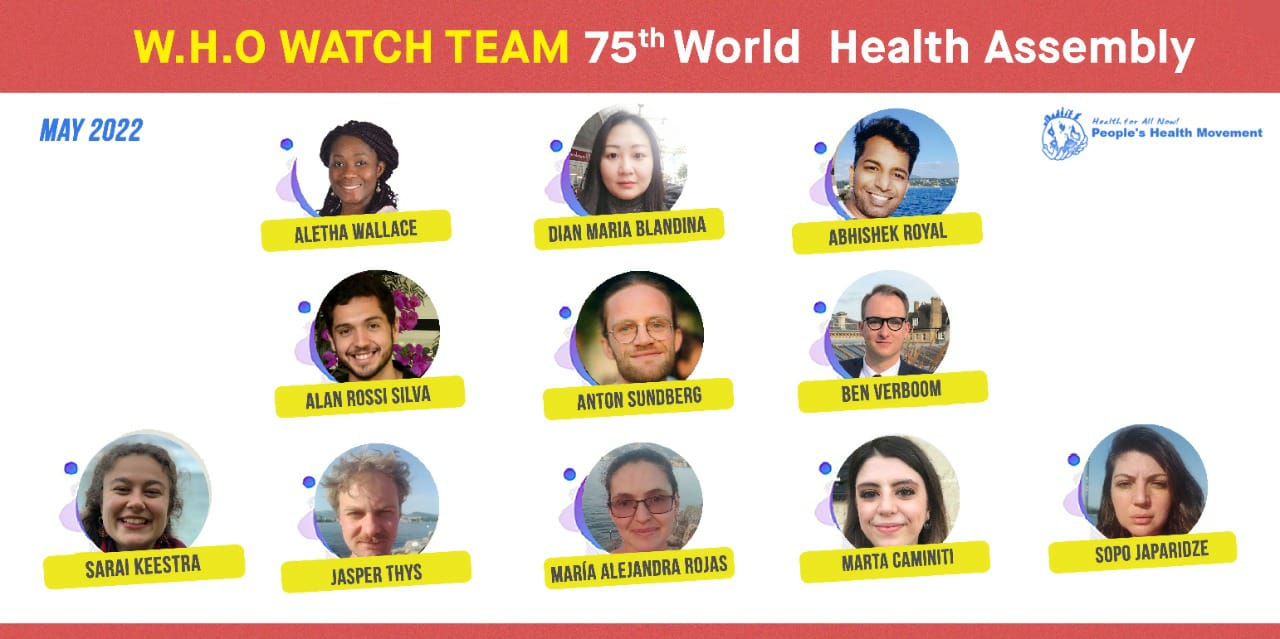
The members of the WHO Watch team are Abhishek Royal (India), Alan Rossi Silva (Brazil), Aletha Wallace (Belgium), Anton Sundberg (Germany), Ben Verboom (Canada), Dian Maria Blandina (Indonesia), Jasper Thys (Belgium), Maria Alejandra Rojas (Colombia), Marta Caminiti (Italy), Sarai Keestra (Netherlands), Sopo Japaridze (Georgia), Lauren Paremoer (South Africa), Jyotsna Singh (India), and Gargeya Telakapalli (India).
i WHO Independent Oversight and Advisory Committee (IOAC)
ii WHO Health Emergencies Programme (WHE)
iii Universal Health Coverage (UHC)
iv Contributions assessed (CA)