This text was written by Ubai Al-Aboudi, Executive Director of the Bisan Center for Research and Development and a researcher in the field of socio-economic rights.
Colonialism is not part of the history books. Its effects are still with us: racism, unfair trade treaties, plundering of raw materials in former colonies.
Colonialism is a direct consequence of capitalism. It increases the wealth of a small group of people, without taking into account the consequences for the majority of the world's population and for the planet. This can be clearly seen in monocapitalist agriculture. Production and productivity must constantly increase in order to make more profits.
Harmful to health and the environment
Chemicals play an important role in this process. Fifty years ago, we didn't know much about pesticides. We weren't really concerned about their effects on health. Since then, research has shown that the use of pesticides causes serious health problems, affecting the functioning of the kidneys and liver and leading to cancerous tumours. And this applies both to those who use them and to those who eat the contaminated food. Research also shows that the internal use ofnsive use of pesticides has a profound effect on the environment. Biodiversity is declining sharply in regions where pesticides are used. This not only affects current generations, but also threatens the future of humanity on our planet.
Banned here, imported elsewhere
The heart of the problem is the production of pesticides by agrochemical companies in high-income countries. Within the EU, the production of pesticides is subject to strict rules. Unfortunately, there is a gulf between the rules governing production and those applying to the production and sale of pesticides.
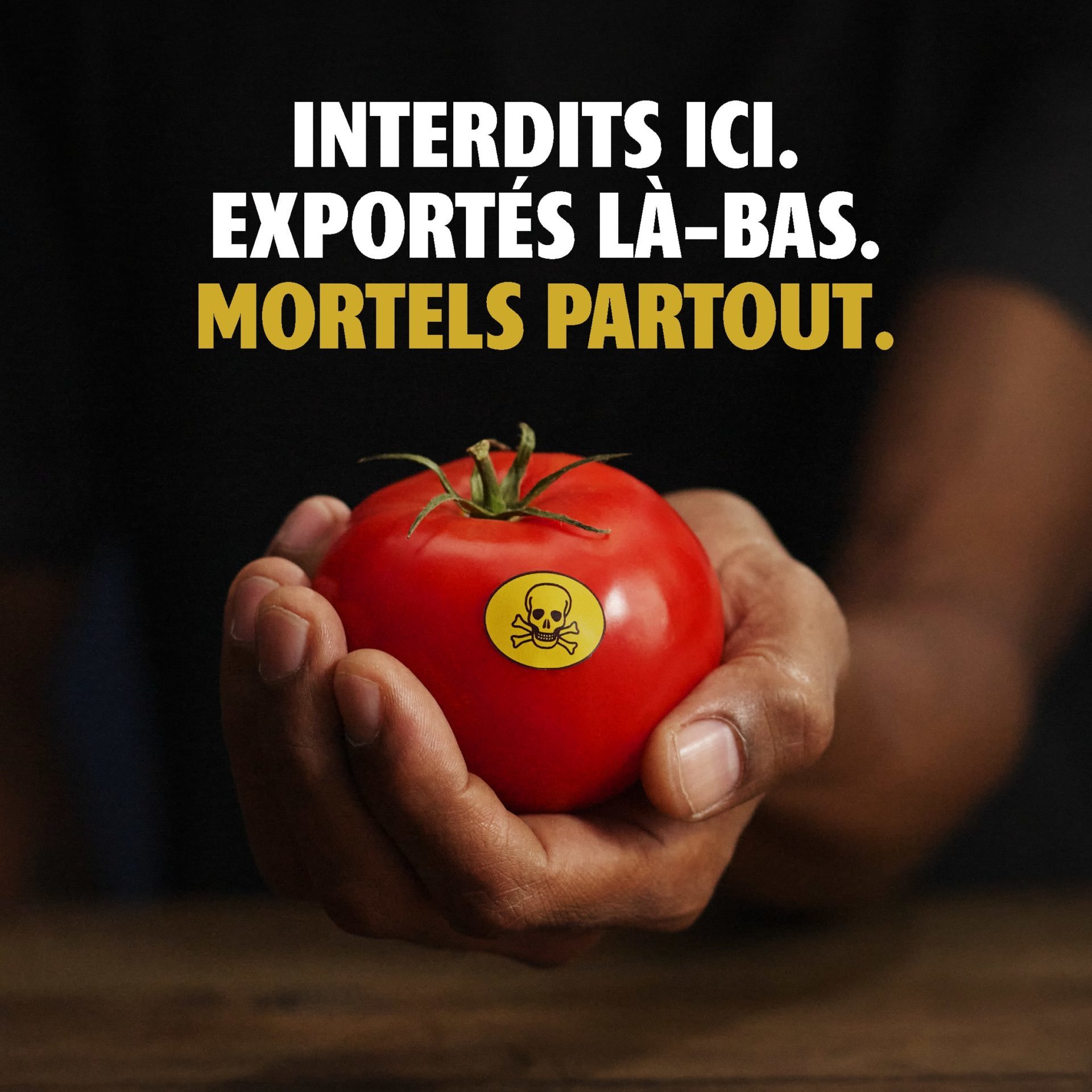
Some pesticides, such as CYPRIN in Switzerland, POLICE and PLICTRAN in Luxembourg and EVISECTS in Belgium, are banned in the EU because of their toxicity. Their toxicity is far too high for organisms living in water, they pose a risk to the liver and kidneys and can affect the reproductive system in both men and women.
Unfortunately, these toxic pesticides continue to be produced and exported to countries outside the EU, such as Palestine, with no regard for their effects on health and the environment. This is reminiscent of the practices of the colonial era, focused on maximising profits without regard for the well-being of the population.
Pesticides in Palestine
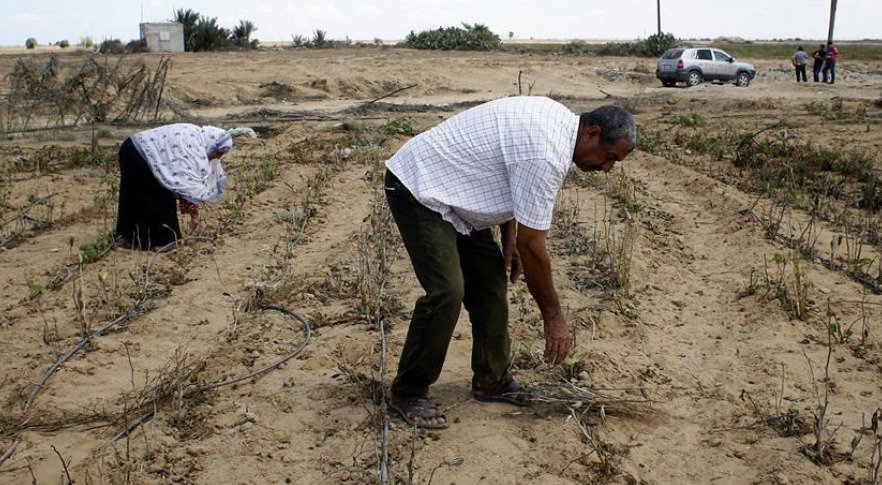
Together with the Bisan Center for Research and Development, This study looked into the presence of banned pesticides in the occupied territories of the West Bank in Palestine. It showed the presence of a number of these pesticides in products on Palestinian markets. At During interviews with farmers and shop owners selling pesticides, we discovered that some of these pesticides come from Israel, and more specifically from its illegal settlements. So importing pesticides is not just a question of health and the environment, but also of controlling Palestine in one's own country and at border crossings.
Residues of these pesticides have also been found in fruit and vegetables exported to the EU. The production and export of pesticides is therefore not only harmful to the population of countries that continue to import them, but also to the population of countries that export banned pesticides while importing contaminated food.
There are alternatives
The use of pesticides in agriculture is not environmentally friendly and is very harmful to the world's population. The monocapitalist agricultural model has reached its limits. It is not capable of increasing agricultural production without seriously damaging the well-being of humanity and future generations. It is therefore of crucial importance for the future of our planet that we create alternatives and adapt the same standards to the export and import of pesticides. There are enough alternative agricultural production methods: agro-ecology, sustainable agriculture, mixed farming, etc.. We need to invest massively right now!
Let's get involved!
Viva Salud is part of a coalition led by SOS Faim to put an end to the export of banned pesticides.
Let's get together to call on Belgium to ban this toxic and immoral trade by signing and sharing our petition !