
#FairFarma: open call for a fair pharmaceutical policy
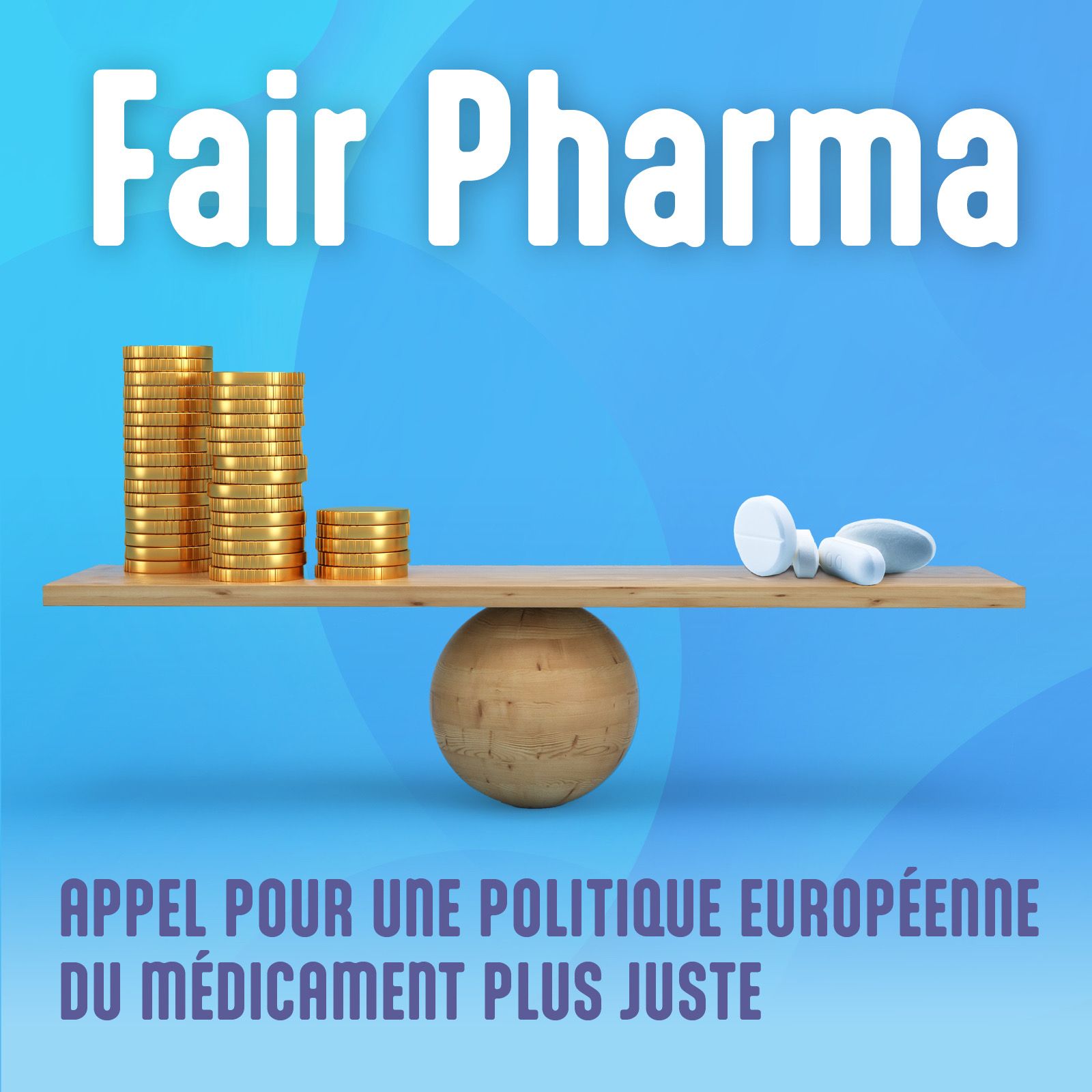
Appeal by Belgian civil society organisations on the occasion of the Belgian Presidency of the Council of the European Union in January 2024.
Medicines policy in Belgium and Europe is at a key juncture. Prices are rising, budgets are under pressure and shortages are multiplying. If we don't act, access to medicines will be increasingly under threat. In Belgium, but also and often more so in the rest of the world. During the Covid crisis, we saw that pharmaceutical companies did not want to guarantee access. Today, reforms are in the pipeline. At the end of April, the European Commission presented a proposal which is currently being examined in greater detail. What will our government be working on during the next Belgian Presidency of the Council of the European Union, starting in January 2024? We advocate a fair pharmaceutical policy, which implies at least the following eight points:
- A fair price for new drugs. The idea that the price of a drug can correspond to what that drug brings to society leads to excesses that are untenable. The price should be determined by the cost of research and production, plus a reasonable profit margin. A model developed for this purpose by an international association of mutual societies should be used in future price negotiations.
- Fair information, greater transparency. Governments should require pharmaceutical companies to make available all information relating to the cost of researching and developing a new drug. The European Commission only proposes to make public the funding of public research, but this is not enough. The World Health Organisation's 2019 resolution on transparency contains a clear outline of the measures needed. These should be fully implemented in Belgian and European legislation. At Belgian level with regard to the decision on reimbursement and at European level with regard to marketing authorisation.
- Fair prices and greater transparency also mean the end of secret contracts. They pit Member States against each other and undermine democratic control. European negotiations on prices can only be brought to a rapid conclusion if the Member States dare to take the first step towards putting an end to secret contracts.
- Fair use of intellectual property. We must resort to compulsory licensing if the companies refuse to adjust their prices to a fair amount. Using or threatening to use compulsory licences strengthens our position at the negotiating table with the multinational pharmaceutical companies, but for this to happen, the legislation must be amended so that the Minister of Health can actually grant these compulsory licences.
- A fair innovation. The government needs to develop new funding models, such as decoupling, that encourage research in areas that have been publicly defined as priorities, irrespective of the potential profit margin it may represent for a pharmaceutical company. We are thinking above all of the problem of growing resistance to antibiotics. There is an urgent need to develop new antibiotics, something that pharmaceutical companies are not doing enough of at present.
- Fair taxation. During the Belgian Presidency, work must continue on implementing the European agreement on a global minimum tax on companies. While the agreement could certainly have been more ambitious, it is important that it is transposed into Belgian law by 2024. There are still too many loopholes that maintain tax advantages and exemptions, particularly under pressure from the lobby of the big pharmaceutical companies present in our country. We advocate an effective tax rate of at least 15 %, without exception.
- Fair and sufficient availability. We need to take firmer action against the many stock-outs. It is the responsibility of manufacturers and distributors to ensure the continued availability of our medicines. The Belgian and European authorities must impose sanctions on companies that are unable to justify why they are temporarily or permanently unable or unwilling to supply a drug. Pharmaceutical companies should be required to draw up stricter prevention plans for managing and preventing shortages.
- Fair solidarity with the rest of the world. If our country wishes to make equal access to medicines throughout the world a priority during the Belgian Presidency, the measures mentioned above are an essential prerequisite. Greater transparency and fairer prices in the richest European countries are elements that would also benefit all the other countries of the world. We are also asking our country to support initiatives to promote local production of vaccines, tests and medicines.
Signed by the following members of the «No Profit On Pandemic» platform» :
- WSM | Bart Verstraeten, algemeen director
- Viva Salud | Fanny Polet, Director
- ACV Puls | Veerle Verleyen, adjunct-algemeen secretaris
- CBCS | Alain Willaert, General Coordinator
- Geneeskunde voor het Volk | Janneke Ronse, voorzitter - Tim Joye, vice-voorzitter
- 11.11.11 | Els Hertogen, Director
- CNCD | Arnaud Zacharie, secretaris-generaal
- Oxfam | Aurore Guieu, Head Of Policy
- Solidaris | Jean-Pascal Labille, algemeen secretaris - Paul Callewaert, algemeen secretaris
- CNE | Felipe Van Keirsbilck , General Secretary
- CM-MC | Luc Van Gorp, voorzitter CM - CLAUDE ROLIN, chairman MC
- Médecins du Monde | Davide Olchini, Global Health Department Director - Michel Genet, Executive Director
- ACV-CSC | Marc Leemans, voorzitter - Marie-Hélène Ska, algemeen secretaris
- ACLVB-CGSLB | Olivier Valentin, National Secretary
- ABVV-FGTB | Thierry Bodson, voorzitter ABVV-FGTB - Miranda Ulens, algemeen secretaris ABVV-FGTB
References :
- Reform of EU pharmaceutical legislation
- INAMI roadmap for the «Reform of drug reimbursement procedures»
- European Alliance for Responsible R&D and Affordable Medicines - Joint Rome Declaration
- International Association of Mutual Benefit Societies (AIM) - Calculator for Fair Medicines Prices in Europe