
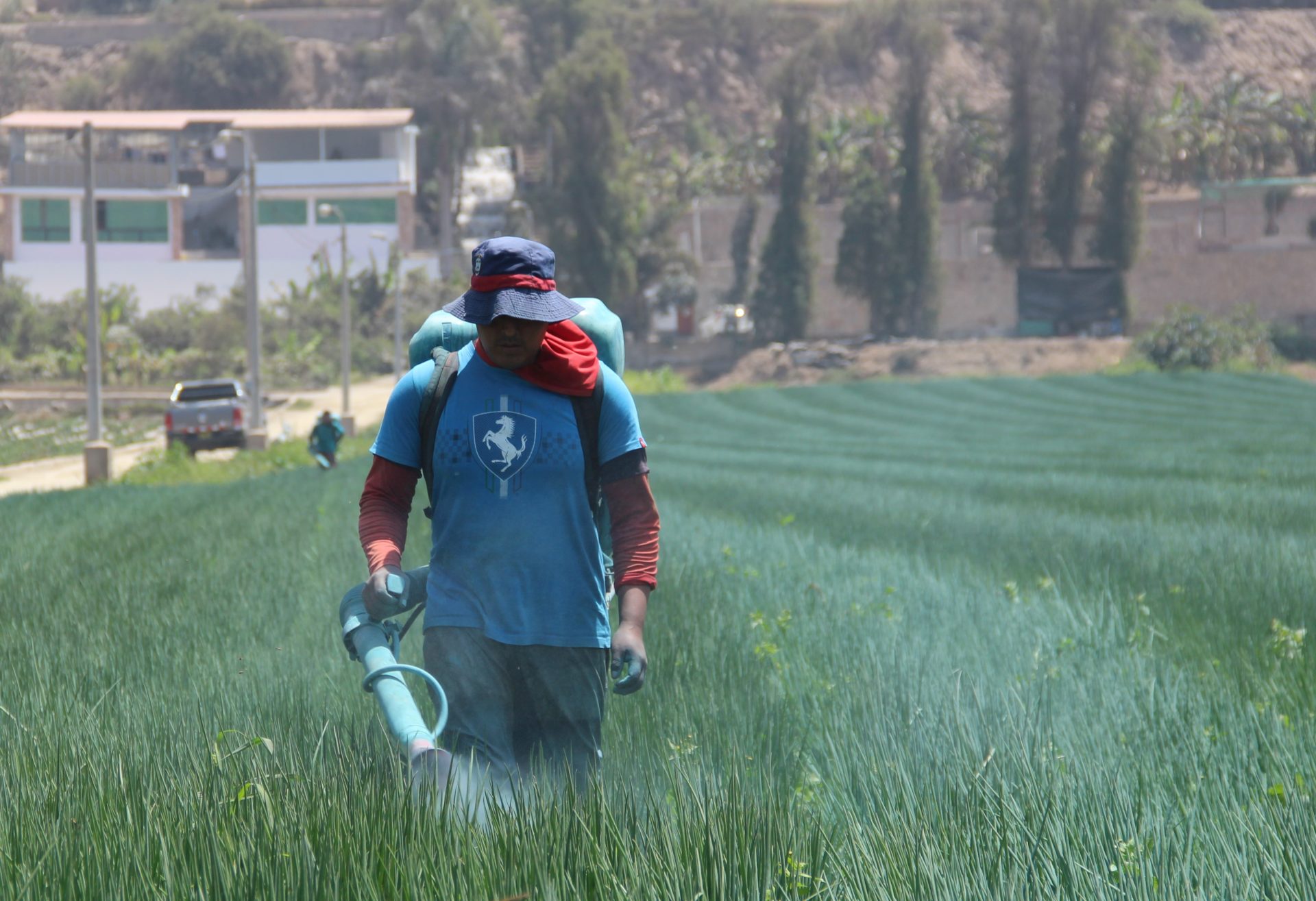
In 2022 and 2023, we ran a major campaign to ban the export of pesticides that cannot be used in the European Union. And we achieved results! On 23 June, the Council of Ministers approved an important draft royal decree. It prohibits Belgium from exporting pesticides abroad that we ourselves consider too dangerous.
In 2020, the Swiss NGO Public Eye published a important report. He condemns European exports of pesticides that are banned within the European Union (EU). These pesticides are banned in countries such as Belgium because they are very dangerous to farmers' health and the environment. Furthermore, these hazardous substances ironically end up in the food we import and therefore on our plates. Pesticides such as Paraquat, produced by the chemical company Syngenta, is lethal after just one dose and causes diseases such as Parkinson's, even with low long-term exposure. It goes without saying that, even with the necessary protective measures, it is irresponsible for farmers to use such a product. And if we do not want to expose our own farmers, why should we expose those in countries outside the EU?
«And if we do not want to expose our own farmers, why should we expose those in countries outside the EU?»
Colonial logic
According to a 2018 Public Eye investigation, the EU exported 81,000 tonnes of pesticides banned in the EU to 85 countries, 75 of which were low- and middle-income countries. Belgium accounts for 6.1% of these exports. and therefore plays a significant role. France has already recently taken the decision to cease these exports.
In early 2022, the Belgian NGO Humundi (formerly SOS Faim) contacted several other organisations working on the right to food, health and decent work. We thus created a strong coalition of seven organisations: Humundi, Broederlijk Delen, FIAN, Iles de Paix, FOS, Entraide et Fraternité and Viva Salud. With the support of the six other organisations, Humundi led a thorough study on Belgian exports of banned pesticides. We launched a petition based on the information we had. In the meantime, Environment Minister Zakia Khattabi and Health Minister Frank Vandenbroucke, who had also read the Public Eye report, jointly submitted a proposal for a royal decree. When our partner organisations in the Philippines and Palestine heard about these practices, they also reacted.
Their case studies revealed the importation of banned pesticides from Belgium and Europe, and used this as the basis for campaigns in their own countries on the importation of dangerous pesticides.. Research conducted in the Philippines, for example, shows how the dangerous substance carbendazim, produced by Arysta in Belgium, ends up on the Philippine market. Ingestion of carbendazim may cause fertility problems and is extremely harmful to aquatic organisms. More than 10 years after the European ban, this substance is still present in our Belgian rivers.
Victory over the corporate lobby
This was followed by intense months of campaigning in 2023. Our petition gathered 8,000 signatures. We launched social media campaigns to write directly to policy makers and circulated articles in the Belgian press. It turned out that few people were aware of the export of banned pesticides. Based on our solid research, we contacted the various ministers who were to vote on the proposed royal decree.
«Of course, we weren't the only ones to contact the ministers. The extremely powerful agrochemical lobby turned out to have close ties to certain political parties.»
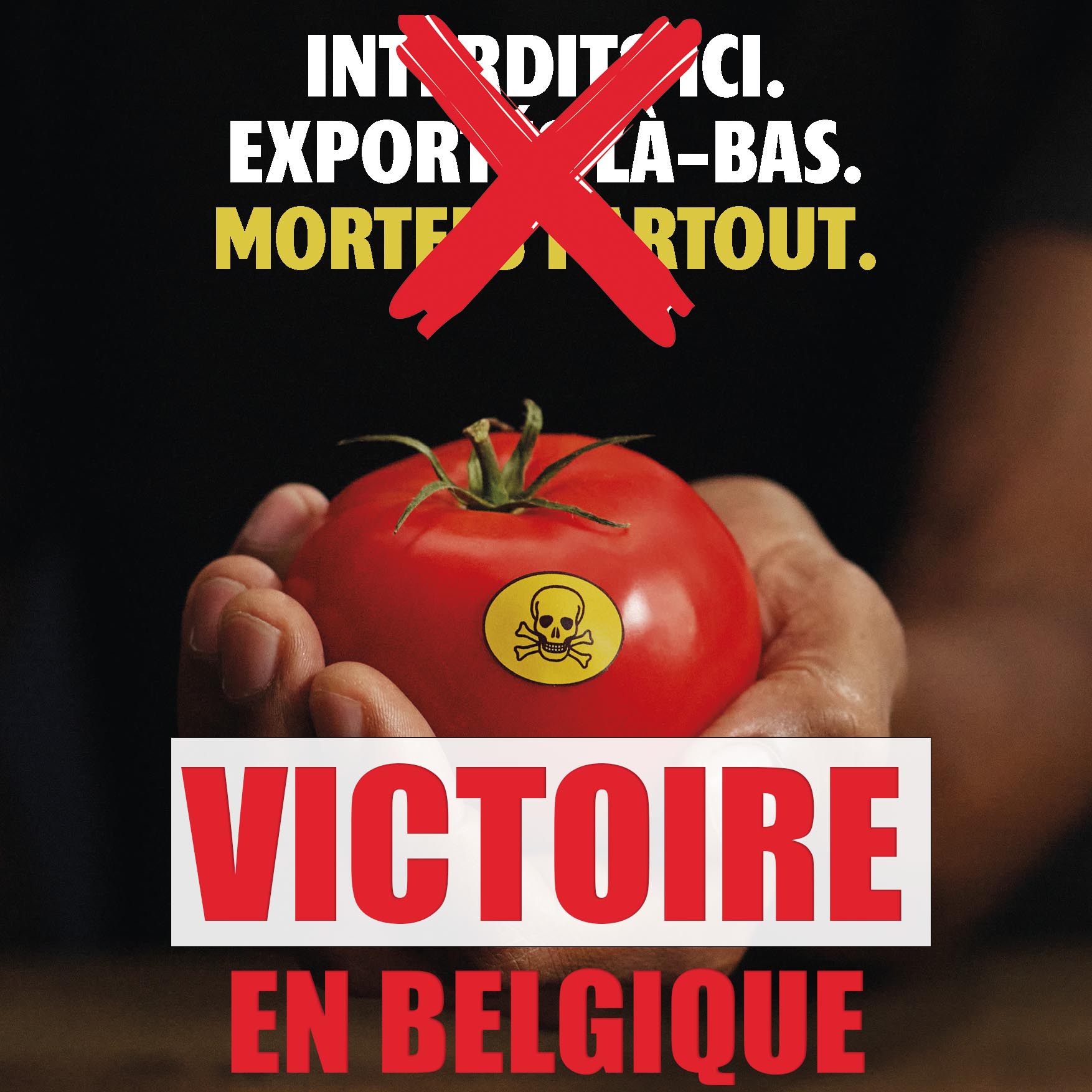
The tension before the vote on 23 June was palpable! We made every effort and finally managed to convince the political decision-makers. thanks to the demand from social movements from around the world in favour of the export ban, a thorough study and the support of volunteers and supporters from our various organisations.
A victory we can be proud of
This victory is a milestone! The ban on exporting prohibited pesticides demonstrates the importance and power of social movements, cooperation and a clear strategy. We are therefore immensely proud of the outcome of this successful campaign and grateful for every signature and contribution to the campaign!
But the fight is not over yet. The European Commission is currently gathering opinions on the ban on exports of these pesticides, which are prohibited at European level and will be voted on shortly. The agrochemical lobby is even more powerful at European level, but This campaign has taught us that by joining forces, we can achieve victory. We, the Belgian coalition against pesticides and our partners in the Philippines and Palestine, let us remain committed to ambitious legislation at European level!