
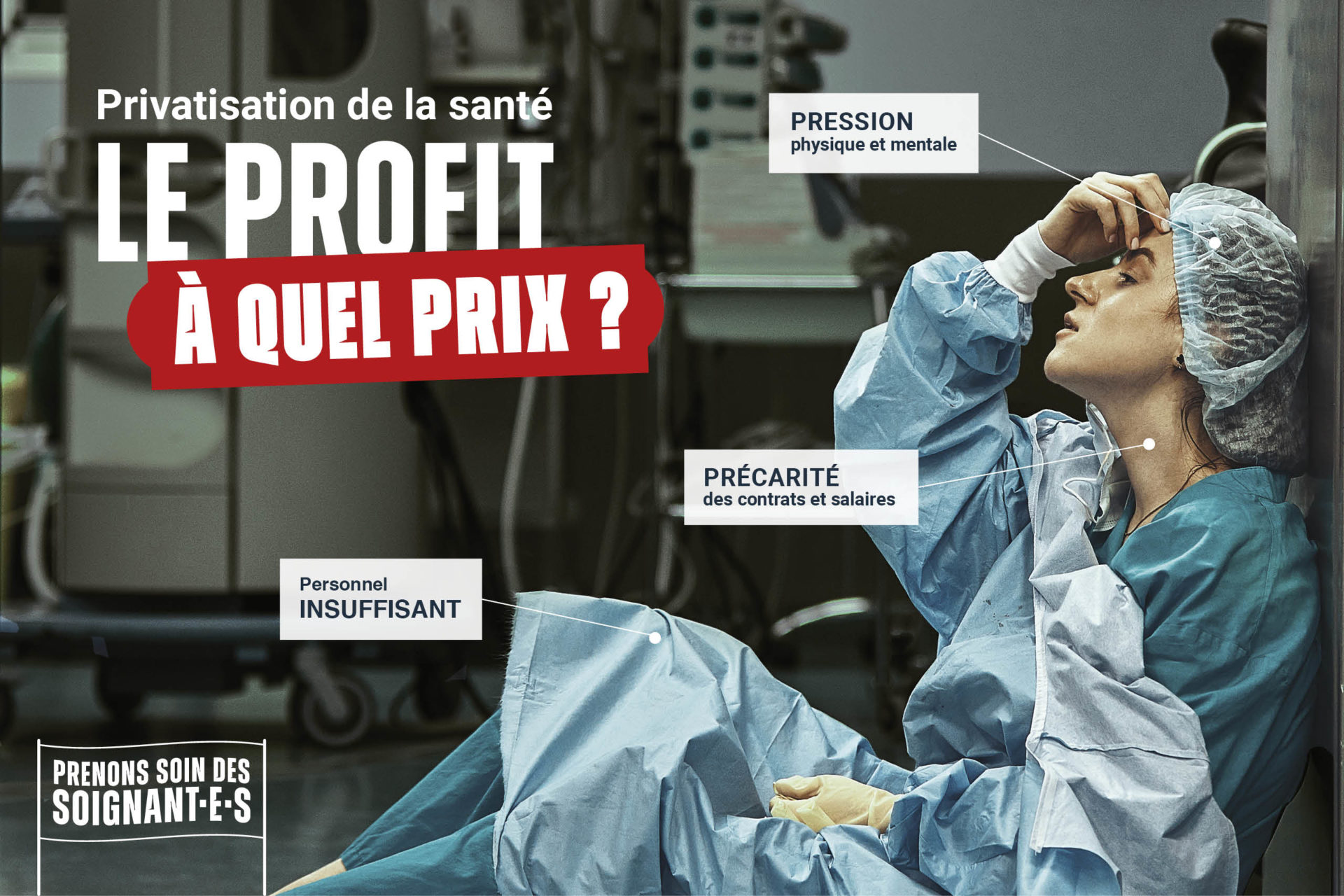
2022–2023 campaign.
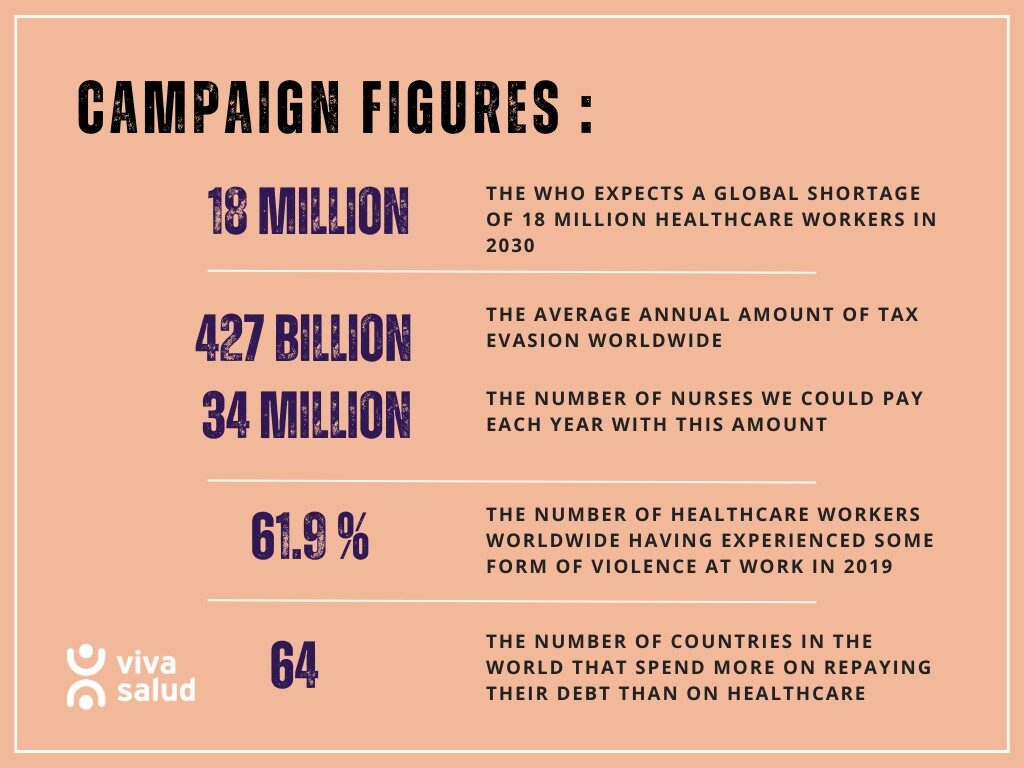
Healthcare is in crisis: we hear and read about it everywhere. There are not enough staff to care for all patients, and the workload is no longer sustainable for anyone. Unhealthy working conditions make the profession unattractive. By 2030, the World Health Organisation (WHO) expects a global shortage of 18 million healthcare workers.
Accounting for 89 per cent of the global shortage, low-income and lower-middle-income countries are the hardest hit. In Belgium, too, nearly half of intensive care nurses are considering resigning due to excessive workloads and unhealthy working conditions.
Fortunately, healthcare workers are not taking this lying down. All over the world, they are mobilising to secure better working conditions and robust public health services. They are leading the fight for the right to health.
During the COVID-19 pandemic, we called healthcare workers heroes. Their efforts were rightly applauded. But governments are still not doing enough to increase their salaries, improve their working conditions and strengthen public health services. The lessons of the pandemic have not been learned.
So how can we take care of those who take care of us?
Before the pandemic, 57 countries were experiencing a severe shortage of health workers, according to the WHO. Yet the IMF advised 24 of these 57 countries to freeze or even reduce public sector wage expenditure.
Commercial players in the healthcare sector have prevented an effective response to the COVID-19 pandemic. Nevertheless, governments have continued to dismantle public health services. The private sector is playing an increasing role in healthcare. How can this be explained?