
Health is a fundamental right, but is it threatened all over the world by poverty, inequality, exploitation and war. The countries in the Global South are particuliarly affected by these realities. This right can only be guaranteed if politics and the economy serve the interests of people, rather than the profits of a wealthy minority.
Today, the economic and political power are often in the hands of few.This increases inequality. And yet, history teaches us change is possible: victories for people's rights, including health, have already been won.
We reject the imperialist system where the most powerful countries impose their interest on the nations historically dominated. We want a world where nations, communities and people in the Global South can freely decide on their future, without interference from outside. To guarantee fair policies that are adapted to local needs, sovereignty is essential. This means enabling people to control their resources and act for a development they can identify with.
Strong social movements are essential. They provide a voice to workers, health workers, farmers and individuals in need. Togehther, they can question power imbalances and contribute to a fairer system through collective mobilisation.
Viva Salud is a Belgian NGO convinced that every individual and every community has the right to health. This is why we support the fight for the right to health in Belgium, in Europe and in the Global South, while defending thedemocratic space to enable social movements to continue to fulfil their absolutely essential role.
We denounce the policies in Europe and Belgium that have an adverse impact within our partner countries. In the Philippines, in Palestine, in the Democratic Republic of Congo and elsewhere via People's Health Movement (PHM), we facilitate exchanges between our partners and we strengthen each other.
We also provide financial support to our partners thanks to grants and donations raised in Belgium. We support their fight through our activities in Belgium and our networking at Belgian and internationallevel, such as PHM.
Values
Sovereignty
We support grassroots movements and local initiatives because sustainable change comes from below and should not be imposed.
Solidarity
We do this with organisations in our partner countries that are tackling the causes of health problems. In Belgium, we organise trainings and campaigns, mobilise our supporters and participate in the global movement for the right to health. Together, we are stronger when it comes to influencing political choices.
Social justice
We advocate for a fairer world, where everyone has access to basic necessities and their rights are respected. With Viva Salud, we address the social, economic and political causes that undermine health: access to healthcare, but also housing, work and the environment.
Activism
As a militant social organisation, we support and strengthen social organisations fighting for real societal change in favour of the right to health, social justice and international solidarity.
History
Since our creation, we have moved from sending healthcare workers to supporting local partners, but we remain faithful to the principles and ideals of our pioneers.
Find out more about our history
Since our creation, we have moved from sending healthcare workers to supporting local partners, but we remain faithful to the principles and ideals of our pioneers.
Viva Salud was founded in the mid-1980s under the name Médecine pour le Tiers Monde (M3M). Doctors from Medicine for the People went to Lebanon to work in the Palestinian refugee camps. They wanted to build solidarity with organisations in Latin America, Asia, Africa and the Middle East that provide healthcare for the people, and give Belgian healthcare workers the opportunity to get involved in a practical way.
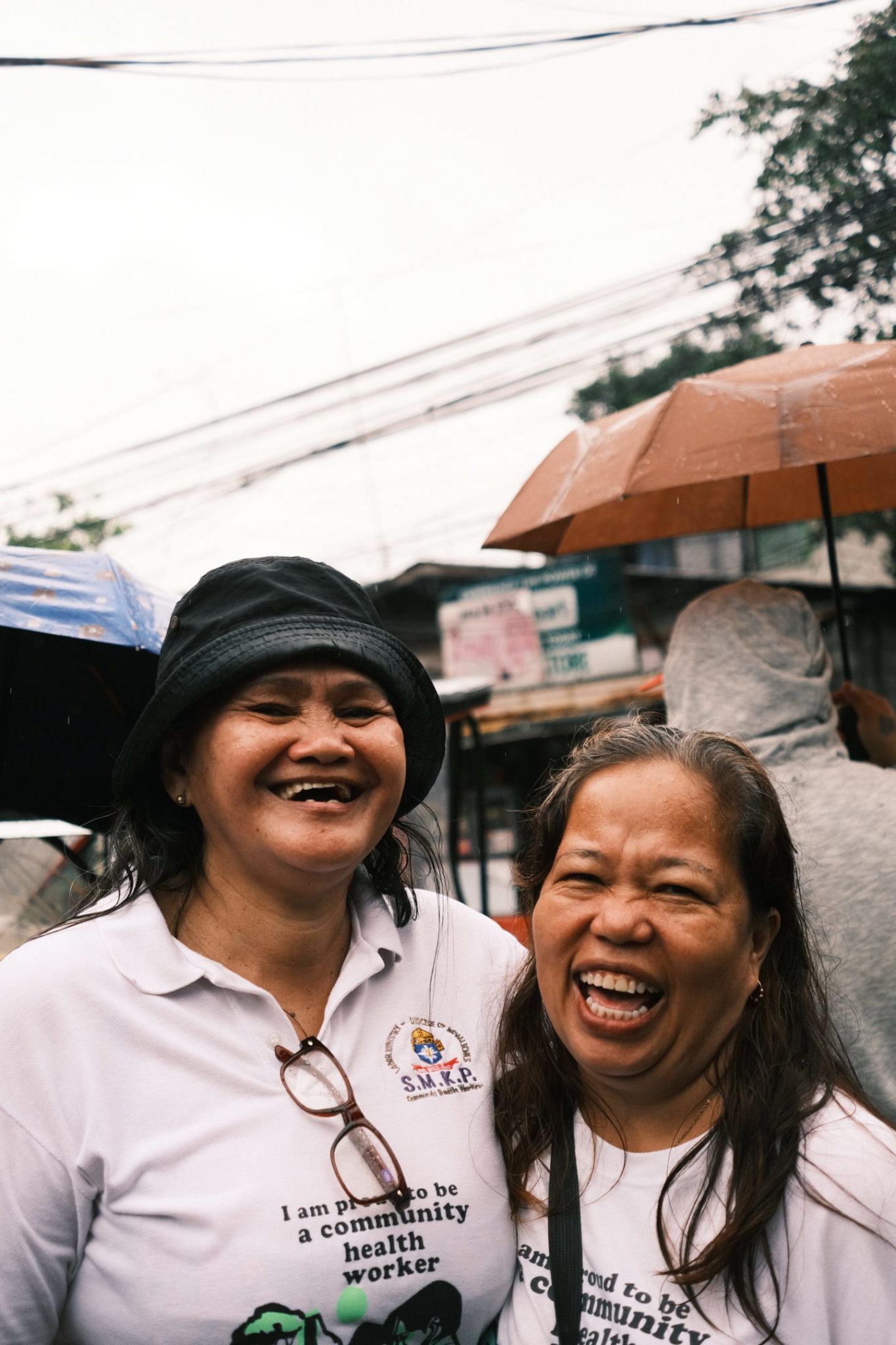
We have always been concerned about the fate of the Palestinian people. But collaboration with Filipino health organisations was also very important in the early years of M3M. These were the “Community Based Health programmes”, which set up programmes to train ordinary people to become “barefoot” doctors capable of treating the most common illnesses. Working closely with the social movements in their countries, these people help people to demand their right to health from the authorities.
During the 1990s, we strengthened our ties of solidarity with partners in Cuba. We moved from supporting the setting up of public health services in neighbourhoods, close to the people, to supporting organisations that promote community participation to improve their living conditions and protect them from the effects of climate change.
At present, we no longer support organisations on a sustainable financial basis, but we remain supportive by responding to specific and/or urgent cases (sending medical supplies during the pandemic, for example) and by using Cuba as an example in the fight for a strong public healthcare system.
We have also deployed our activities in the Democratic Republic of Congo. There we are helping local organisations to set up basic healthcare programmes in the working-class districts of Kinshasa, and later in other towns.
Over the years, we have invested more in building the capacity of local partners. We have largely given up sending health workers, except under very specific conditions. For example, when Iraq was invaded in March 2003, we sent a team of four doctors to Baghdad. And when Israel brutally attacked Gaza at the end of 2008, we sent a neurosurgeon on a mission.
In the early 2000s, we also became involved in the global movement for the right to health. We co-founded the People's Health Movement, a network of health organisations and activists, and have remained very active in it to this day.
In addition to our target countries, we also support smaller projects in a number of other countries. We do this at the request of support committees or in response to emergency situations.
In Belgium, we are supporting the creation of a broad movement for the right to health. To do this, we are working with solidarity movements such as intal and Cubanismo.be and we helped set up the Platform for Action on Health and Solidarity, which brings together social movements, NGOs and academics working to promote the right to health in Belgium and around the world.
Finally, it is also thanks to our many volunteers and ambassadors, who get involved throughout the year in campaigns and activities, within our secretariat or in their local communities, that we have been able to strengthen our impact in the fight for the right to health.
By campaigning, we are fighting together for a Belgian and European policy in favour of the right to health worldwide.
Management
Board of Directors
The Board of Directors comprises the following members: Marc Botenga (Chairman), Wim De Ceukelaire (Managing Director), Isabelle Vanbrabant, Anuschka Mahieu and Micheline Bruyninckx.
Their membership of the Board of Directors is unpaid.
In addition to the directors, the General Meeting is made up of other volunteers, members of social movements and the paid team.
Environment and sustainability
For Viva Salud, it is important that our governments take action to reduce CO2 emissions and combat environmental destruction. We need another socially and economically sustainable society. Despite the emergency situation,
we can only conclude that this is still not a priority for the European Union. Under pressure from industrial lobbies, the EU is favouring the activities of multinationals in its free trade policy, in order to create new markets for itself, mainly in the countries of the South. These countries are already the most vulnerable to climate change and are victims of the plundering and destruction of their natural resources by multinationals, which further increases their vulnerability to climate change.
We want to play a part in the fight against climate change and we attach great importance to the environment in our day-to-day operations. We strive to provide a healthy working environment (air quality, building insulation, healthy, local and fair trade food) that respects the environment (local purchasing policy, energy savings, etc.). Every member of staff has a role to play in behaving in accordance with the values of the organisation.
But that's not enough. We believe it is essential to raise awareness among citizens, to organise them and mobilise them through campaigns so that they can put pressure on our government to adopt a policy that will benefit the planet and its people.
We support our partners in the south of France and in Belgium to implement an environmental policy in their operations. By sharing successful initiatives, we inspire them to reduce their daily impact on the environment.
Gender and equality
As an NGO, Viva Salud defends and supports the right to health and the struggle of social movements. We also play a role in the fight for equality between women and men. Gender is a factor that influences the right to health.
Viva Salud attaches great importance to highlighting gender differences in order to improve gender equality. We want to improve the internal workings of the organisation and have put in place a gender policy in line with our values and vision.
We help our partners in the South and in Belgium to integrate a gender policy into the structures of their organisation and into their day-to-day work. As well as exchanging best practice, we also offer our partners tools for improving their gender policy in practice. We have drawn up a gender checklist, which is useful for integrating a gender policy into an organisation's day-to-day activities. We are also constantly developing and enriching our gender analysis.
Viva Salud places gender within a wider social context. Gender is an integral part of the fight against social injustice and a possible lever for the right to health. We must not only ensure that women are represented and listened to in social movements, we must also support our partners in mobilising on gender-related issues and reject policies that reinforce inequalities.
Quality and ethics
We have the following quality label:
C2E (Committed to Excellence) - Quality label awarded after assessment by an assessor from the ACODEV federation.
We are signatories to the following codes of conduct:
- Code of ethics in fundraising - The’Association for Ethical Fundraising confirms that we comply with the association's code of ethics.
Charter on the recruitment and the support to the development of Health Human Resources in the partner countries - The Human Resources for Health van Be-cause Health working group's voluntary code of conduct for healthcare staff.
Viva Salud is recognised by the Belgian federal government as a programme NGO and as an NGO authorised to provide services of general interest. tax certificates.
Transparency
Our transparency policy is based on the following principles
-
Our transparency policy covers both upstream and downstream transparency. This means that transparency towards our partners and target groups is just as important as transparency towards our funding bodies and donors.
-
Communication is tailored to target groups, so that appropriate information is provided in a way that is accessible, understandable and attractive to those for whom it is intended.
-
We do not withhold information when it is not necessary, but if we are unable to disclose certain information, we will always give reasons for our decision.
-
We ensure that our communication channels are recognisable (logo, name, etc.) and contain contact information. We make a clear distinction between communication by employees or volunteers in their own name and communication on behalf of the organisation.
-
We strive to meet all legal requirements in terms of transparency and data disclosure.
-
We collaborate on sector initiatives related to transparency.
-
At least once a year, we publish a detailed report with an overview of our annual accounts, recent activities and results, gender and environment policy, alliances, membership and finances.
Integrity
Since our creation, we have moved from sending healthcare workers to supporting local partners, but we remain faithful to the principles and ideals of our pioneers.