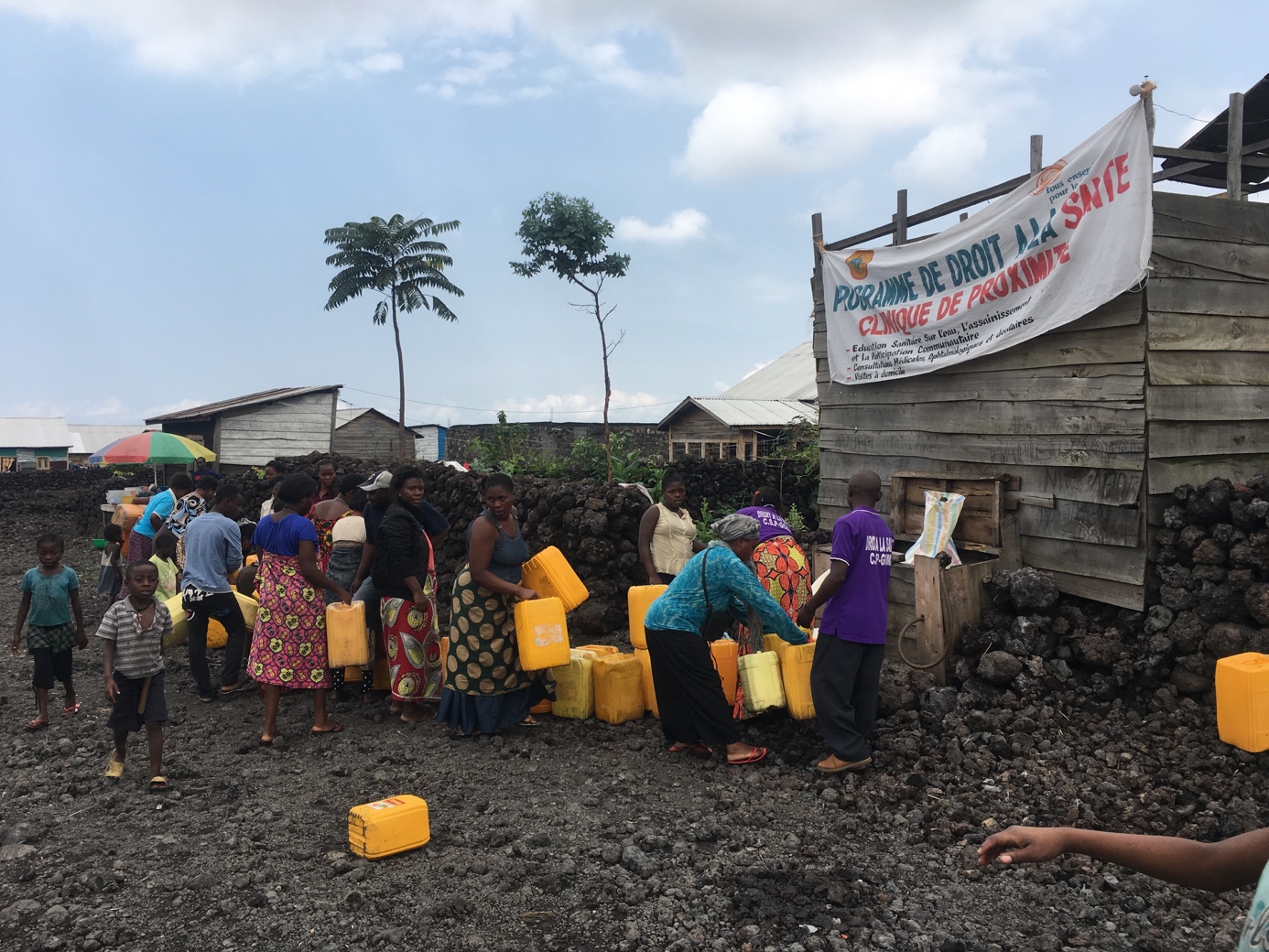
The city of Goma, in north-eastern Congo, is located on the immense Lake Kivu, yet access to water in working-class neighbourhoods is far from easy. In 2017, we installed a 10m³ reservoir in the Lac Vert suburb. This investment has made a big difference to the lives of local residents.
In early January 2018, the Provincial Minister of Health in North Kivu decided to collaborate with local community committees.
‘Water is life’ is the slogan used by water committees to demand better access to water in the working-class neighbourhoods of Goma. Installing water tanks is not an end in itself, but rather a step towards strengthening the community. Together with our local partners, we are organising the population so that they can take matters into their own hands.
Steps towards the right to clean drinking water
The organisation of a neighbourhood begins by bringing together leaders, intellectuals and elders. Together, they identify the problems in their neighbourhood. Once the priorities are clear, this core group expands to form a popular health committee, with committed young people and women from the neighbourhood. A large-scale survey is then conducted among the population. This allows us to involve as many people as possible in the project.
In 2017, the Lac Vert People's Committee decided to make better access to water the first item on its agenda. The neighbourhood struggled to access water because Regideso, the national water distribution company, had neglected it. Since 2010, Regideso had been supposed to install water pipes, but seven years later, nothing had been done.
Mercy Corps, an American NGO, recognising this need for drinking water, installed several reservoirs in Lac Vert and the nearby neighbourhood of Mugunga in 2014. However, monitoring and maintenance proved too difficult a task for the provincial authorities in North Kivu.
The «Yellow Vests» protest puts pressure on national water legislation
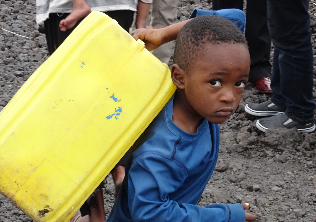
The local residents quickly wanted to get involved in the management and organised themselves into local health committees, with the support of our local partner Etoile du Sud (EDS). They took to the streets to demand their right to water, during a march with yellow jerry cans that we filmed in this documentary.
Local authorities felt supported by the “yellow can” march and put pressure on national authorities to amend Congolese water law. This law made the national water distribution company responsible for water supply throughout the Democratic Republic of Congo. This was an almost impossible task, given that Congo is nearly 77 times larger than Belgium and that some regions are very difficult to access.
The new law, approved at the end of 2017, nevertheless allows for collaboration with third parties. This gives local health and water committees an additional opportunity to obtain funding for their projects from the province of North Kivu.
At the end of 2017, a sustainable water committee installed a new reservoir in the Lac Vert neighbourhood. The reservoir has sufficient capacity to supply around 100 families. The popular committee manages and maintains it itself. Water is pumped from Lake Kivu, transported to a local treatment plant and then to the Lac Vert reservoir.
The People's Committee inspires provincial authorities
Seeing that these local water committees ensure autonomous management, the provincial authorities have shown interest in broader collaboration. In early 2018, this collaboration was formalised following a meeting with the Provincial Minister of Health of North Kivu.
Sawy, a lawyer and provincial collaborator with Etoile du Sud, is a staunch advocate of sustainable collaboration with the authorities: “EDS wants to create levers for change through community participation. But responsibility for basic needs must remain in the hands of the public authorities. This is how they can strengthen themselves and guarantee the basic rights of the population.”
The Lac Vert Water Committee now wants to go even further. They are making plans for mobile reservoirs to supply water to families living in even more remote areas.