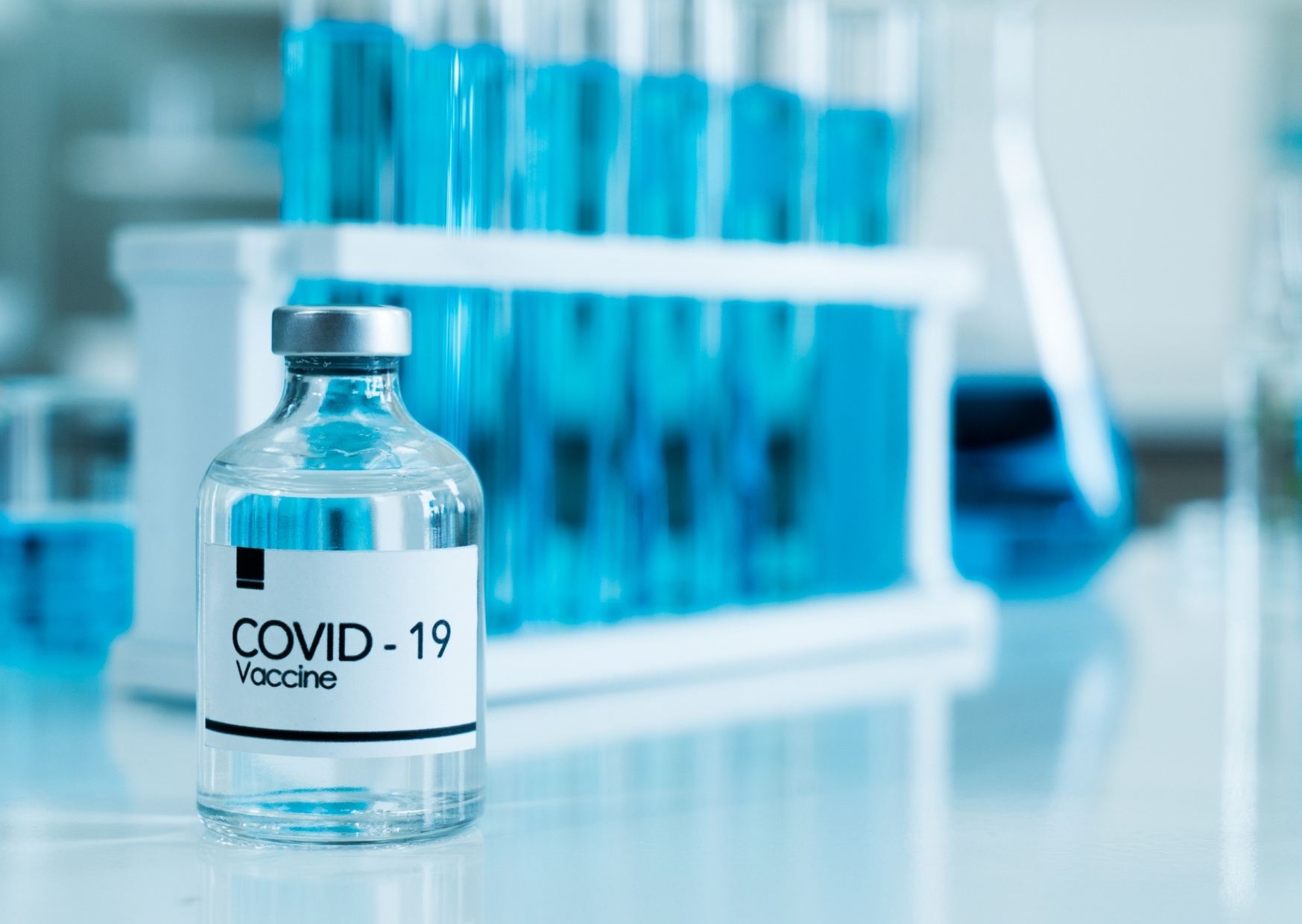
Together with a broad coalition of European doctors, health experts, trade unions, mutual societies, students and NGOs, Viva Salud is committed to collecting one million signatures across Europe to ensure that the European Commission keeps its promise: COVID-19 vaccines must be “our universal common good”. With this open letter, more than 50 Belgian experts express their support for this initiative. Will you also sign this initiative?
The full list of signatories is provided below.
In April, European Commission President Ursula von der Leyen stated that any future COVID-19 vaccine should be «available in every corner of the world [...] at affordable prices». It must be our universal and common good. The European Commission has appeared to put its money where its mouth is. Together with some Member States and the European Investment Bank, it has raised nearly €12 billion to advance the development of COVID-19 vaccines, tests and treatments and ensure equal access to them.
Thanks to impressive scientific work, the first vaccination programmes have been launched. But there is still a long way to go. Currently, pharmaceutical companies operate on an exclusivity-based model that prevents the rapid and affordable distribution of high-priority vaccines. Contrary to its own promises, the European Commission has not yet taken a single step to radically change this scenario.
How did we go from universal solidarity to segregation in vaccination?
Despite receiving millions in public investment and benefiting from academic research, pharmaceutical companies are allowed to patent the results of their research. This gives them a monopoly on the development and distribution of the vaccine.
However, research findings can only be shared in the public interest: this would improve the effectiveness of current vaccines and greatly speed up global production and distribution. A handful of companies cannot supply the entire world.
Due to these shortages, 9 out of 10 people in low-income countries will not be vaccinated this year, according to calculations by the People's Vaccine Alliance. In our countries too, large sections of the population will have to wait until summer before they can receive a jab. In addition to the human suffering that this delay will cause, it will give the virus extra time to spread and mutate.
Fortunately, there are clauses within the World Trade Organisation and European law that can set aside intellectual property rights in the event of a health crisis. Nevertheless, the European Commission systematically blocks any international proposal that would allow open exchange of technologies. It is incomprehensible that public sharing of data and clinical results and universal access are not conditions for the use of public funds.
Closed doors
Negotiations between the European Commission and pharmaceutical companies are increasingly taking place behind closed doors. Even elected parliamentarians do not know exactly how much we will pay per dose, how much has already been paid in public contributions, or the exact efficacy of the approved vaccines.
The purchase of medical products is not subject to the same transparency rules as other forms of public procurement. Price calculations in the pharmaceutical sector are notoriously lacking in transparency and are often based more on «willingness to pay» than on development and production costs. Thanks to the inadvertent leak by the Secretary of State for the Budget, De Bleeker, We now know that the price per syringe varies between €2 and €18. This price does not include the €2.45 billion advance payment made by the EU to pharmaceutical companies to secure its own vaccine stockpile.
Take the Pfizer/BioNTech vaccine, the first vaccine to receive European marketing authorisation. Pfizer received $546 million from the EU and the German government to fund its research and development of an effective coronavirus vaccine. Pfizer now charges €15.50 per injection, of which two are required. The company proudly announced that it will make a profit of £27 billion in profits from the Covid-19 vaccine by 2023. In the midst of a pandemic and economic crisis, there is no reason to contribute to excessive shareholder profits.
Not again
Numerous comparisons have been made with other health crises. The HIV crisis is perhaps the most instructive and disturbing example. Millions of people died because they could not afford treatment. Public pressure forced pharmaceutical companies to abandon their patents in low-income countries. Treatments became available there ten years after they had been available in Western countries. The world simply cannot afford to wait that long.
But another example shows that there is an alternative: the polio vaccine came onto the market without a patent, and the disease has now been eradicated in many parts of the world.
By launching a European citizens' initiative, we are reminding the European Commission of its commitment to make the future COVID-19 vaccine a universal public good. To do this, we need 1 million signatures. This would highlight the growing demand from citizens, health experts and leaders around the world that now is not the time for excessive profits and secret contracts, but for public control.
This carte blanche is also published in The Free Belgium today.
Signatories
- Alain Willaert, general coordinator of the Brussels Council for Socio-Political Coordination ASBL
- André Kiekens, Secretary General of WSM
- Anne Delespaul, general practitioner at Medicine for the People, initiator of the European Citizens‘ Initiative ’Right to Cure'
- Annuschka Vandewalle, Secretary General, FOS
- Ariane Estenne, Chairwoman of the MOC – Christian Labour Movement
- Augustin Ntambwe, Head of Health Policy, Médecins Sans Vacances
- Christine Mahy, Secretary General of the Walloon Network for Combating Poverty (RWLP)
- Cinzia Agoni, spokesperson for GAMP (Action Group Against the Lack of Places for People with Severe Disabilities), chair of Inforautisme
- Damien Favresse, Coordinator, Brussels Centre for Health Promotion
- Elies Van Belle, Chief Executive Officer, Memisa
- Emmanuel André, Microbiology, National COVID-19 Reference Centre
- Els Hertogen, Director of 11.11.11
- Els Torreele, Institute for Innovation and Public Purpose, University College London, former director of the MSF Access Campaign
- Erik Demeester, coordinator of Hands Off Venezuela
- Felipe Van Keirsbilck, Secretary General of the CNE
- Fred Louckx Emeritus Professor, Vrije Universiteit Brussel
- Freek Louckx, Professor of Labour Law, University of Antwerp and Vrije Universiteit Brussel
- Guy Tordeur, Director of the Belgian Network for Combating Poverty
- Jan De Maeseneer, Head of the WHO Collaborating Centre for Family Medicine and Primary Health Care, Ghent University
- Jean Hermesse, former Vice-President of Mutualité Chrétienne, interim President of the Health & Solidarity Action Platform
- Jean-Marie Leonard, Charleroi Health Workshop
- Jean-Pascal Labille, Secretary General of Solidaris
- Karim Zahidi, Chairman of Masereelfonds vzw
- Koen De Maeseneir, Director of the Association of Community Health Centres
- Kristof Decoster, Researcher in International Health Policy, Institute of Tropical Medicine Antwerp
- Lieve Herijgers, Director of Broederlijk Delen
- Lodewijk De Witte, President of Oxfam in Belgium
- Lou Dierick, Honorary Consul in Mombasa, Kenya
- Elisabeth Degryse, Vice-Chairperson of Mutualité Chrétienne
- Marc Van Ranst, Head of the Clinical and Epidemiological Virology Laboratory at KU Leuven.
- Mario Franssen, Director of ManiFiesta
- Mark De Soete, Chief Executive Officer, OKRA Vzw
- Marleen Temmerman, professor emeritus at Ghent University, director of Aga Khan University in Kenya, former director of the WHO, former senator for SP.A
- Martine Bantuelle, Director of the non-profit organisation Health, Community, Participation
- Michel Genet, Chief Executive Officer, Médecins du Monde Belgium
- Michel Roland, professor emeritus of general medicine and social medicine at ULB
- Michel Vanhoorne, coordinator of the Left Ecology Forum
- Muriel Di Martinelli, Federal Secretary, CGSP
- Olivier Nyssen, General Secretary of the CGSP
- Pierre Schoemann, coordinator of the LAMA PROJECT non-profit organisation
- Raffaella Ravinetto, pharmacist, researcher at the Institute of Tropical Medicine Antwerp, former president of Médecins Sans Frontières Italy
- Reginald Moreels, humanitarian surgeon, former Minister for Development Cooperation
- Remco van de Pas, Researcher in International Health Policy, Institute of Tropical Medicine Antwerp and Maastricht University
- Stefaan Decock, Secretary General ACV Puls
- Werner Soors, researcher in inequality and public health, Institute of Tropical Medicine Antwerp and University of Antwerp
- Willem van de Put, Researcher in International Health Policy and Crisis Interventions, Institute of Tropical Medicine Antwerp and Fordham University New York
- Willy Van Den Berge, Federal Secretary, ACOD LRB
- Wim De Ceukelaire, Director of Viva Salud
- Wim Vereeken, Head of ACV Pajottenland and Zenne Valley
- Wouter Arrazola de Oñate, Doctor and public health researcher, COVID-19 advisor for Belgium
- Yves Hellendorf, National Secretary, CNE Non-Profit