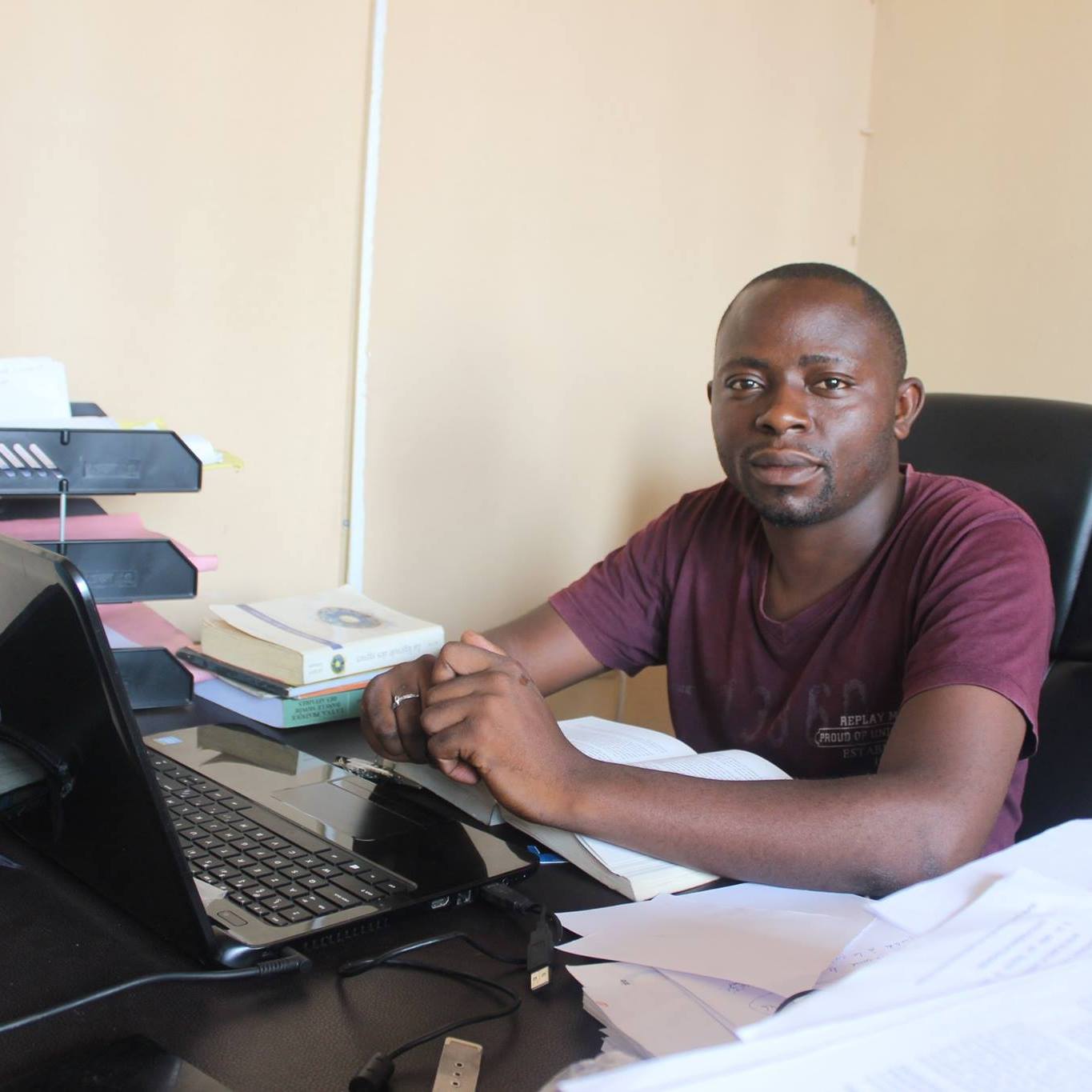
While the vaccination campaign is in full swing in Europe, it is still struggling to get off the ground in many countries due to a lack of available vaccines. Billy Mwangaza, from our partner organisation Étoile du Sud, explains the challenges of the vaccination campaign in the DRC.
What is the current situation (19/8/21) in the DRC with regard to the pandemic?
«The DRC is currently experiencing a third wave of COVID-19, which has mainly affected large cities. The cumulative number of cases since 10 March 2020 is 53,620 confirmed cases. As of 17 August, 1,050 people had died. Those are the official figures. But there is other data that is not readily available, such as the number of people currently hospitalised. However, with a little research, it becomes clear that some hospitals are full to capacity.»
What is the status of the vaccination campaign in the DRC?
«The issue of vaccination remains complicated in the DRC. The vaccine became available on 19 April. It was initially offered to people over 55 and frontline medical staff. But vaccination was suspended on 10 July. Out of a population of over 90 million, only 81,910 people have been vaccinated. Of these, fewer than 5,000 have received their second dose. This represents a vaccination rate of less than 0.11%!»
Why has the vaccination campaign been suspended?
«We do not have any vaccines available. Only part of the first batch of vaccines received through COVAX could be used. This was mainly due to logistical difficulties and widespread reluctance among the population. Some doses expired before they could be administered.»
How can this reluctance on the part of the Congolese population be explained?
«The DRC has already suffered many epidemics. The way in which they have been managed does not make it easy for the population to trust the state. On top of that, the government's communication strategy has not been effective. It remains difficult to find transparent and clear information about the vaccine. In a context where many voices are raised in criticism of the vaccine, this is unforgivable. Some people continue to believe that it is a disease of the rich, from which only the rich can die.
Then we received AstraZeneca vaccines at a time when their reliability was being questioned by many countries, particularly in Europe, where these vaccines originated. This raised a lot of questions. Will people who received their first dose receive their second dose? Will this first dose be effective? Will someone who has received a first dose of AstraZeneca receive the second dose of another vaccine? The first citizen of the republic himself said in an interview that he did not trust the AstraZeneca vaccine and was waiting for another vaccine to be administered.
Finally, some people were given expired vaccines. Some may think that administering expired vaccines only encourages the spread of the virus.
So all of this contributes to fuelling mistrust among the Congolese population.»
Which role role of civil society in the fight against coronavirus?
«We want the government to take charge and implement a real strategy to deal with the pandemic. We want it to take responsibility for the issue of vaccination. This is not an external issue. Because what comes from outside has always tarnished the country's image and confused the government's actions. And we want it to coordinate its communication with social and local leaders.
Since there is no vaccine available, awareness-raising efforts are focused on compliance with preventive measures and prevention. But if a fourth wave arrives, Africa will still be severely affected because it has not had access to the vaccine. We therefore also want to prepare for the arrival of new vaccine doses in order to build herd immunity. We are drawing on examples from other past epidemics, diseases that have always been vaccinated against here, such as measles. Many diseases have disappeared in this way.
Misinformation exacerbates the consequences of the pandemic.»
CHow to adapt our healthcare systems to prevent future epidemics ou at least to mitigate the effects?
«We must strengthen and fund our health systems so that we are ready to distribute the vaccine when it becomes available again to the Congolese population. We need to involve the local community more, particularly those working on the periphery of the health systems, in providing information and raising awareness.
We must avoid repeating our mistakes. For example, with the Ebola virus epidemic, a parallel system was set up alongside the health system, in specific locations, with staff hired specifically for this purpose. It seemed like something very special. It generated fear. Under pressure from social movements, the approach was redefined and everything was reintegrated into the normal health system: in health centres, health areas, etc. Using community relays and involving communities in strategies puts people at the centre of the health system's actions. This brings the population closer and reassures them. This will give us stronger health systems that are able to respond directly to future epidemics.»
What do you think about patents on vaccines?
«We know that Big Pharma, thanks to their patents on vaccines, are making a lot of money. This increases mistrust. We feel like we are just outlets for their products. The lifting of patents could improve public opinion on vaccines and promote the idea that we are dealing with a global problem that we must all tackle together. Because there is no point in vaccinating Europe alone. This is a pandemic. So everyone must have access to the means to combat it.»
Sign the European Citizens' Initiative No Profit on the Pandemic and ask the European Commission to lift patents on coronavirus vaccines.
This interview dates from 19 August. Find out more here are the updated figures.