Israel has been praised worldwide for the speed of its vaccination campaign. But behind this success story lies a very sad reality. «The structural inequality in access to vaccines between Israeli and Palestinian citizens is staggering. The only conclusion is that, in 2021, Israel is still practising a system of apartheid,» said Firas Jaber, from our partner organisation in Palestine, Al Marsad, on the occasion of a report on the Palestinian vaccination campaign.
Two parallel vaccination campaigns
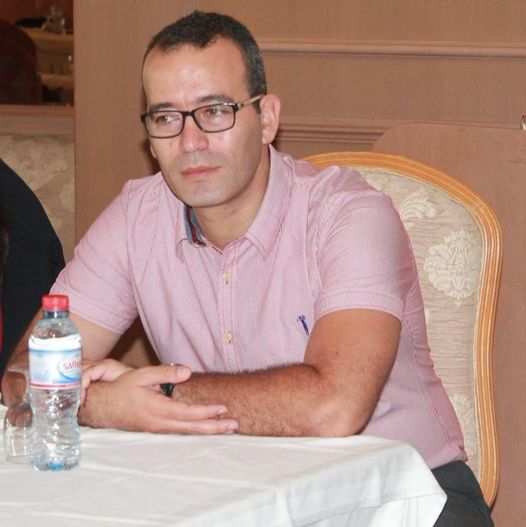
A study by Al Marsad was devoted to the Israeli and Palestinian vaccination campaigns. The figures speak for themselves: two-thirds of the Israeli population have received two doses, «and even more strikingly, more than 30% have already received a third dose, known as a booster», says Firas. «In contrast, the Palestinian vaccination figures are disheartening. In the West Bank, only 23% are fully vaccinated. In Gaza, the figure barely reaches 7%. We are seeing the consequences of this in mortality rates. In Gaza, around ten people die every day from coronavirus. This is undoubtedly due to the low vaccination rate.».
According to the Geneva Convention (1949), Israel is responsible for the purchase and distribution of vaccines in the Occupied Palestinian Territory. Articles 55 and 56 refer to the occupying power’s direct responsibility with regard to public health, with specific emphasis on «epidemics and contagious diseases». Edelstein, the Israeli Minister of Health, has made it clear that this is in no way a duty or a priority for the Israeli government.
The Israeli vaccination programme is intended solely for citizens of Israeli nationality. Consequently, the parallel vaccination programme for the Palestinian population has been a failure. «The residents of illegal Israeli settlements in occupied territory, known as the settlers, have been able to benefit from the Israeli campaign. We therefore have a situation where residents of the same geographical area are affected by two parallel vaccination campaigns. »Someone living 1 km from your home receives the vaccine, can return to work, and feels safe, whilst you are unvaccinated and face health risks every day,” notes Firas.
COVAX versus Pfizer
The Israeli vaccination campaign began in December 2020. This was the result of bilateral negotiations between Israel and Pfizer. Israel paid a high price to be first in line. «In Israel, everyone who has been vaccinated has received the Pfizer vaccine. For the Palestinian population, there are a wider variety of vaccines available: the Russian Sputnik, Moderna, Pfizer, as well as the Chinese vaccine,» says Firas. The Palestinian vaccination campaign was launched a few months later, in February 2021. The first dose in Palestine was administered whilst 40% of the Israeli population had already been fully vaccinated.
The Palestinian vaccination programme has also been hampered by delays in deliveries. The programme was based on the initiative COVAX from the World Health Organisation and donations from other countries. «COVAX was supposed to help the poorest countries and was intended to redress the inequality in the race to secure vaccines. The target was to secure 2 billion COVAX vaccines. But it soon became clear that this target was unrealistic. Coordination with COVAX was not mandatory, and many countries chose to conduct bilateral negotiations in their own interests. This, of course, had an impact on the vaccination campaign in Palestine,» explains Firas. The first COVAX deliveries to Palestine, scheduled for February 2021, had to be postponed by three months. Furthermore, Palestinians received fewer doses than expected.
Despite the Israeli regime’s legal responsibility to provide vaccines to the inhabitants of the occupied territory, the bilateral negotiations conducted by the Palestinian Authority have been hampered for several reasons. The agreement with Pfizer (May 2021) providing for the delivery of 4 million doses was only partially fulfilled. Deliveries were postponed on several occasions, and the agreement with Pfizer lost all credibility when it emerged that the Israeli Ministry of Health and its Palestinian counterpart intended to conclude a vaccine exchange agreement. Israel was going to «offer» the Palestinians surplus Pfizer vaccines, two weeks before their expiry date, in exchange for new vaccines that would form part of the Palestinians’ agreement with Pfizer at a later date.
The death sentence for Palestinians
In addition to the difficulties in obtaining vaccines, the Palestinian vaccination campaign has been systematically sabotaged by Israel in various ways. «Many Palestinians in East Jerusalem neither speak nor read Hebrew. Yet the leaflets and websites providing information on the virus and vaccination were written in Hebrew,» explains Firas. «The Israeli government refused to set up vaccination centres in certain Palestinian neighbourhoods of Jerusalem, such as Kafr’Aqab. The same applied to the provision of equipment to hospitals in East Jerusalem, and the setting up of testing centres in that part of the city was deliberately delayed.»
The situation in Gaza is tragic. The vaccination rate has barely reached 7%. Hospitals are facing severe shortages. «Medical supplies are being held up at Israeli customs. In Gaza, we lack equipment and resources, a direct consequence of Israel’s blockade of this part of the territory,» says Firas. Vital medical supplies are either failing to reach their destination or arriving with huge delays. The cost in human lives is high. This deliberate aspect of the blockade, in the midst of a global pandemic, is particularly cynical. Patients who try to seek the healthcare that is lacking in Gaza in Egypt or the West Bank have little chance of success.
«The current mortality figures in Gaza are high and deeply worrying, due to an extremely low vaccination rate and a lack of medical equipment. As a result, there is a severe shortage of oxygen for Covid patients. Gaza is also densely populated. There are frequent power cuts, and poverty and unemployment figures are sky-high,» says Firas. «And that’s not even mentioning mental health during the pandemic.»
Bombs instead of vaccines
During the Israeli offensive against Gaza last May, six hospitals were (partially) destroyed, as was the largest Covid laboratory. Medical staff lost their lives in the bombardments. The World Health Organisation and a number of humanitarian organisations sounded the alarm and called for medical staff to be spared.
In the West Bank, too, the healthcare sector has been hit hard. The Health Work Committees (HWC), the third-largest provider of healthcare in the West Bank and a partner of Viva Salud, have been the target of a major Israeli offensive. The director, Shatha Odeh was arrested in early July by the Israeli army, barely a month after the organisation’s main office had been sealed off for six months. Amnesty International condemned this attack on «one of the region’s main providers of healthcare» and warned of «catastrophic consequences» for Palestinians seeking medical care in the midst of the pandemic.
On numerous occasions, the UN has called on Israel to fulfil its responsibilities. Israel must allow the free movement of vaccines and must not hold up deliveries at the border with Gaza. The international community has expressed concern, but Israel is nevertheless continuing its vaccination campaign «successfully». The country has not put an end to its bilateral negotiations with multinational companies or its political alliances, and is paying no heed whatsoever to the numerous warnings, statements and concerns directed at it.
Share the vaccine, not the virus! Sign the European Citizens’ Initiative ‘No Profit from the Pandemic’ here and call on the European Commission to ensure that everyone has access to the coronavirus vaccine.