The son of Philippine dictator Ferdinand Marcos has won the country's presidential election. Ferdinand «Bongbong» Marcos, Jr. took an unassailable lead over his closest rival, Leni Robredo, the country's current vice-president.
The return of the deads
During more than 20 years in power, the elderly Marcos plundered the country and committed flagrant human rights violations. Thousands of people were imprisoned, tortured, killed or disappeared under his dictatorship. In 1986, a popular uprising drove Marcos out, but not before he had stripped the country of more than $10 billion and left its economy in tatters.
After the dictator's death in exile in 1989, the Marcos family was able to return to the Philippines and began to make a comeback in politics. They have never acknowledged their wrongdoing or apologised for human rights violations, and have continued to lie about the wealth they plundered. Successive governments have failed to hold the Marcos family accountable for their crimes against the Filipino people.
With the help of social media and an army of trolls, the Marcoses have managed to whitewash the odious legacy of the Marcos dictatorship and even reshape it into a «golden age» for the Philippines. In addition, they have used social media to wage smear campaigns against their opponents, particularly Leni Robredo.
According to some political analysts, many Filipinos supported Marcos because they were increasingly disappointed with the liberal democracy that dominated after Marcos was ousted, which failed to bring about real change in the country. Poverty is still widespread, corruption within the government has worsened, and the gap between rich and poor has widened, with the country having one of the worst income inequality indices in the world. Marcos capitalised on people's feelings of being victims of the dominant system by creating a narrative that his family is also victims of a conspiracy by the 'elite».
Progressive social movements supported Robredo's candidacy in order to prevent the Marcoses from returning to power. Beyond that, Robredo's socio-economic plans are in line with their advocacy on various issues such as promoting the right to health, defending human and environmental rights, genuine agrarian reform, ending contract labour, and a rights-based response to pandemics.
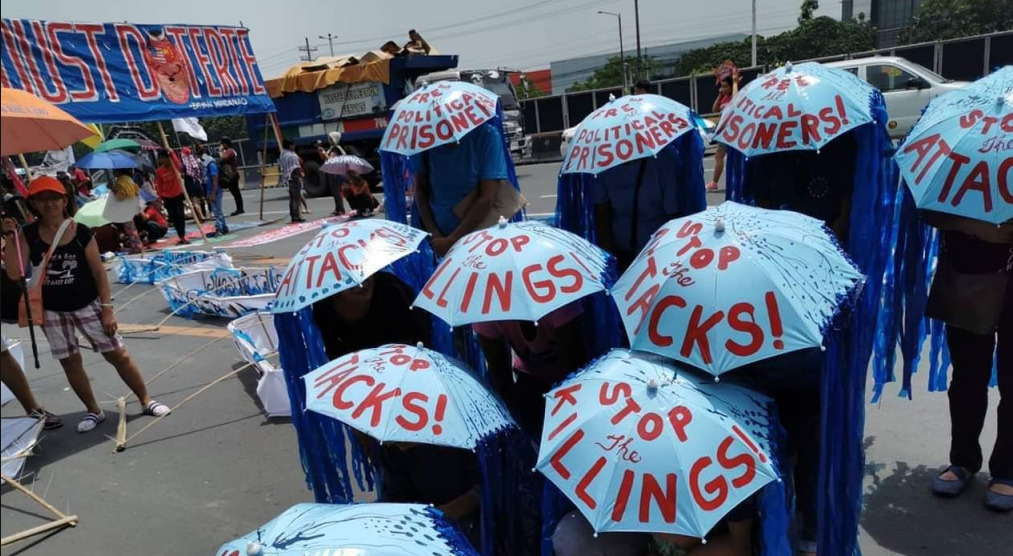
At the time of writing, protests against Marcos' imminent victory are intensifying, with various groups denouncing alleged fraud and irregularities that marred the electoral process.
The right to health under threat in the Philippines under the presidency of Marcos
What are the prospects for defending the right to health under Marcos« presidency? The Marcoses» return to power presents both challenges and opportunities for social movements. During the election campaign, Bongbong Marcos presented no political programme, avoiding presidential debates and sticking to an ambiguous message of unity. He promised to continue President Duterte's plans and programmes. He pledged to spare Duterte from having to return to the country. Ferdinand "Bongbong" Marcos, Jr. took an unassailable lead over his closest rival, Leni Robredo, the country's current vice-president. and the imprisonment and murder of human rights and environmental defenders.
His critics fear that Mr Marcos will intensify the culture of impunity established by President Duterte, further reducing the democratic space in which social movements can act and hold the government accountable for its actions.
What could be the potential impacts of Marcos' presidency on the work of Viva Salud's partners? Marcos will inherit a chronically ill public health system. Under his presidency, Duterte prioritised the police and the military at the expense of health, even during the COVID-19 pandemic. Duterte took no steps to strengthen the public health system and make health services accessible to the people. Instead, he relied on the neoliberal model of privatising healthcare through social health insurance. Social movements should not expect Marcos' health programme to be any different from Duterte's. They can even assume that Marcos will push the public health system even further into collapse, as when Duterte leaves office, the country's debt will reach a record high of 13.42 trillion pesos (€243.5 billion).
The struggle for social justice in a reduced democratic space
The campaign for the right to health led by Viva Salud's partners in the Philippines is now more crucial than ever. A broad mass movement emerged during the election campaign, supporting Robredo's candidacy and rejecting Marcos's attempt to return to power. People from different sectors of society, especially young people, took the initiative to fight against historical distortions, expose the crimes and wealth of the Marcoses, and demand justice and accountability.
This presents a great opportunity for social movements to organise and mobilise these people to defend the right to health. It is crucial to remember that the election is only part of a broader struggle for meaningful change. The Philippines is facing a health and economic crisis due to the impacts of the COVID-19 pandemic. Social movements can rally the population to assert that people's health is first and foremost the responsibility of the state and demand that the government ensure that the public health system can effectively provide health services to the population, especially during a health crisis such as the COVID-19 pandemic.
Political repression is likely to intensify under Marcos's presidency. Social movements, however, are prepared to wage a determined struggle to defend what remains of the democratic space under Duterte, in order to continue fighting for the people's right to health and empower them to bring about social change.