Healthcare in the Philippines suffers from a chronic illness. But those who speak out about it are victims of repression. The agents·e·s Private healthcare workers and, even more so, public service workers are exposed to real situations of violence.
Healthcare system for the chronically ill
The Philippine healthcare system is chronically ill. The national healthcare budget is far too low. The government spends £35 per person per year on healthcare. In other Southeast Asian countries, it is double that amount. As a result, the majority of the population has little or no access to quality healthcare.
The country has only 1.2 hospital beds per 1,000 inhabitants. This figure is comparable to that of the world's poorest countries. In rural areas, half of Filipinos·s must travel more than 30 minutes to reach a health centre. Barely 13 per cent of health personnel and 40 per cent of hospitals are located in rural areas.
Finally, the ratio of healthcare workers to the population remains woefully low throughout the country: there is one doctor for every 27,236 people, one nurse for every 4,852 people, one midwife for every 5,111 people and one dentist for every 55,293 people. Low wages, lack of benefits and poor working conditions are forcing many Filipino healthcare workers to seek work abroad.
Professionals·the·health issues in the spotlight
Many Filipino health workers are speaking out about the deplorable state of healthcare in the country. They are reminding the government of its failings and, above all, its duty to protect and promote the population's right to health. They are launching campaigns, putting pressure on the government and forming alliances with other organisations to improve public health. Because of their criticism, many health workers are facing state repression.
There is a growing wave of violence against progressive doctors and health workers. They are victims of intimidation, illegal arrests and sometimes even murder. This criminalisation further deprives the population of essential health services.
The deaths of Dr Sancelan and Zara Alvarez
As of December 2021, 427 human rights defenders and health workers have been killed in the Philippines. Dr Mary Rose Sancelan and Zara Alvarez, who both dedicated their lives to serving vulnerable communities on the island of Negros, are among the victims. They played an important role in the fight for the right to health in the Philippines.
Dr Mary Rose Sancelan was the municipal health officer in the city of Guihulngan, in the Negros Oriental region. She headed the agency responsible for curbing the spread of COVID-19 in the city. On 15 December 2020, she and her husband were shot dead by two armed men as they were returning home. Dr Sancelan was the only doctor in this city of more than 100,000 inhabitants, most of whom are small farmers and fishermen.
Zara Alvarez was a human rights activist known for her unwavering commitment to the struggle of farmers, agricultural workers and other marginalised groups in her native province of Negros. Zara also worked as a policy officer for the Negros Island Health Programme (NIHIP). As a result, she became a target of state repression. She was labelled a terrorist and received constant death threats.
Nevertheless, Zara continued to fight for people's right to health. In August 2020, Zara was shot dead by unknown assailants. Her name was added to the long list of activists and human rights defenders killed in the Philippines. Zara's death plunged her colleagues at NIHIP into a state of constant fear. This has seriously affected their mental health. Some of her colleagues at NIHIP have abandoned their posts and killed themselves for fear of being the next targets.
#NotATarget
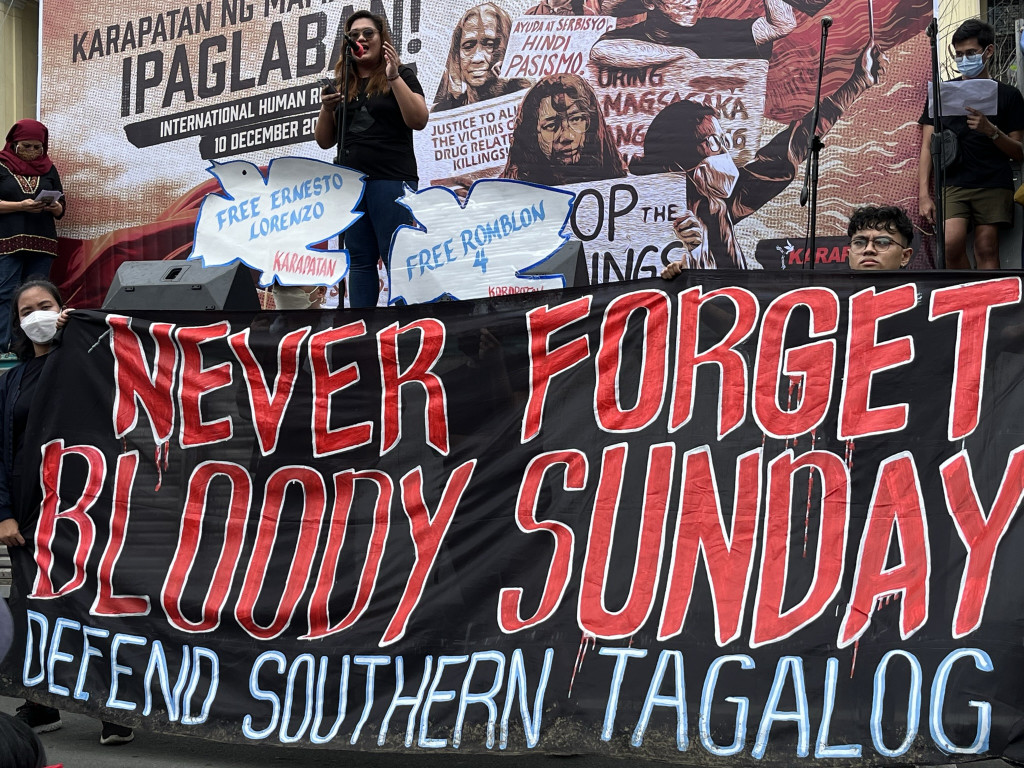
Health workers and activists should never be the target of violence or repression. They play a crucial role in the fight for the right to health. Fortunately, our partners Karapatan, Gabriela, IBON and the Health and Development Council They are not giving up the fight. They ensure that vulnerable communities have access to healthcare, identify the most pressing issues and raise awareness of the injustices suffered by the population. In this way, they are working together to improve access to healthcare.
They are also making their voices heard on the international stage. From the People's Health Movement to the United Nations. Together with international partners such as Viva Salud, they are defending the situation in the Philippines to foreign politicians and activists. The aim is to hold the Philippine government to account and demand an investigation into the multiple human rights violations in the country.
You too can do your part! In December, we will make our voices heard by Development Minister Caroline Gennez. Would you also like to take a photo with a message of solidarity for Filipino health workers and activists? International solidarity starts now!
PODCAST: BEING A HEALTH ACTIVIST IN THE PHILIPPINES
In September, Viva Salud launched the #NotATarget campaign. On Spotify, a podcast was launched under the same name, where you can hear more testimonials from Kat, Tinay, and other health activists.