Since 20 October, 188,000 people have been displaced by fighting between the M23 rebel group and the Congolese army in the Democratic Republic of Congo (DRC). The violence is having a major impact on health workers and the provision of healthcare in the country. But health workers are speaking out to demand better working conditions.
Healthcare provision under threat
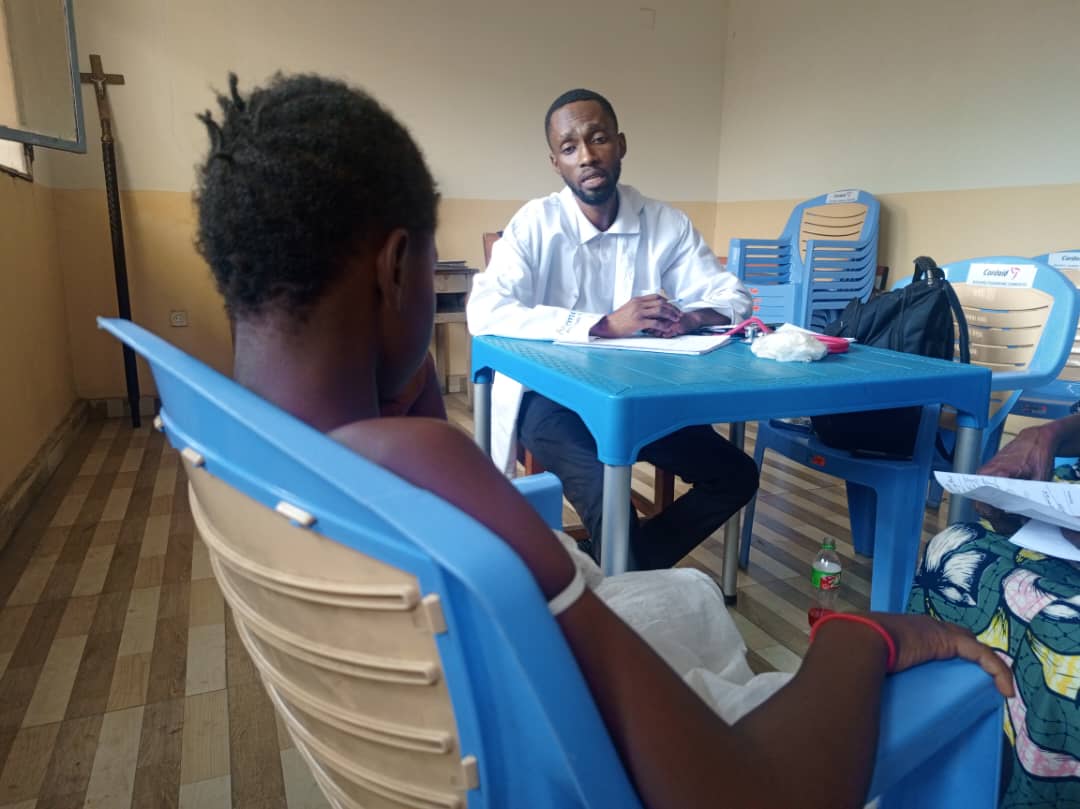
In 2021, we recorded 127 incidents of violence or obstruction against health workers in the DRC. This is a sharp increase from the 81 incidents reported in 2020. These incidents include theft of medical equipment, arrests and even abductions of health workers. These practices often resulted in physical injury and sometimes even death. Nearly 90% of the incidents took place in the north-east and east of the country, near the border with neighbouring Uganda.
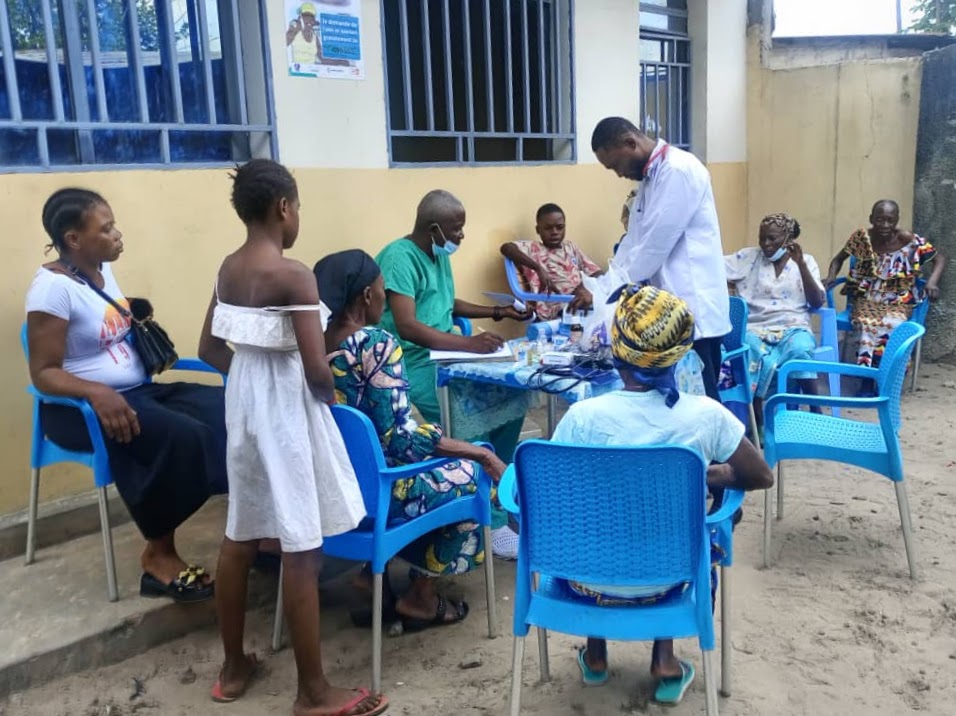
Violence has a significant impact on health services in the DRC. In Ituri province, for example, several health centres have had to close their doors and evacuate their staff to the provincial capital. Thousands of residents thus found themselves without access to healthcare. In Djugu, rebels stormed a hospital and set it on fire. As a result, new medical equipment worth more than US$1 million was lost. The rebels were eventually driven out, but the hospital's capacity remains limited due to the significant loss of equipment. In June 2021, another hospital, this time in Boga, was completely destroyed. Overnight, 80,000 people were left without access to healthcare.
Pregnant women and young children are the main victims of limited access to healthcare in the DRC.. The mortality rate for children under five in the DRC is one of the highest in the world. Maternal mortality in the country also remains very high. In addition, the DRC was also affected by a new measles epidemic in 2021. Several factors have hampered national immunisation programmes, mainly as a result of inadequately equipped health facilities and the inability of immunisation teams to reach certain communities due to ongoing insecurity. In the north and east of the country, young children are still not receiving all their childhood vaccinations. There are fears that diseases such as polio and diphtheria could make a comeback, leading to an increase in child deaths.
Strike for better working conditions
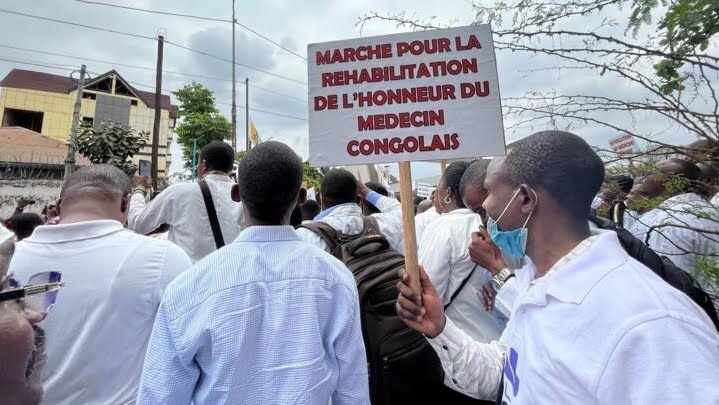
Healthcare workers in the DRC are not only victims of violence, but also work in poor general conditions. On 21 September, doctors and other medical staff took to the streets in Kinshasa to demand better working conditions. Doctors in public hospitals have been on strike for months. They accuse the government of failing to keep its promises, particularly with regard to salary increases, reducing workloads and guaranteeing pensions. The majority of doctors are joining the strike, but they are continuing to provide minimum services.
After months of strikes, doctors from the National Union of Doctors (SYNAMED) and the Free Union of Doctors (SYLMED) decided that the strike was not yielding enough results. They therefore initiated a new peaceful demonstration on Wednesday 21 September.
As the doctors moved from Avenue des Huileries towards the boulevard, a violent confrontation took place with the Kinshasa police, despite the peaceful nature of the demonstration, which had been authorised. Some demonstrators were beaten, kicked, mistreated and injured. Others were arrested and then released.
Campaign in solidarity with striking healthcare workers
Doctors are outraged by the police violence. They want to continue the strike through the «hospitals without doctors» movement. Even though the strike has a significant impact on the quality of care in public hospitals. Under normal circumstances, Access to decent healthcare is already compromised for 90% of the population.. It is therefore essential that the demands of the striking doctors are met.
With the unions involved in the strike, Southern Star and Si Jeunesse Savait, our two Congolese partners, launched the online solidarity campaign « Mosalayamongasanténabiso »(«The work of health workers is our health» in Lingala). Through this campaign, they raised public awareness of the challenges faced by health workers in the DRC and strengthened support for their strike. It remains to be seen whether the campaign will be successful in the long term, but the organisations have already managed to elicit a response from the DRC's Minister of Health. The latter stated on Twitter that he would work towards a solution. Health workers continue to press for better working conditions in the public health sector so that the universal right to health for Congolese people is guaranteed.