Report, testimonial - This article appeared in DeWereld Morgen, 3 April 2023
Along with ten other sportsmen and women, Jorn Verschuere travelled to Palestine to take part in the Bethlehem Marathon. Together, they learned a great deal about the struggle for national liberation of the Palestinian state. Testimonial.
Spreading the love
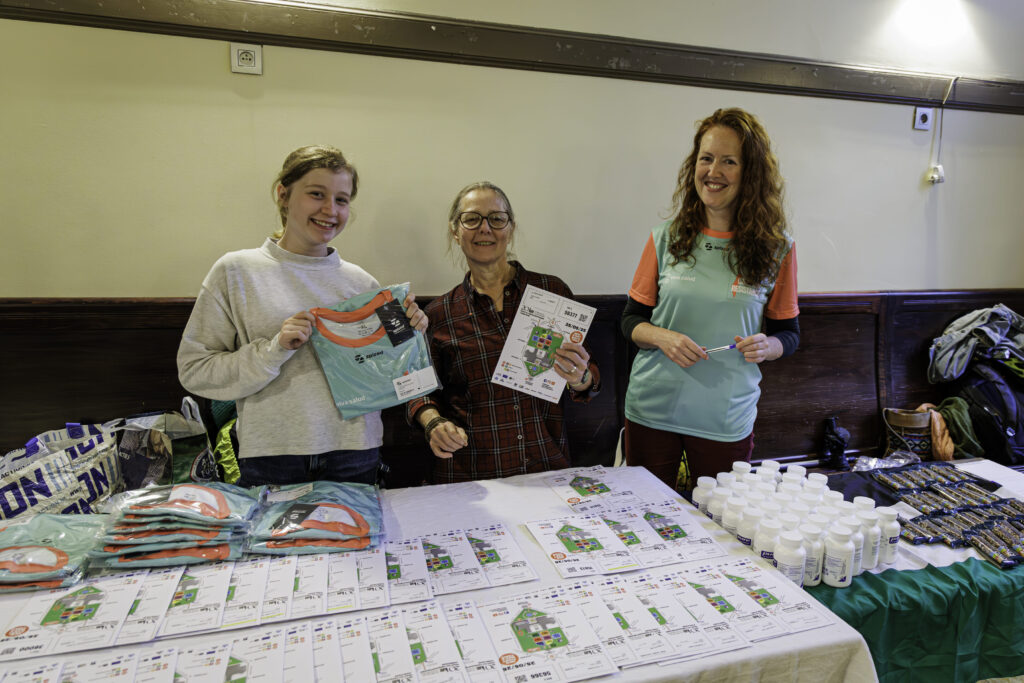
«11 Belgians and I took part in the Palestine Marathon through Viva Salud. During our stay, we also discovered the different aspects of the Israeli occupation in Palestine.
Despite the festive atmosphere during the marathon, we couldn't escape the confrontation with the growing tensions in the region. Could the third Intifada be just around the corner? That's the question we came home with.

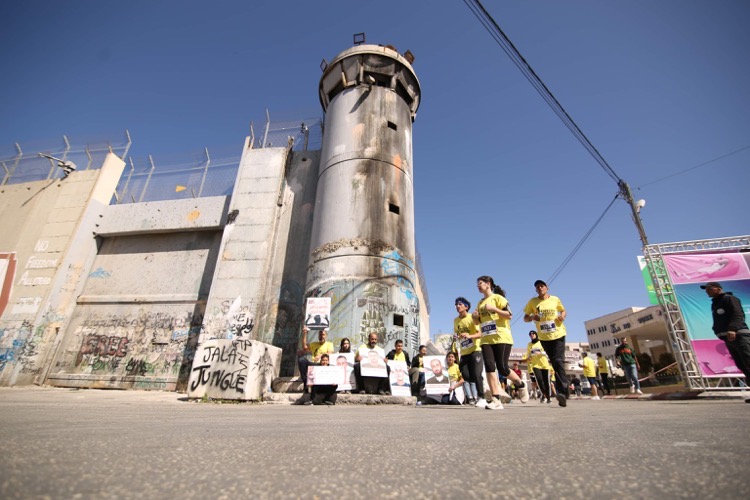
There was a relaxed and festive atmosphere in Bethlehem on Friday 10 March 2023. Around ten thousand participants from 90 different countries took part in the Freedom of Movement Palestine Marathon.
Through this marathon, the organisation hopes to draw attention to the restrictions on the Palestinians« freedom of movement and to the Israeli occupation of which they are still victims. For example, they explain on their website: »All marathon runners can be confronted with the famous wall, as a result of the physical and emotional fatigue associated with a 42-kilometre race. In the State of Palestine, if you want to run you are literally up against a wall.»
The route takes participants through the centre of Bethlehem, along the apartheid wall and through the refugee camp·s d'Aïda - the place where the most tear gas is used in the world, among other things.
Through this marathon, the organisation hopes to draw attention to the restrictions on the Palestinians' freedom of movement and to the Israeli occupation to which they continue to be subjected. For example, they explain on their website: «All marathon runners can be confronted with the famous wall, as a result of the physical and emotional fatigue associated with a 42-kilometre race. In the State of Palestine, if you want to run you literally come up against a wall».»
I can only confirm that you come up against several walls in Palestine - especially after covering 42 kilometres on a hilly route. But I didn't just encounter the wall figuratively.

Travelling in Palestine, means running into checkpoints from time to time, targeting soldiers and witnessing constant humiliation. This is the daily reality facing every Palestinian. It's like undergoing the physical and emotional ordeal of a marathon runner, over and over again, day after day.
There was a stark contrast between the festivities of the marathon on the one hand and the harsh reality that we had been confronted with in Palestine over the previous few days. The continuing development of the Israeli occupation and its apartheid regime is approaching its boiling point.
The the desperation of the situation, the ever more frequent and intense deadly Israeli raids, the total loss of legitimacy and control by the Palestinian Authority... It seems that escalation is inevitable, which prompts us to ask the question: «Have we just run a marathon with the Third Intifada at our backs?«
The second Nakba in Oslo
Whatever the answer to this question, it cannot be understood without looking back at the past. two crucial years: 1948 and 1995. The year 1948 is known to most people as the year of Israel's independence and the creation of the State.

For Palestinians, that same year is known as the Nakba, or «catastrophe». It refers to the uprooting of Palestinian society, the displacement of more than 700,000 Palestinians, the destruction of 531 Palestinian villages and the start of the Israeli occupation of Palestine.
After more than 70 years, hundreds of thousands of Palestinians are still living in refugee camps. Despite the passage of time, they still consider it a temporary place of residence.
Those who visit the Aïda refugee camp will see an enormous «Key of Return» placed on top of the camp's access gate, symbolising the key that Palestinians have kept to their former home. and embodies the right to return that they are still denied.
In the 1990s, the Oslo Accords promised an end to the occupation and the beginning of Palestinian autonomy. But thirty years on, the Palestinians see the agreements as a capitulation to Israel and a second Nakba.
These agreements have divided the West Bank into three zones :
- The A zone (18%) is governed by the Palestinian Authority (PA); ;
- Zone B (20 %) under civilian control of the PA but under Israeli military control; ;
- Zone C (62 %) is entirely administered by Israel.
The territory was reduced to a patchwork of enclaves, military checkpoints and finally the construction of the apartheid wall, which has been declared illegal by the International Criminal Court.

Strategic locations such as industrial zones, water resources and raw material resources were taken over in zone C and thus passed into the hands of the Israeli state. During the construction of the apartheid wall, the agreed boundaries were also often flouted in order to gain total control over these areas.
Fragmentation of the territory and military checkpoints also mean total dependence on Israel for Palestinians' freedom of movement, As a result, Palestinian villages and towns are hermetically sealed off.
In addition, illegal Israeli settlements continue to proliferate in the West Bank, a situation that has become increasingly serious.i involves the ongoing displacement of Palestinians, the construction of the apartheid wall and a growing number of military checkpoints.
Despite the fact that the agreements are often seen as a first step towards the Palestinians« right to self-determination, it was Oslo that made the so-called "peace settlement" impossible.« of two states »and which favoured the development of the occupation. « Because how can you have a state without territorial unity? »adds our guide cynically.
The impatience of Palestinian Generation Z
While the Oslo Accords have remained a dead letter, unease and impatience continue to grow among the Palestinian population, particularly among young people. The despair caused by the occupation, the continual humiliations - that's how our guide in Hebron was literally spat on by young Israelis - and the absence of any prospect for the future push them even further into despair.
What's more, one of our guides also spoke about the emerging phenomenon of « survivor's guilt syndrome »Among young Palestinians. Almost every Palestinian has a family member, friend or acquaintance who has been killed by the occupation.
Relatives often feel guilty because they survived the occupation but did nothing about it. This is also reflected from a generational point of view, with the post-Oslo generation accusing the older generation of a certain kind of passivity towards the occupation.
As a result, a growing number of young people see armed resistance as the only way out. One of these new armed resistance movements is the Lion's Den, which appeared in the summer of 2022.
It organises attacks on Israeli military checkpoints and illegal settlements. Little is known about the background to the movement, except that they operate independently of any political party or faction and are united in their (armed) resistance to the Israeli occupation of Palestine.
22 February, the Israeli army organised a raid in the historic centre of the city of Nablus to eliminate some of the leaders of the Lions' Den. The raid killed 11 Palestinians, injured hundreds and completely destroyed homes.
Although the town is zoned A, the Israeli army was not prevented by Palestinian security forces from entering the town, which contributes to the population's further disillusionment with the Palestinian Authority1 .
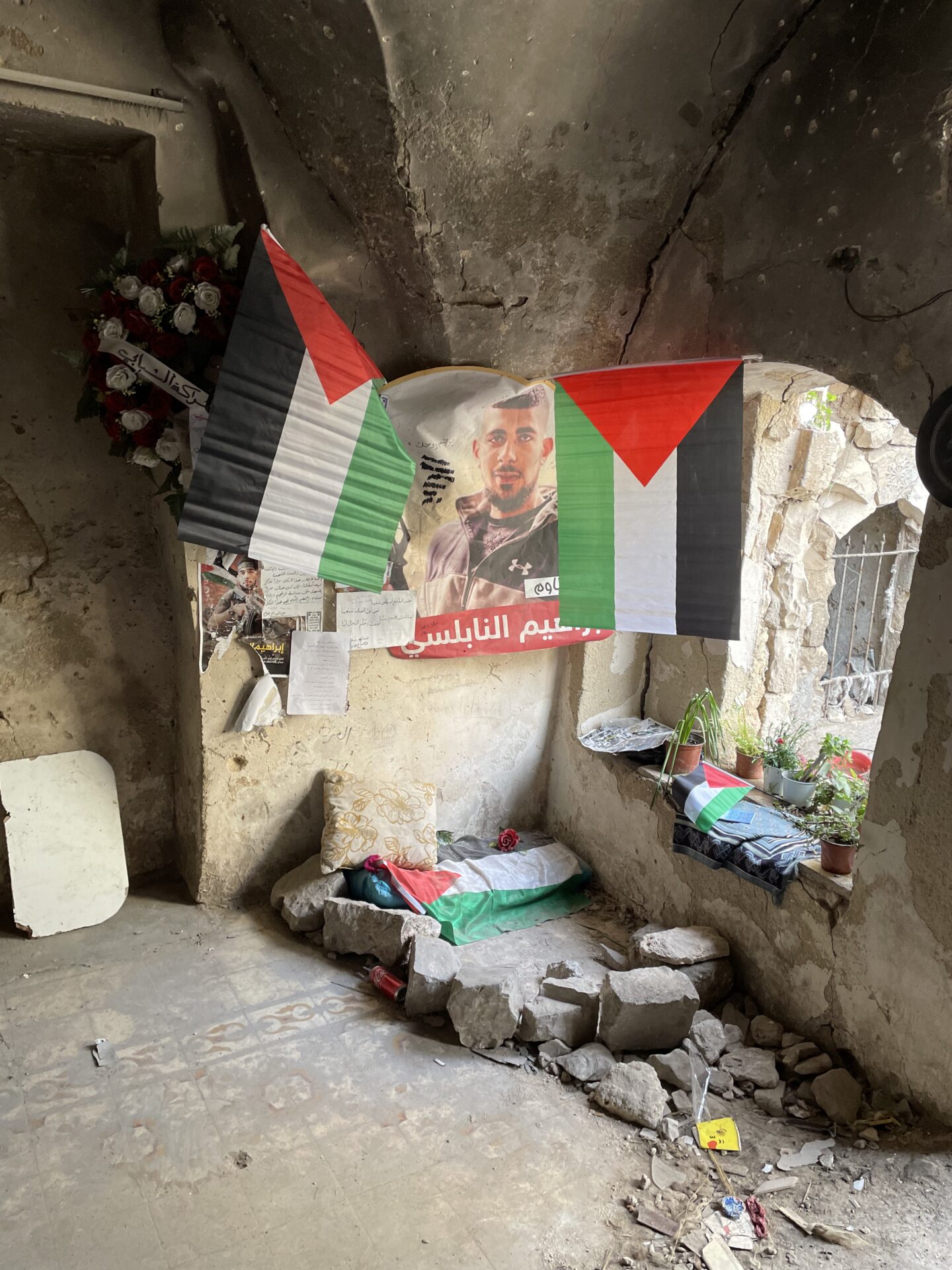
For the residents of Nablus, and by extension for many Palestinians, members of the Lion's Den are heroes and die martyrs. For many, they represent a new source of hope in the fight against Israel's apartheid regime.
This is evidenced by the many posters heroically depicting the martyrs in the towns, the battle sites transformed into places of pilgrimage and the visible carrying of weapons by members in the town centre. The events in Nablus were not isolated, nor was the ascent of the Lion's Den.

This must be seen in the context of a growing spiral of confrontation and violence. With 150 Palestinian victims, l‘he year 2022 has already seen record number of murders by the Israeli army of occupation or settlers' self-defence groups, and with 80 victims after the first two months of this year, In 2023, it looks like the figure will be exceeded. You have to go back to the second intifada, in the early 2000s, to see so many Palestinian victims.
Since the installation of Netanyahu's new far-right government at the end of 2022, the apartheid regime has no longer been covered up or swept under the carpet, but openly affirmed. In fact, they have already stated that in the fight against the Lion's Den, they will not hesitate to use collective punishment and their families.
The Lions' Den responded to the raid on Nablus by killing two Israeli settlers in the Palestinian town of Huwara, a few kilometres south of Nablus. Subsequently dozens of Israeli settlers invaded the village, burning dozens of Palestinian homes and cars and killing one.
What we have here is a veritable collective punishment by a militia that took place under the approving gaze of the Israeli occupation army and was applauded by Israeli Finance Minister Bezalel Smotrich with these words: «I think the whole village of Huwara should be wiped off the map.
During our stay in Palestine, an Israeli raid took place in the Jenin refugee camp in the north of the country. Six people were killed, including the perpetrator who had killed settlers in Huwara. Also in Jenin, the Israeli army carried out a three-pronged attack: the entire city was reduced to a battlefield, the collateral damage were part of the collective punishment, and even the ambulances were caught in enemy fire.
That evening, in Ramallah (north of Jerusalem), we witnessed a spontaneous demonstration of solidarity with the victims, supported by the war songs of the Intifada echoing from loudspeakers in the streets. The next day, a general strike took place in Palestine, as a collective sign of mourning and solidarity.
Is a third Intifada imminent?
Will there be a third Intifada? This is a question that has come up several times in conversations with our guides and partners. Of course, none of them can predict it like that.
But all agreed that the growing escalation is fertile ground. The continuing occupation and relentless despair are creating an increasingly unstable situation in which the Palestinians see no other way out than armed resistance.
The The openly radical ethno-religious discourse of the new Netanyahu administration and the raids that accompany it only serve to reinforce intolerance in this respect (listen to our #NotATarget podcast on the subject). The despair is all the greater because, unlike the previous Intifada, the Palestinian Authority has lost all legitimacy and there is no longer any figurehead - such as the late Yasser Arafat - who can speak on behalf of the Palestinian people, let alone the international community. empowering an underground, fragmented resistance movement.
People are anxiously awaiting Ramadan, which this year falls at the same time as the Jewish festival of Pesach. For Palestinians, Ramadan often goes hand in hand with an increase in provocation and repression by the Israeli authorities and settlers.
The trigger for the previous Intifada was the provocative visit by Ariel Sharon, then leader of the Israeli opposition, to the Temple Mount and the sacred Al-Aqsa Mosque in East Jerusalem. The May 2021 crisis was also triggered by the storming of the same mosque by Israeli security forces.. For many Palestinians, the question is not whether there will be such a provocation this year, but what it will lead to.
Note:
1 One of the provisions of the Oslo Accords was that the Palestinian government was not allowed to call itself a «government» because, according to Israel, this implied recognition of a state. Hence the somewhat bizarre name of Palestinian Authority (nvdr).