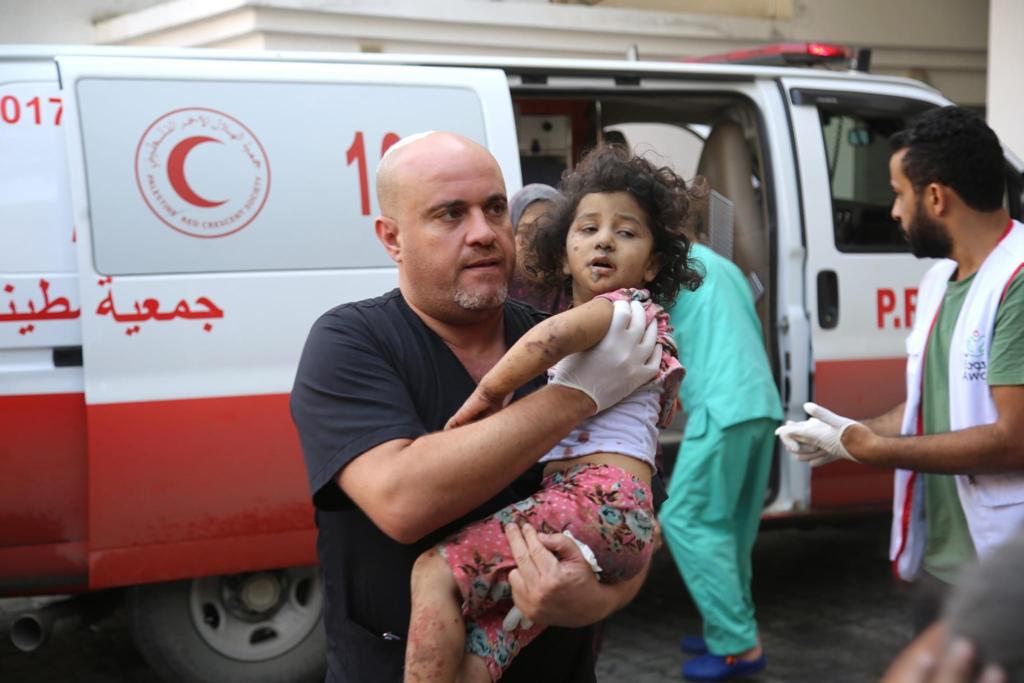
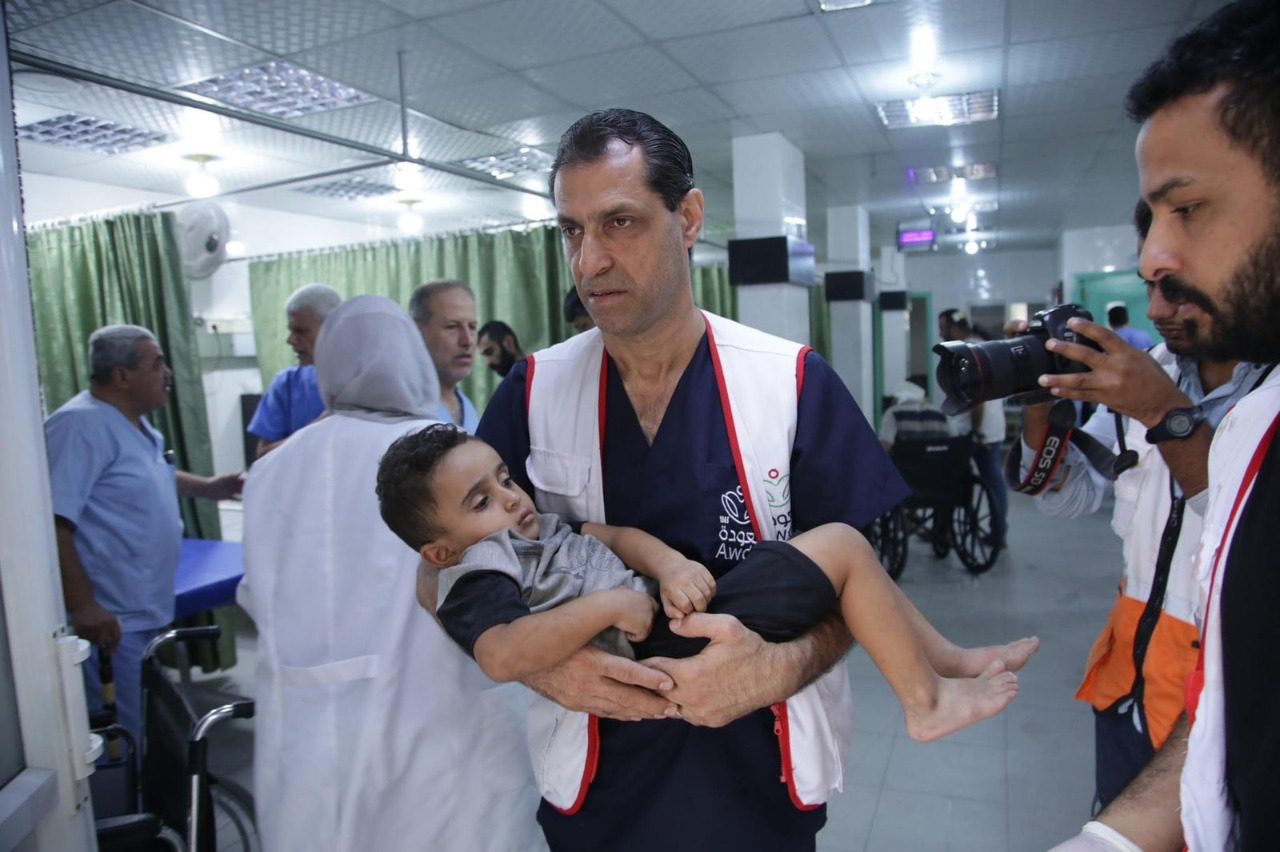
30,000 dead, including 25,000 women and children. At the end of February, at the time of writing, this is the assessment given by... the White House of the massacres carried out by the Israeli army in Palestine since 8 October. We met Mohammed Salha, the director of a hospital in the Gaza Strip, to put into words the daily horror experienced by millions of Palestinians.
This interview was conducted on 23 February by Fanny Polet, Director of Viva Salud, in collaboration with In solidarity and was published in the Spring 2024.
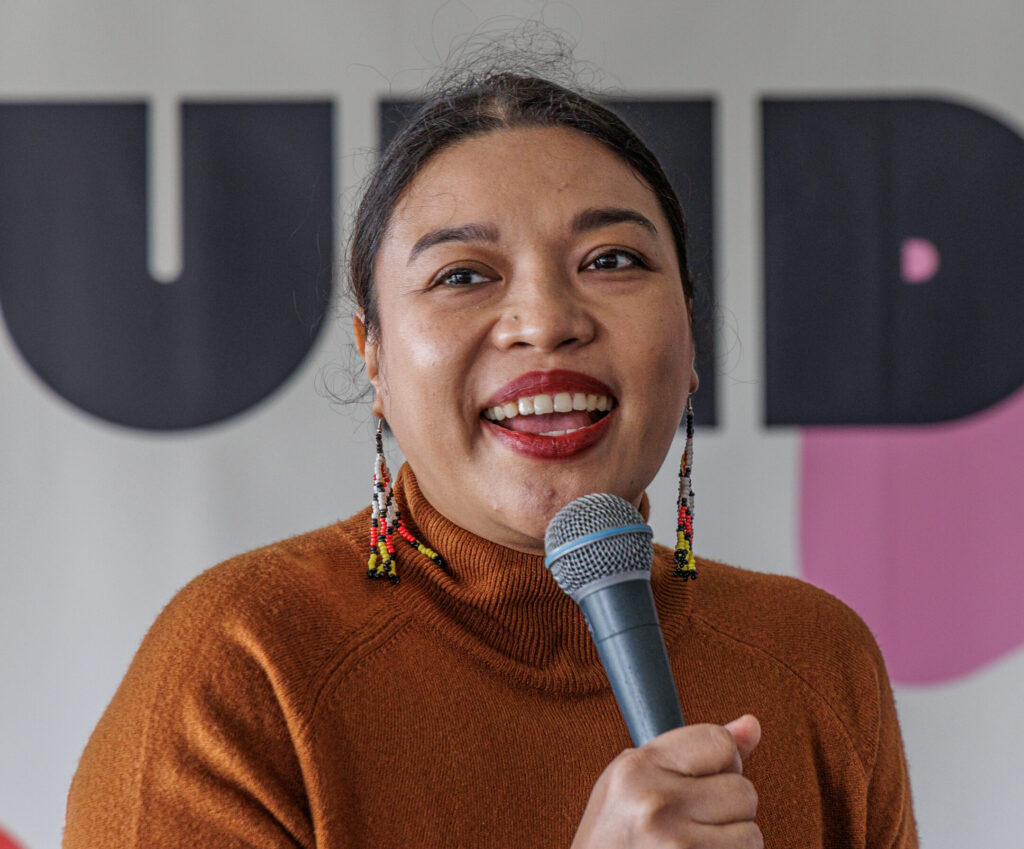
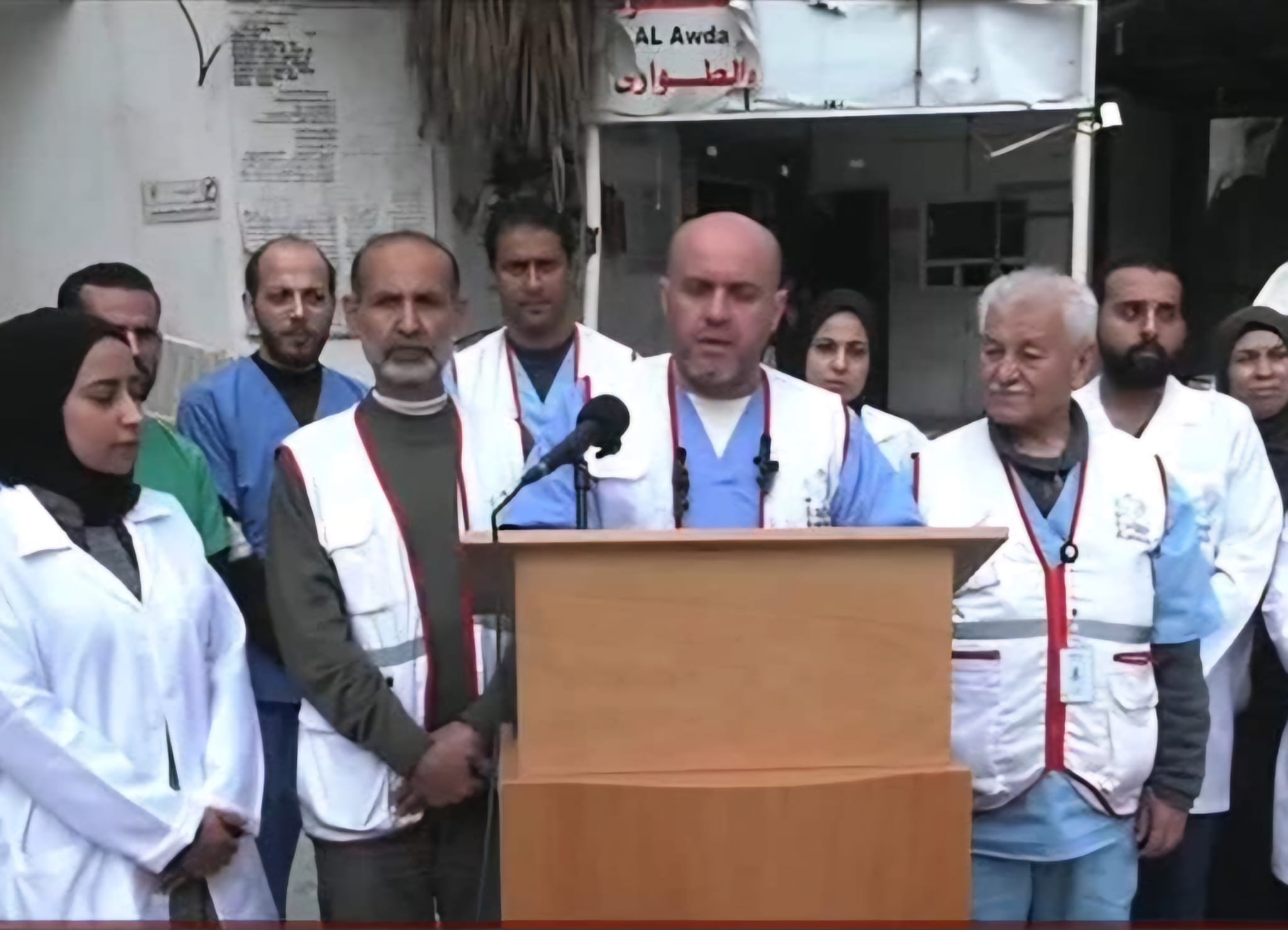
Mohammed Salha is the acting director of the’AWDA (see box below) in Jabalia, in the north of the Gaza Strip. Why «acting»? Because, like many other health professionals, the director, Dr Ahmed Muhanna, was arrested by the Israeli army for no reason on 17 December. Here we meet a father who, despite the horror, remains hopeful.
« I first became aware of AWDA at the age of 13 when I attended the Jabalia community centre. At 18, I became a youth group leader; at 26, I became a volunteer and then a project coordinator. I worked for emergency services for a few years and now I'm one of its managers. », says Mohammed Salha from the Gaza Strip, where he stays to help those in need.
What happened on 7 October in AWDA hospitals and health centres?
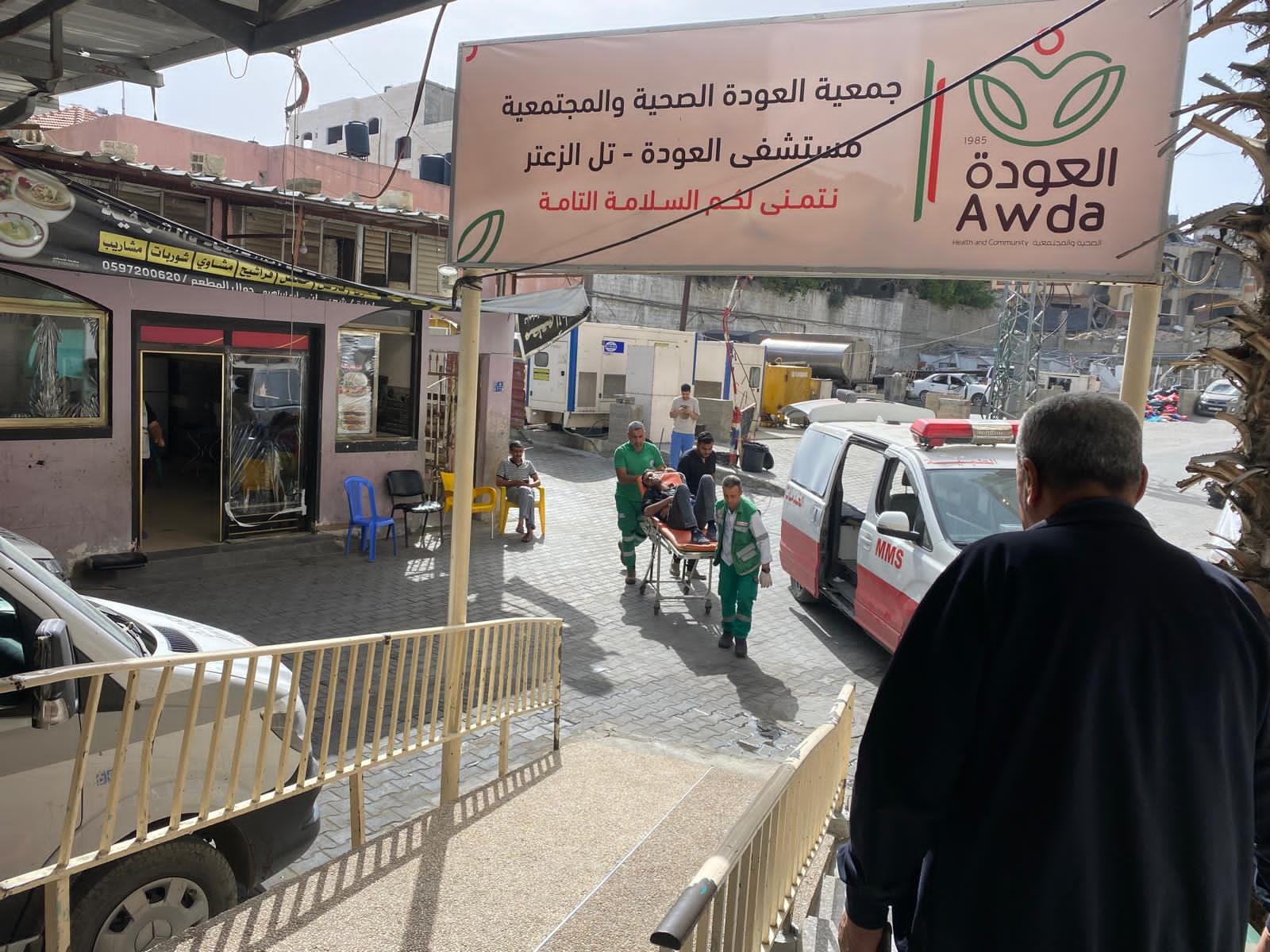
Mohammed Salha. That day, the third scenario of AWDA's emergency plan was triggered. It called for Israel to enter Gaza and wipe it out. All the medical teams then had to go and work in the hospital or centre nearest to their homes. As I live in the north, I went to the hospital in Jabalia. Our two hospitals have still been in operation since 7 October and, of the six health centres that AWDA has, four are no longer able to function. As well as health care, the centres also offer services in the shelters close to them: these are mainly psycho-social services for our completely traumatised population.
Were staff warned of the bombings by the Israeli army?
Mohammed Salha. On 13 October, the Israeli army asked Dr Ahmad to evacuate the hospital. We were working at full capacity, especially for pregnant women, and we couldn't leave them. It was a hospital! The internal decision was made: we would not abandon our post. On 21 November, the third and fourth floors were bombed. Four people were killed: two doctors working for the NGO Médecins sans Frontières (MSF), one for AWDA and one who was accompanying a patient. We were bombed twice more after that: on 29 January, when half the beds were destroyed, and on 31 January, when the top floor was targeted because that is where the water supply and solar energy system are located.
In early December, theʼhospital was besieged by theʼarmy ofʼIsrael...
Mohammed Salha. The hospital was surrounded by tanks and snipers. They were less than 50 metres away. The siege lasted 18 days, it was really horrible. The army bombed our water tanks. We ate one meal of rice a day. There were 260 of us: staff, patients and three families of neighbours. We couldn't stand up because we risked being shot. We had to crawl when we had to go near the windows.
We had to perform three amputations because of the presence of bacteria. Our pharmacy, 40 metres away, was too far to supply us with medicines. We had no food.
The hospital was surrounded by tanks and snipers. The army was bombing our water tanks.
Mohammed Salha
On 17 December, the Israeli army entered the hospital. They took 20 people, including Dr Ahmad, for questioning. The next day, the soldiers and the 20 people returned at around 10am. They asked the people, aged between 15 and 65, to undress and keep only their underwear on. They tied their hands behind their backs and left them like that in the December cold all day, interrogating them one after the other. At the end of the day, they told 12 members of the hospitalʼs team to go and eat something, to go and change because they had to follow them. Dr Ahmad was one of them. He came up to me and told me that he had been arrested.
The only news we have received since then is from the eight people who have been released in the meantime. The Red Crescent (the Muslim equivalent of the Red Cross) has no news. AWDA management is working intensively to secure their release, but we know nothing...
Lʼhe Israeli army claims that there are tunnels under hospitals or that Hamas uses «human shields» in hospitals. What did it say in the case of AWDA?
Mohammed Salha. Israel tells everyone that Hamas hides in hospitals. When they questioned me on the day they arrested my colleagues, the soldiers mainly wanted to know whether we had taken in people who weren't patients. That's not the case, we don't receive anyone else. We mainly provide maternity services.
My colleagues were arrested because they were particularly important members of the team: the director, surgeons and the ambulance driver. They wanted to stop the hospital from working. This is a war on healthcare, not terrorism. More than 120 health institutions have been destroyed and 55 primary health centres have been affected (between 7 October and the end of February, editor's note).
How did you continue to work?
Mohammed Salha. I'm in communication with Nuseirat headquarters. We are scattered all over the Gaza Strip. Nuseirat hospital is the only hospital in the centre that still offers maternity services. There are around 50 deliveries a day, and more than 300 women use our obstetric services. Women have been killed on their way to our hospitals to give birth.
A woman went to hospital to give birth. She was accompanied by her 16-year-old brother-in-law and her mother-in-law. The mother-in-law was killed in the street outside our house. When we came out at the end of the siege, still surrounded by soldiers, the young boy saw his mother's body being lifted by a digger.
Another was shot by a sniper just outside the hospital during the siege. It was impossible for us to go and help her. I can still hear her screaming. She died of her wounds.
Do you still live with your family?
Mohammed Salha. My family has been in Rafah since 23 November. I have five children: two girls and three boys. My eldest daughter is studying engineering. Well, not any more, because her university was destroyed. The hardest time was in December when three of them were celebrating their 15th, 13th and 9th birthdays...
I haven't seen them for over three months. I receive news when communications are not cut off. As AWDA has a centre in Rafah, I can send them money regularly. Food sometimes costs 10 times what it used to. Here, we no longer have any flour, so we eat animal feed.
What are your days like?
Mohammed Salha. We divide the day in two: 12 hours of work and 12 hours of rest. But for the first three months, it was impossible to rest. We slept for 2-3 hours on chairs or on the floor. There were a lot of wounded, a lot of them arriving every day. We have managed to treat 44,000 people since 7 October...
After the siege in December, fewer people were injured. Our 12-hour rest periods became real rest periods.
How do you see AWDA's work after the war?
Mohammed Salha. We have a lot to think about. First of all, we need to rebuild our buildings. Above all, we'll need places to serve the population. They will be coming back to our community centres and they will have a lot of needs. Maternity services were also destroyed in Gaza, so we'll have a lot to do there. We will also have to offer mental health support to the whole population. People are living in shelters, especially in the north where everything has been destroyed. We need to create a dynamic with these shelters. We need to rethink our community activities and work with other partners. We also need to ensure that children are protected. Young people will also be an important target audience. They are beginning to despair. They need to feel that they are important to their country. So they won't leave. Many, many young people are thinking of leaving Gaza...
What would you like to see happen in Gaza?
Mohammed Salha. I'd like to see Gaza as it was before 7 October. We are living through an economic, social and psycho-social disaster. There are children without families, families separated, people without homes. We have to give nappies to 3-4 year olds, even women. They are so scared.
The soldiers have destroyed the universities, hospitals, schools, organisations, streets, water and electricity. You couldn't live normally in Gaza before 7 October, now it's impossible.
How do you see theʼfuture?
Mohammed Salha. Over 25 years ago, I started studying the concepts of humanity, human rights and peace-building. I then became an activist. These concepts completely changed my perspective on other people. I was very proud of my knowledge and the way I behaved. During that war, strange feelings began to come over me, feelings I never thought I'd have. My mind rejected them at first, but the pain I feel in my heart because of the destruction, the hunger, the killings, being separated from those I love, etc. makes me see those who caused all that in an extremely negative light, especially when they attack children.
What we are facing is simply inhuman. Israel has destroyed everything. How can we talk about human rights to people who have lost their families? My sister's husband's whole family was killed in the bombings. His parents, his brothers and sisters, his brothers' and sisters' children. They were normal people, like you and me, not terrorists.
And is your sister still alive?
Mohammed Salha. No. His body is still under the rubble. We can't even give him a proper burial. My nephew is the only survivor. How can I talk to him about human rights? What will he say to me?
There's no room for hope?
Mohammed Salha. Despite all this, there is still room for hope. There has to be. We can deal with this situation. We need even more resilience, even more cooperation. We need to be strong. We need to stay here. Everyone here has lost a brother, a sister, a son, a daughter, a father, a mother, a friend. But we keep telling ourselves: hope lives in our hearts, because it's not about the number of lives we've lost, but about the number of lives we've saved.
My colleagues have not been able to see their families for 140 days. We're angry, we're hungry. We get up at 3.30 in the morning to do the briefing together. When I saw the despair in their eyes, I thought we could sing. So after the briefing, we all sing together until I feel they're a bit more motivated. We will remain human until our last breath and, if we die, we will die with dignity and in peace.
| In solidarity is the magazine of the Belgian Labour Party (PTB). The magazine takes a different look at current affairs, presenting a mix of interviews and analysis on topical national and domestic issues such as health, education, the environment, housing policy and trade union news. |
| AWDA is a Gazan health organisation with 2 hospitals and 6 community health centres throughout the Gaza Strip. As well as providing healthcare, its community health centres offer training and a meeting place for young people. Since 7 October, AWDA has been providing other services according to the needs of the population: distribution of food parcels, mattresses and blankets for displaced persons, and activity kits for traumatised children. AWDA has lost 7 members of staff since 7 October, and 6 are in prison without knowing what they are accused of or their sentences. The staff are continuing their work, however, as women continue to give birth and the wounded continue to pour in. |
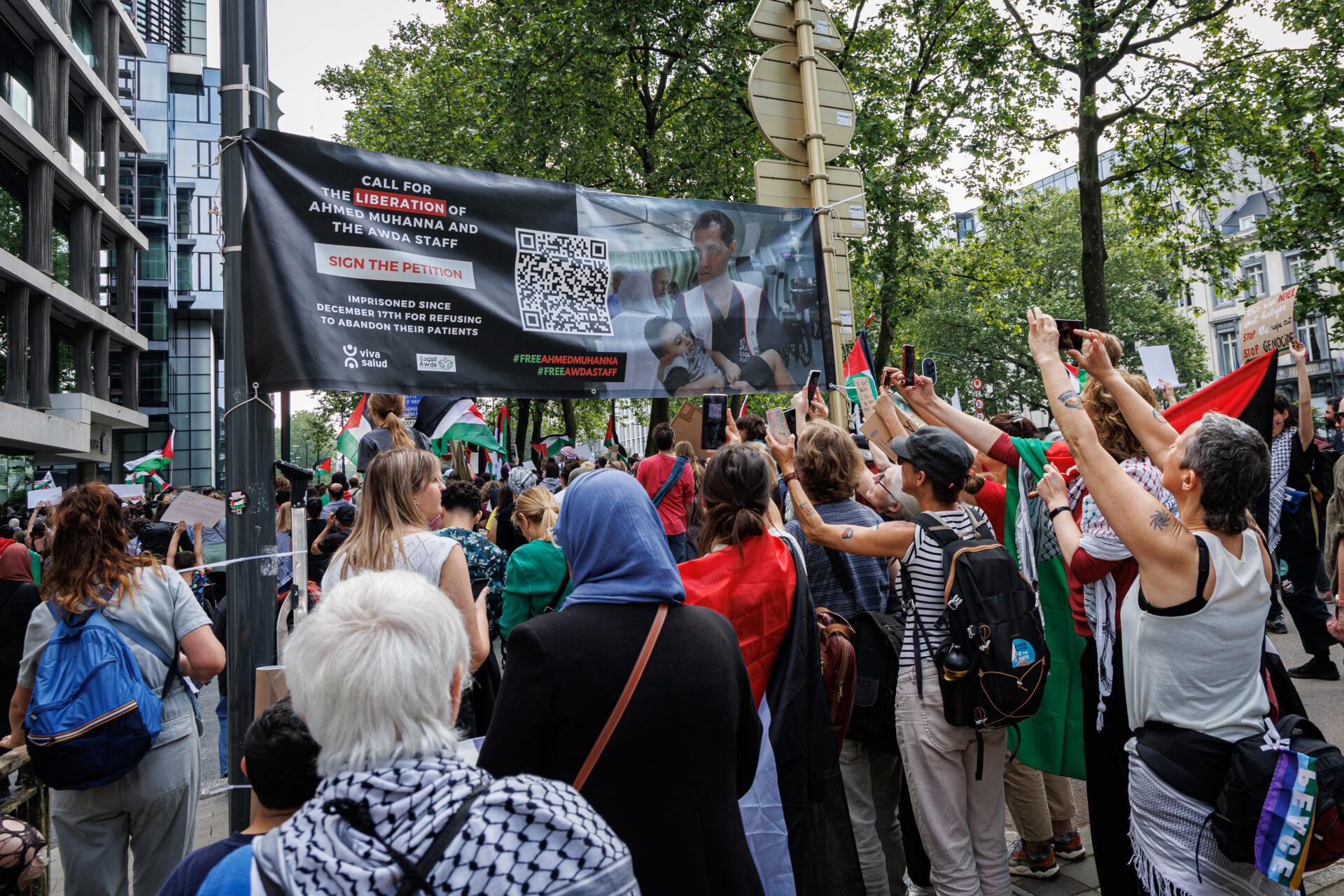
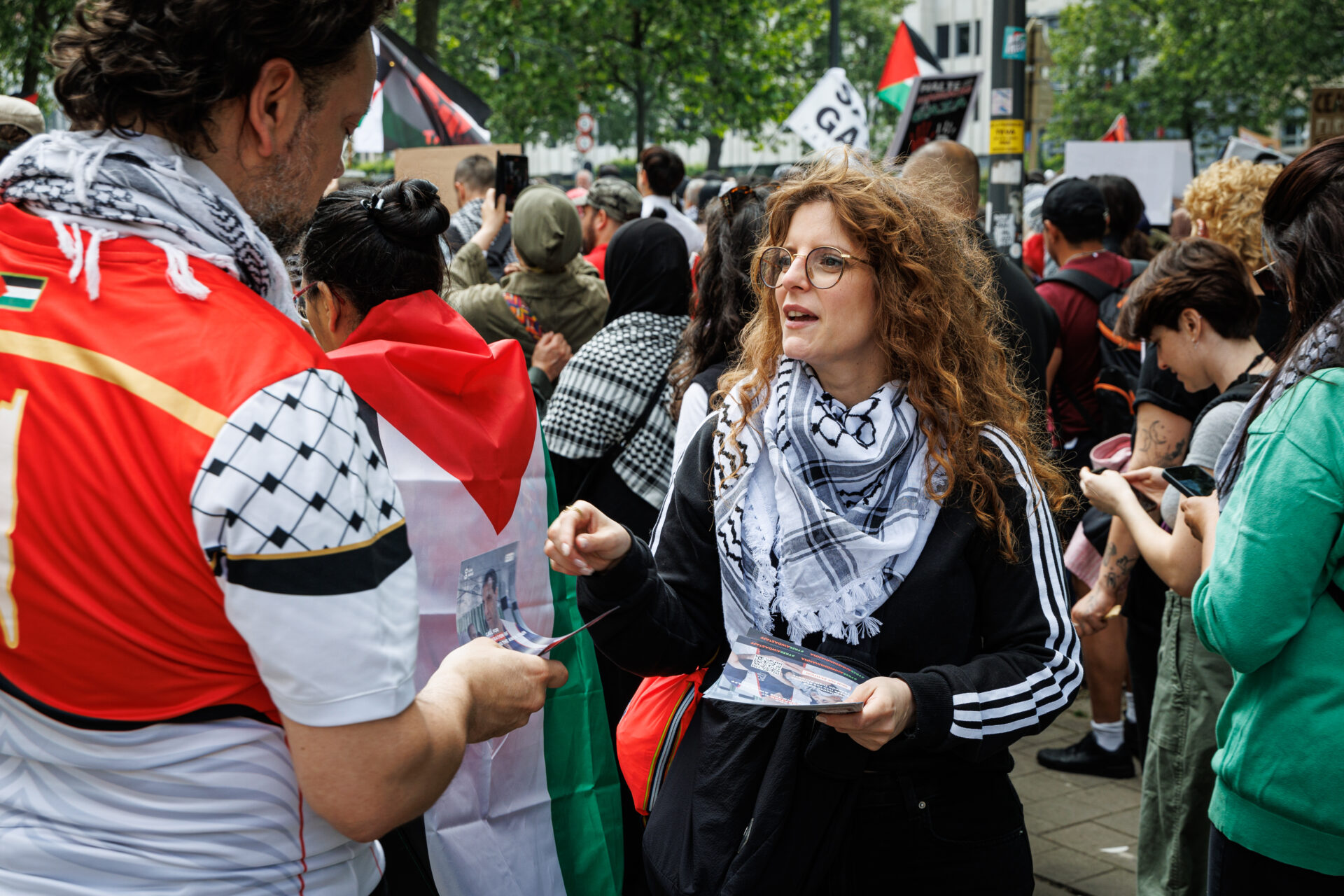
Viva Salud Supports AWDA and calls for the immediate release of AWDA staff members and its director Dr Ahmed Muhanna. We call for the unconditional protection of all health workers⸱euses in Gaza. Health professionals⸱le⸱s are not a military target.
▶︎ Sign our petition