This article appeared in February 2026 in the magazine Solidaire. An interview by Marie-Lou Badie, policy and campaign officer for the Philippines at Viva Salud.
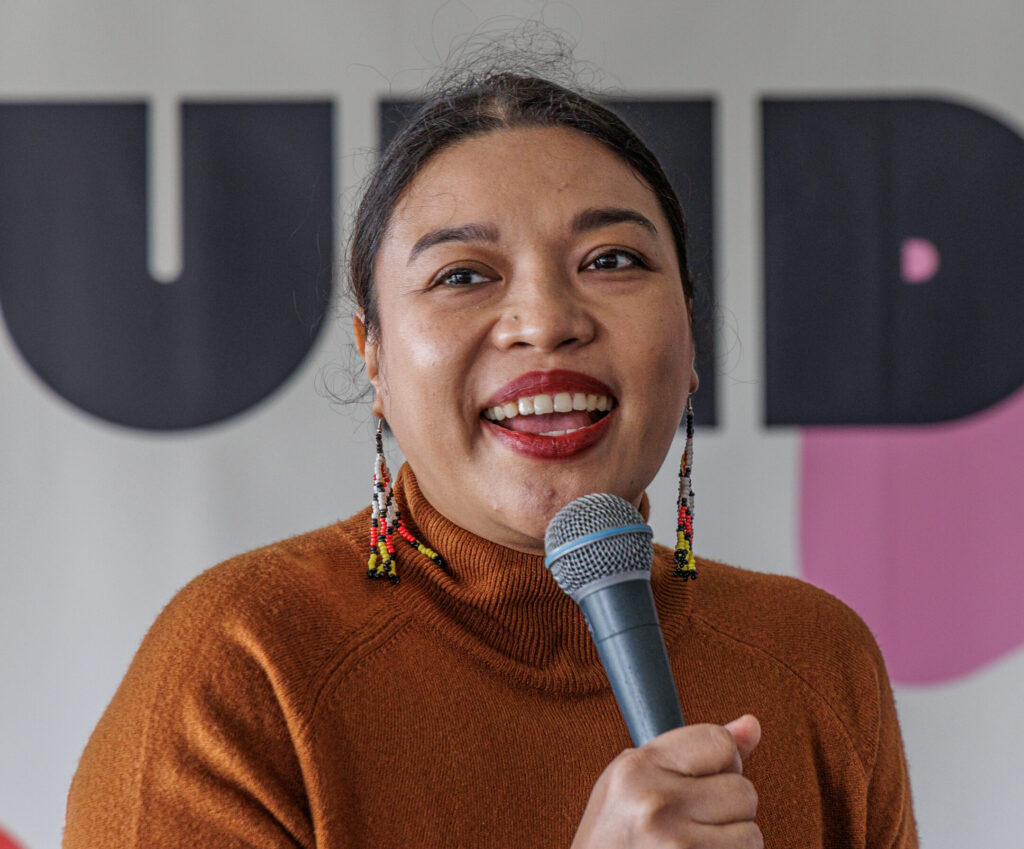
Under the authoritarian leadership of Rodrigo Duterte (2016-2022), the Philippines experienced violence and terror in the name of the so-called «war on drugs.» Today, the former president stands trial before the International Criminal Court (ICC) for crimes against humanity. Kristina Conti, a leading Filipino lawyer and human rights expert, works with the victims and prepares the fight for justice. In an interview for Viva Salud, she explains what is at stake in this historic trial.
Official figures mention 7,640 victims, but the actual number could involve 30,000 murders and 300,000 arrests. Duterte's so-called «war on drugs» meant terror and mass murder. Instead of targeting drug barons, street children, poor neighbourhoods and slums, but also journalists and leading figures from civil society became victims.
National courts proved powerless. Filipino law is not accessible to the most disadvantaged. For Kristina Conti, this trial, despite its limitations, is very hopeful for the Filipino people fighting for an end to violence and for justice.
Rodrigo Duterte is being prosecuted for crimes against humanity. Can you explain what this charge means?
Kristina Conti. Crimes against humanity are among the most heinous crimes that can be committed. It essentially involves a deliberate large-scale or systematic attack against a civilian population. This can take the form of murder, imprisonment or persecution, or in other ways.
Duterte is specifically accused of murder, but he is also responsible for many other crimes, such as imprisonment in the context of his war on drugs. He ordered murders and arrests and presented the results of this repression as achieved goals. He eliminated and «neutralized» - that is, killed - drug addicts and dealers by attacking the demand side rather than the production camp: the major barons or suppliers.
How many victims have been counted and how will they be represented during the trial?
Kristina Conti. Official government data reports that 7,640 people were killed in police operations. However, according to estimates from the media and academia, the actual death toll could rise to 12,000 to 30,000. And that's just the tip of the iceberg: 300,000 people were arrested on charges of drug use. The majority of them pleaded guilty as part of a plea bargain. This doesn't correspond to reality, because most simply admitted to a crime to reduce their prison sentence.
Unfortunately, the scope of this ICC case is very limited. The Philippines withdrew from the ICC in 2019. Only complaints from victims of abuse up to March 16, 2019 remain admissible to the court. This means that only the first three years of Duterte's six-year term are being addressed.
There's another aspect to this. Duterte was mayor of Davao, where the «Davao Death Squad» operated for a long time (this paramilitary militia is estimated to have executed more than 1,000 street children and other street residents over ten years, editor's note). Thus, an entire decade before and three years after the end of his term are missing. Moreover, this only concerns murders, not imprisonment or attempted murder. At this moment, we're talking about approximately 300 victims registered with the ICC.
Does this development, despite its limited scope, still represent a turning point in the Filipino people's fight for justice?
Kristina Conti. Absolutely. This trial is the only criminal case filed against a leader of the country. Previously, there was Ferdinand Marcos Senior, under whose rule thousands of people were murdered and disappeared, but he was never charged. In Duterte's case, where the murders were so evident and the crimes so widespread, we felt other options had to be explored.
At that time, he enjoyed presidential immunity. So we turned to the ICC. There, Filipinos finally saw how justice is supposed to work, because in the Philippines, the justice system worked against the poor. Access to justice is a very important problem: our courts use English, which is not spoken by everyone, and the simple rule of wearing closed shoes poses an obstacle for the poorest people.
The confirmation of charges hearing, scheduled for September, was postponed. What is the reason for this setback?
Kristina Conti. The confirmation of charges hearing was supposed to give the prosecution the opportunity to present Duterte's case. Unfortunately, at the last moment, he declared that he was unable to stand trial. The court then decided to postpone the hearing to examine that claim. For the victims, this was very frustrating because we had almost made it. We also think Duterte is playing theatre, especially since his family members declared that he was in good health.
Are the indictment and arrest of Duterte in themselves already a victory? What was the role of the Filipino people in bringing about a trial?
Kristina Conti. Yes, it's already a victory in itself. In the Philippines, it's unthinkable that a president would be imprisoned. Joseph Estrada, who was in power between 1998 and 2001 and was convicted of corruption, was placed under house arrest in a mansion until he received a pardon. But that's the only precedent. So we have no real example of a trial against those responsible for mass crimes in the country.
The Filipino people exerted tremendous public pressure. Although the Filipino government claims it is not obligated to arrest Duterte because the country is no longer a member of the ICC, the mobilization of the population domestically and abroad (for example at the UN) was able to move this case forward.
What role did Western powers, such as the United States under Donald Trump, play?
Kristina Conti. Neither Trump nor his predecessor Joe Biden did much, quite the contrary. They are supposedly against the ICC because of sovereignty issues. Above all, they're afraid that they themselves might face the axe one day. Donald Trump even supported Duterte's «iron fist» policy in the Philippines.
If activists in Belgium want to show solidarity with the Filipino people, how can they help?
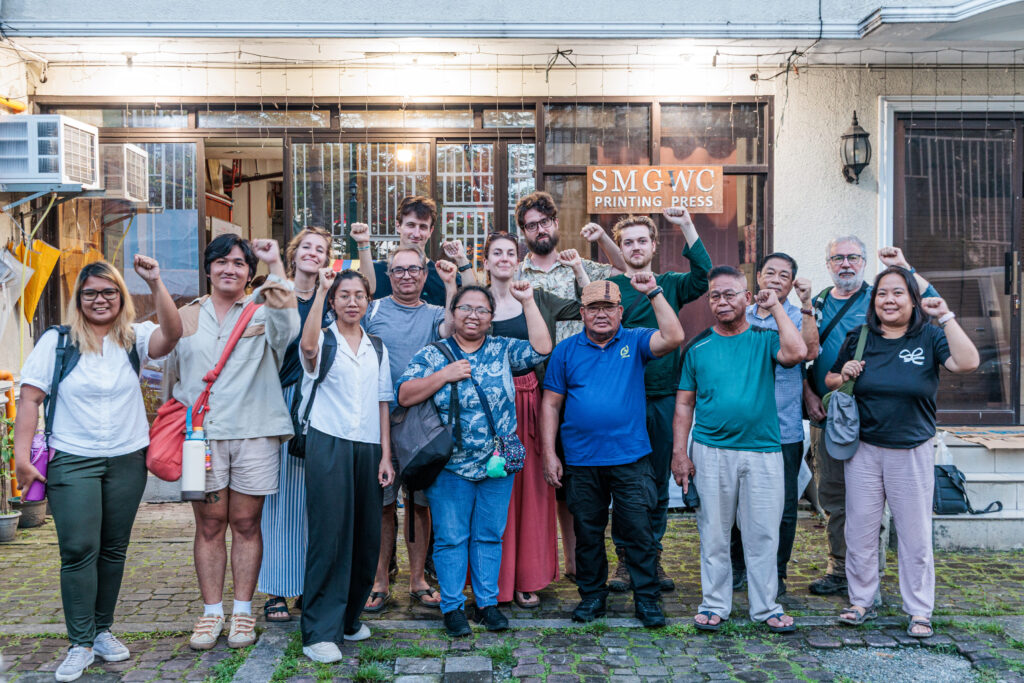
Kristina Conti. There are many ways to help. Through our organization, the National Union of Peoples’ Lawyers (NUPL), they can register on our website (nupl.net) to receive regular updates. They can also make a donation to the NUPL. But above all, they can send or participate in solidarity missions to the Philippines (like Viva Salud, which sent several people from Belgium on a solidarity trip to the Philippines at the end of the year, editor's note).
Recently, we had a Caravana Filipina, where European lawyers conducted an investigation and compiled a fact-finding report on attacks against lawyers, a report that was well received by the ICC and the UN. Asia is a region to watch because of the many internal and international conflicts. The Philippines is also in a particularly delicate geographical position: we are located between China and the west coast of the United States, which means we could serve as a launch base for US troops should a world war break out.