Sama Jaber on her work for AWDA from Belgium. Interview by Viva Salud, March 2026
From Belgium, Sama serves as the link between the outside world and the team on the ground — a team that continues to work under extreme conditions. We spoke with her about AWDA’s work, the situation in Gaza today, and what international solidarity means in concrete terms.
From volunteer to international spokesperson
Sama first worked for AWDA in 2022, when she still lived in Gaza, as a volunteer project coordinator and media coordinator. When the genocide began, she felt compelled to contribute again, despite the distance. « It’s the least I can do for my people, » she says.
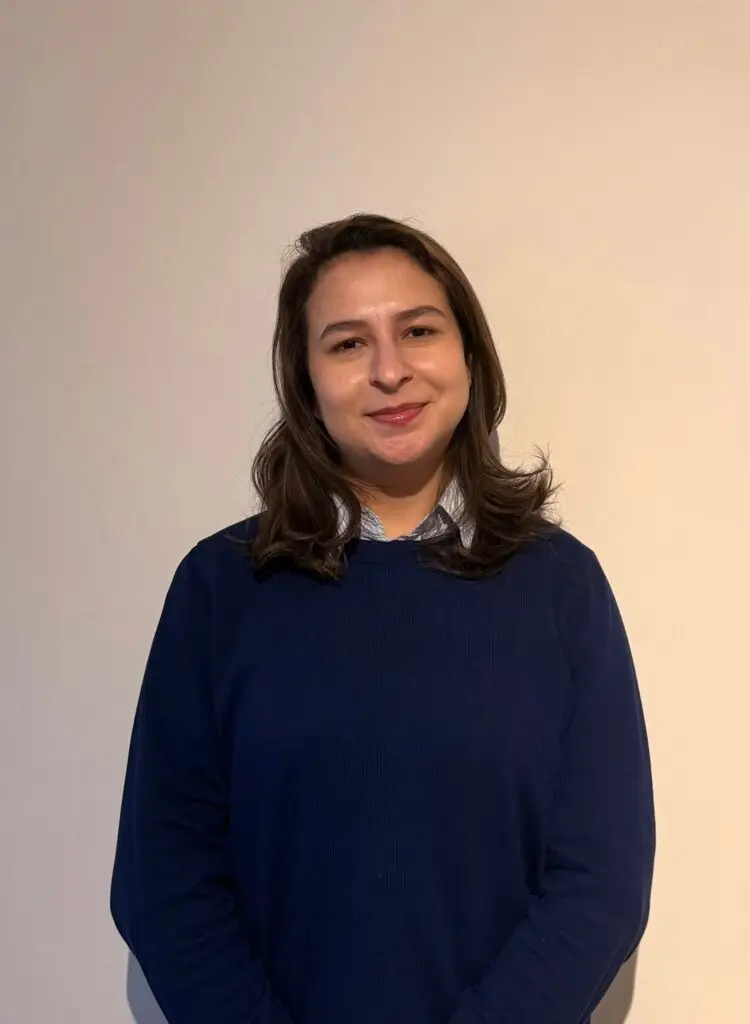
From Belgium, she translates AWDA’s materials from Arabic into English: emergency appeals, video messages, project documents. She also serves as a focal point between Gaza and the outside world, as the team on the ground cannot always publish or communicate themselves due to the lack of internet and electricity. « Sometimes they just send me a message. Because I have internet here, I can publish what they want. »
She also maintains contacts with donors and partner organisations, including Viva Salud, which she has visited. Her role is broad and continuous: there is no fixed schedule when a hospital is attacked at night or when an emergency appeal needs to be published.
AWDA: much more than a hospital
For many people in Gaza, AWDA is synonymous with healthcare, but the organisation does far more than that.
Before the genocide, AWDA had two hospitals and thirteen centres — 6 medical and seven community centres. The largest hospital, Nuseirat in the centre of the Gaza Strip, was expanded through the construction of a field hospital from 17 to 130 emergency beds, with plans for further expansion to 200.
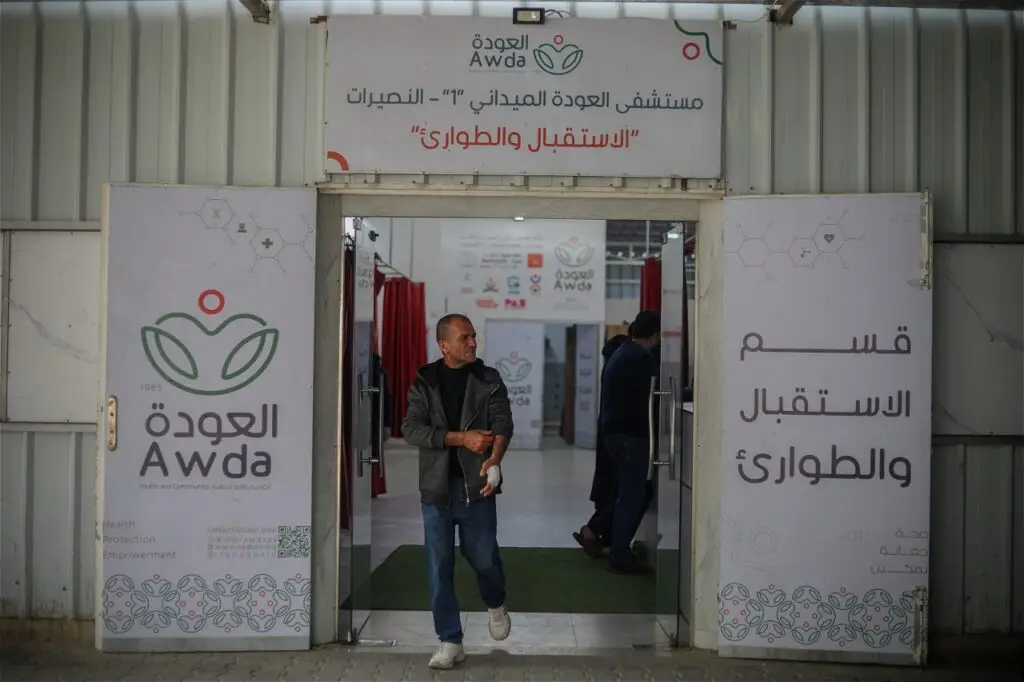
In the north of Gaza, where all hospitals have been destroyed or are inaccessible, AWDA is trying to fill the medical gap through nine primary care and community centres, with plans to expand to twelve. « People are returning to their neighbourhood. Not to their home — their home no longer exists. They pitch a tent on the rubble. They need care, but have to walk kilometres to find it.«
In addition to medical care, AWDA also provides psychosocial support for children and women, training for women awaiting minor surgical procedures that are no longer performed anywhere so they can carry them out themselves, education through a project with Relief International that currently reaches 400 students, and soon also shelter for children without parents. « They are not numbers. They are people with a story, with needs. We listen first, then we look for what truly helps, sometimes that’s drawing or playing, sometimes it’s a tent or food. »
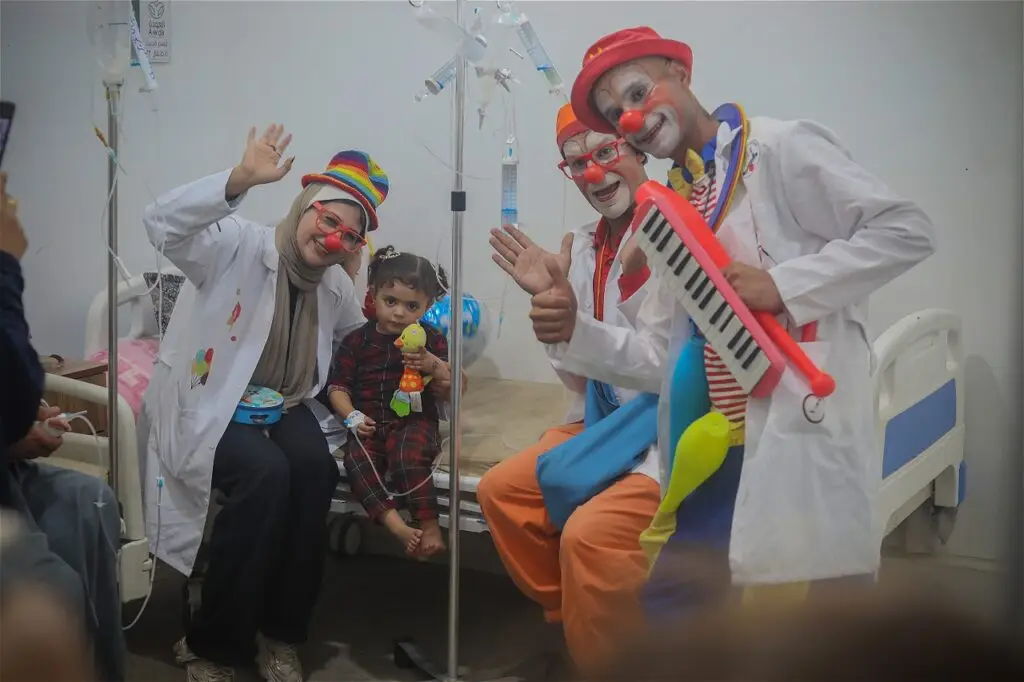
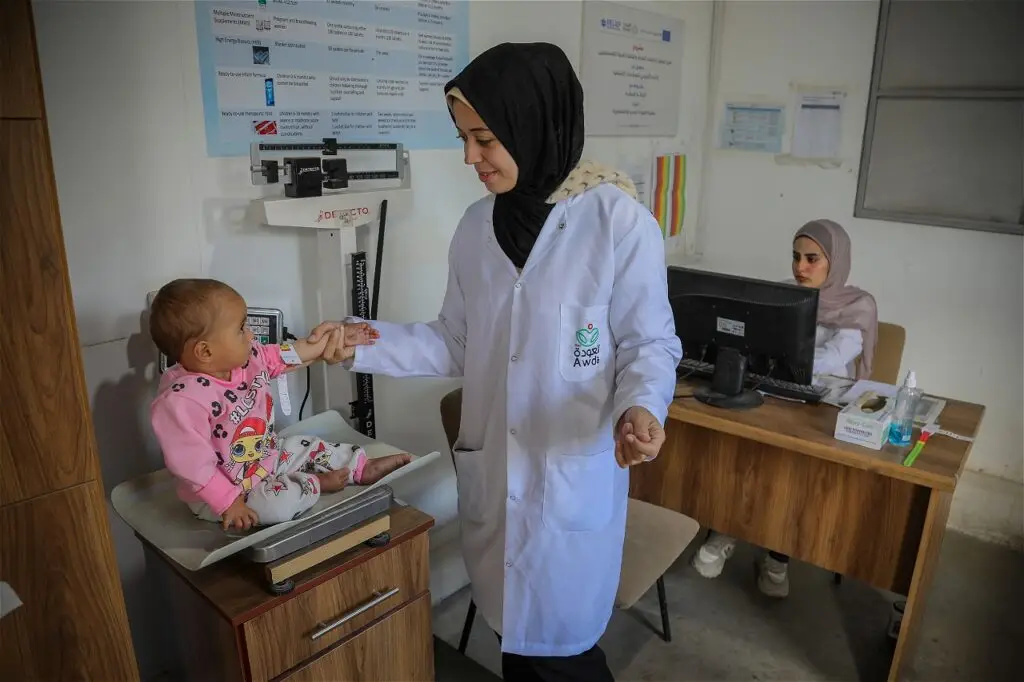
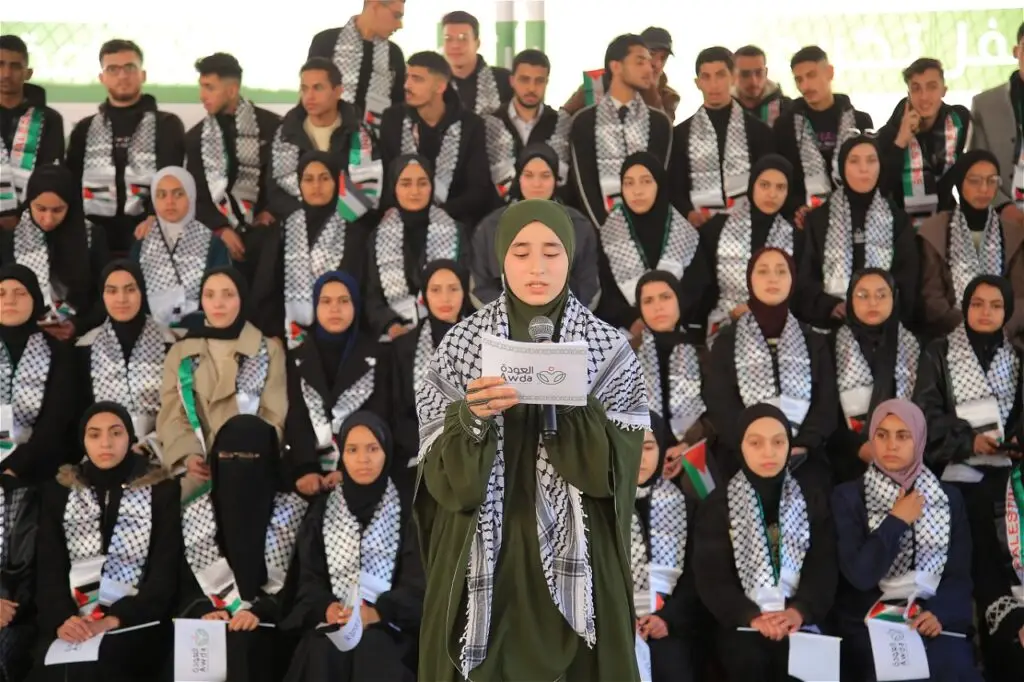
And then there is the radio project: a new initiative for 2026 through which AWDA aims to offer free medical advice, educational programmes and psychosocial support via radio — so that people can access information and care even from their tent.
The situation today: a ceasefire solves nothing
There is officially a ceasefire, but at AWDA’s hospital, they see little evidence of it. Wounded people keep coming in — people who were shot while returning home, people injured in a new attack, or people injured when their tent collapsed in the rain and wind.
The famine remains real. Israel only allows in crisps, chocolate and fizzy drinks — no nutritious food. Children with malnutrition are still being admitted. People drink water without knowing whether it is safe — it is the only water available. Kidney disease is a growing problem. Women cook over open fires, pick up wood from the street, and suffer burns.
Medical equipment and surgical supplies barely make it in. What does arrive comes irregularly and only through international organisations such as the WHO. Specialised care for wounds that sometimes need dressing twelve times a day, for ophthalmology, dermatology, diabete, barely exists.
Working under extreme pressure: on trauma and perseverance
How do AWDA’s staff keep going? Sama pauses to think. « As a Palestinian, you know you can’t change the reality you’re in at that moment. Your nervous system gets used to the pressure. You don’t really realise what is happening to you, what you’re seeing — as long as you keep working. »
She talks about a doctor from Valencia who worked in Gaza during the genocide. He barely speaks about it anymore. It is a trauma. But the doctors in Gaza themselves, they are still working, for three years, without stopping. Only now, now that there is a lull, are some beginning to realise what they have been through. « Suddenly they miss people. They miss their home. Their nervous system was on standby, in a way. But there was no other choice. Many doctors were wounded, killed, or arrested. There simply aren’t enough of them left.«
After the genocide, AWDA’s staff will themselves need psychosocial support and medical delegations capable of performing specialised procedures that have been postponed for too long.
What international solidarity means
Sama is clear about what she asks of people outside Gaza. Not in vague terms, but concretely:
- Keep talking about Palestine. In the media, it looks as though it’s over. It is not over. The people in Gaza are not yet safe, but the rest of the world risks forgetting them.
- Donate. Everything in Gaza costs double or triple what it did before the genocide. AWDA must literally rebuild everything from scratch.
- Be a loudspeaker for AWDA. Help spread the stories of people who don’t have a large reach themselves.
- Boycott. Economic pressure works.
Would you like to support AWDA yourself? You can! Make a donation, order the book and rent the photography exhibition, or organise your own action for AWDA.
Sama Jaber over haar werk voor AWDA vanuit België. Maart 2026.
Vanuit België is ze de schakel tussen de buitenwereld en het team op het terrein — een team dat onder extreme omstandigheden blijft werken. We spraken met haar over het werk van AWDA, de situatie in Gaza vandaag, en wat internationale solidariteit concreet betekent.