
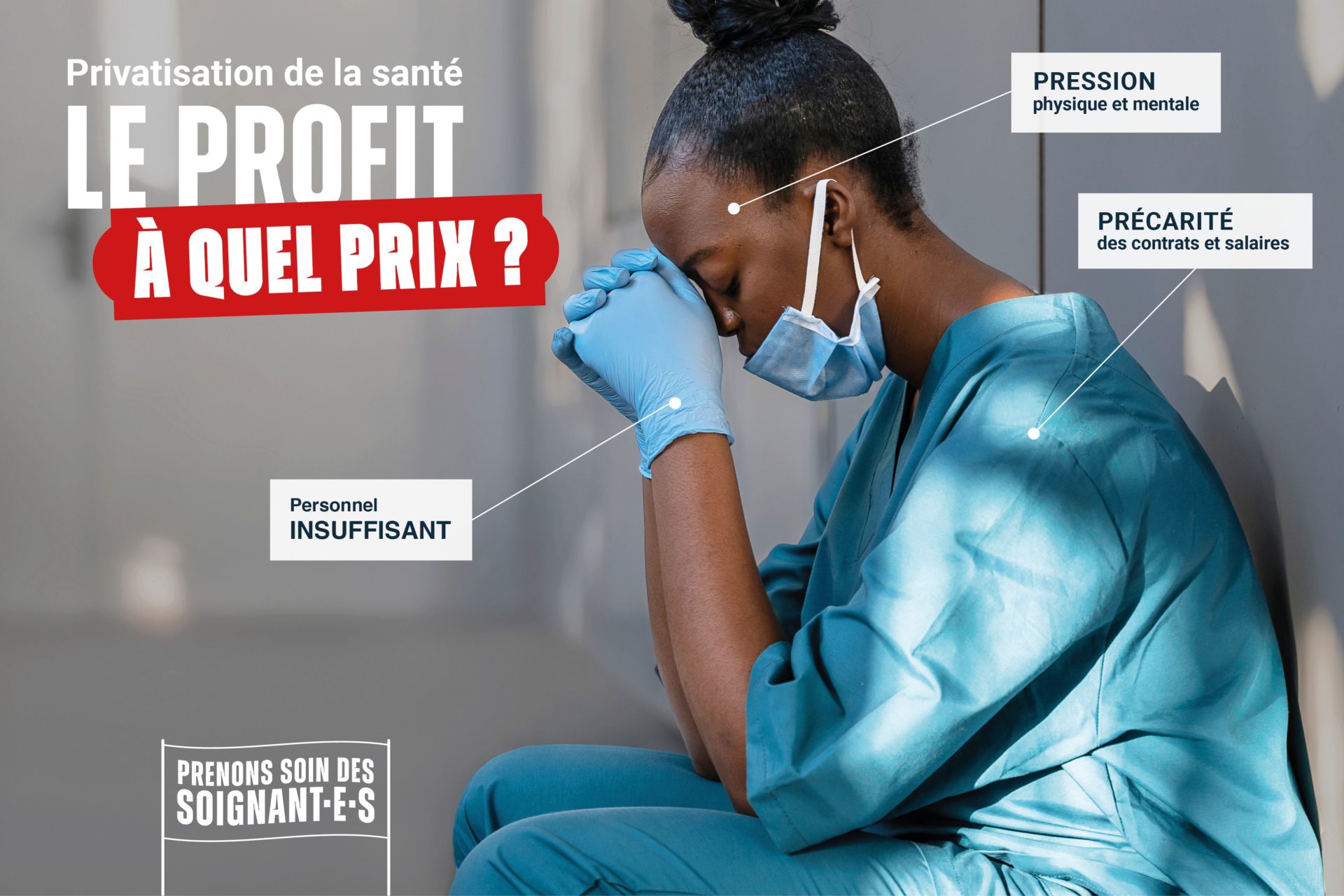
Privatisation: its impact on healthcare
Commercial players in the health sector have prevented an effective response to the COVID-19 pandemic. Nevertheless, governments have continued to dismantle public health services. The private sector is playing an increasingly significant role in healthcare. How can this be explained?
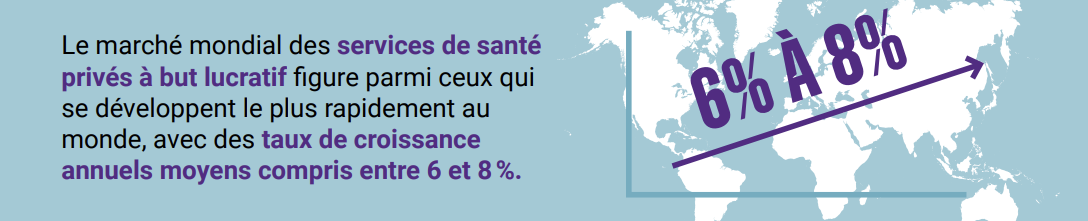
| WHAT ARE WE TALKING ABOUT? In the field of healthcare, Privatisation and commercialisation take all sorts of forms and occur on all sorts of scales. Healthcare is becoming essentially commercial, which allows profits to be made. Commercialisation involves a market-based approach and commercial principles, which are then applied to public policies as well as to stakeholders in the sector. As part of the privatisation process, Health services, health policy and the production of healthcare products are funded and delivered by private, profit-making organisations. In this report, the term «private sector» refers to all types of private, profit-making organisations. |
The role of international financial institutions
In most low-income countries, the World Bank (WB) and the International Monetary Fund (IMF) are the driving forces behind the privatisation of the health sector. During the 1980s, they imposed stifling loan conditions through their infamous structural adjustment programmes. In many countries, the public health sector was on the brink of collapse. Governments were forced to open up their health sectors to foreign investment and make drastic cuts.
The cap on wage expenditure in the public sector has resulted in healthcare staff being underpaid and demotivated. Patients suddenly had to pay more for care, leading to high healthcare costs for families. Research shows the negative impact of World Bank and IMF policies on public health. Yet these institutions are sticking to their usual roadmap.
«Before the pandemic, 57 countries were facing a severe shortage of healthcare staff, according to the WHO. Yet the IMF advised 24 of those 57 countries to freeze or even cut public sector wage expenditure.»
Jasper Thys, political and campaign officer at Viva Salud
The role of our economic system
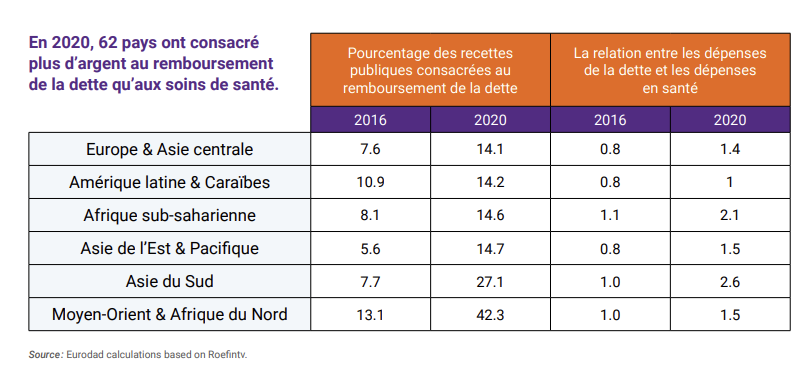
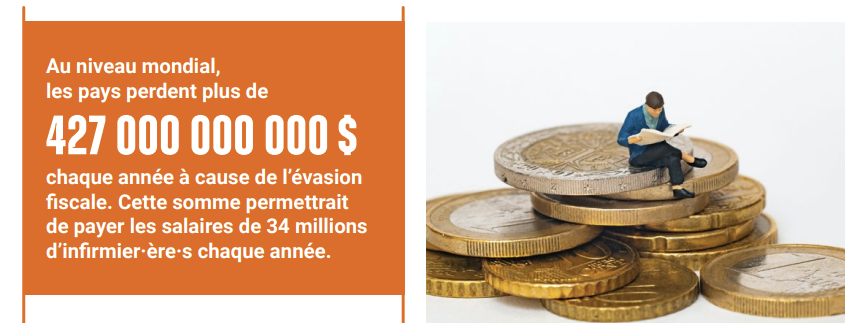
Our global economic system is unfair: unfair trade rules, tax evasion, stifling borrowing conditions, debt repayments stretching over decades and failing international financial policies are all factors that prevent most governments from boosting state revenues. This prevents low-income countries from investing in public healthcare and healthcare staff.
The Jubilee Debt campaign showed last year that 64 low-income countries spend more on repaying their foreign creditors than on healthcare. Furthermore, expenditure on global debt repayment is rising year on year. This hinders the necessary investment in public services. Former colonies have been trapped in an economic system that benefits a small group of people whilst leaving the majority of the population to live in inhumane conditions.
The role of philanthropy
During the 1980s, international institutions – established after the Second World War to serve the public interest – began to form partnerships with philanthropists. Since then, the charitable initiatives of the global elite have increasingly shaped the international health agenda. The Bill & Melinda Gates Foundation, for example, is the WHO’s second-largest donor, whilst governments are contributing less and less. These philanthropists decide for themselves how their donations will be used.
This is how the WHO is gradually losing its independence. Philanthropists often have indirect interests in the business and industrial sectors. They encourage the private sector to play a central role in their work and are the driving force behind public-private partnerships (PPPs). These are long-term contracts under which the private sector sets up and operates infrastructure projects or key services traditionally managed by public authorities, such as hospitals, schools or energy supply. All too often, this is done at the expense of human rights and genuine sustainable development.
The role of development co-operation
More than half a billion euros. That is the amount the British government is said to have spent over the last decade on supporting private healthcare in dozens of low-income countries. This is according to a study carried out by Global Justice Now. These revelations come as no surprise, however. Since the 2007–2008 financial crisis, governments and international organisations have been promoting the private sector as the key to sustainable development. But in practice, it is not always possible to demonstrate the positive impact of this approach.
The private sector uses public money, for example, to eliminate the risk associated with investment, whilst reaping all the profits. Furthermore, the money is invested in stable sectors where there are fewer challenges. The Belgian development bank «BIO Invests» also invests indirectly, through investment funds and major international asset managers, in private sector organisations in the healthcare sector in low-income countries.