Julie Steendam, former campaign manager at Viva Salud and volunteer at Cubanismo.be, spent six months in Cuba. There she learned about Proyecto Akokán, a social, cultural and ecological project run by Centro Felix Varela, which we supported this year through our Easter campaign. In a fascinating interview, Michael, the coordinator, told her about the project.
The virus that must no longer be named and the ensuing lockdown have exacerbated the precarious situation for a large part of the Cuban population. The participants in Proyecto Akokán have courageously tackled the Covid crisis with a contagious dose of ‘Sí se puede’ (Yes we can).
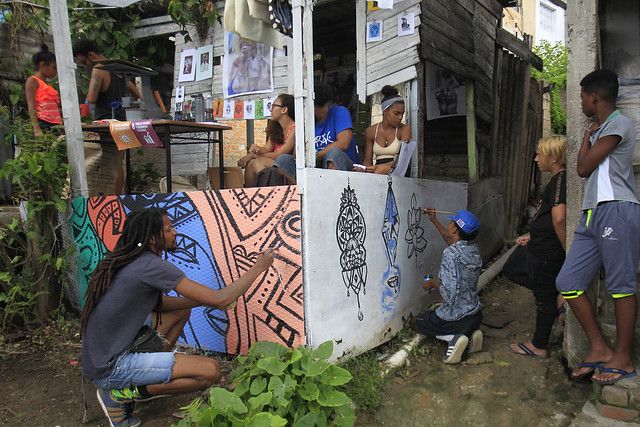
The Akokán Project targets the neighbourhood of Los Pocitos in the municipality of Marianao, west of Havana. The initiative is called Akokán, which means “with the heart” in Yoruba, an Afro-Cuban language that is still widely spoken. Their motto is “Cuando actuas de Akokán todo es Oddara”: if you act with your heart, everything will be fine. The positivity of this slogan fits perfectly with the atmosphere that coordinator Michael has created around his project.
Los Pocitos is the Cuban version of poor Latin American suburbs, which are unable to integrate the influx of rural populations into their infrastructure. The most striking problems are the lack of a waste collection system and the absence of a proper sewerage network. Some houses are not connected to water pipes, so the population has to fetch water from communal water points.
In Cuba, fundamental rights such as healthcare and education are guaranteed and free for everyone. However, there is a shortage of building materials, which prevents the construction of solid houses. So people build with whatever materials they have available. 10% of dwellings are classified as being of good quality, 20% as being of average quality and the remaining 70% as being of poor quality. Some houses are made of wood, others are made of debris and most do not really have proper floors.
These living conditions lead to several forms of violence: gender-based violence, domestic violence and community violence. The victims are mainly vulnerable people: women, children, the elderly and people with disabilities.
«If you act with your heart, everything will be fine.»
Proyecto Akokán is only four years old, but it has quickly grown into a large organisation that tackles sensitive issues in the neighbourhood.
Michael describes the evolution this way: «Initially, we wanted to fill the gaps. We wanted to build houses, give clothes and money to the community... Today, we want to support small independent businesses, let them create their own jobs, and give them the means to work. We organise remedial classes for children, and local residents share their talents in practical workshops.» If there were a word for «resilience» in the Yoruba language, Akokán would undoubtedly have adopted it as its motto!
Then came Covid-19...
In mid-March, when President Díaz-Canel announced the first cases of coronavirus infection, the people of Akokán immediately took action. They knew only too well that vulnerable people are more exposed to various risks of infection.
At the end of March, the Cuban government decided to suspend public transport, close non-essential public services, switch to teleworking and cancel all public events. Restaurants, taxi services and schools were immediately closed for an indefinite period. This threw a spanner in the works for Proyecto Akokán. Without transport, volunteers from other neighbourhoods were unable to come and help, and the project's cafeteria was no longer generating income. These compelling circumstances forced Proyecto Akokán to seek new resources within their own neighbourhood.
« We must sow»
Michael succeeded in bringing together the efforts of several residents: workers from an agricultural cooperative, two restaurants, visual artists, neighbourhood committee coordinators, and the constituency representative.
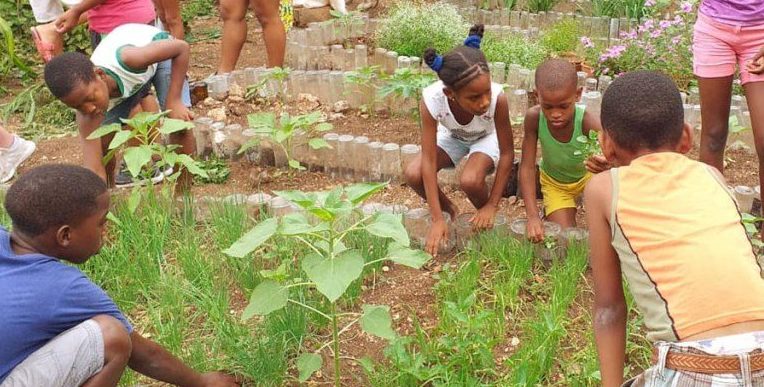
When we met after the first phase of lockdown, he said, «We were prepared for the worst. One of the first things that came to mind was you have to sow – we must sow seeds». Food security could become the biggest problem. We immediately contacted the person in charge of the neighbourhood so that we could expand the vegetable gardens, and we prepared the community centre so that it could be converted into a field hospital if necessary.
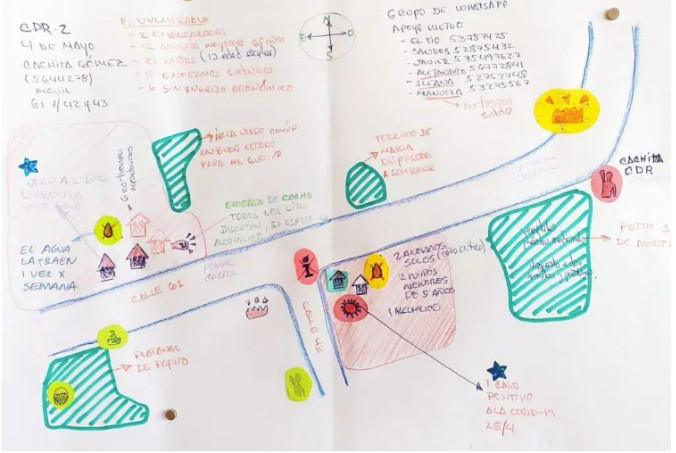
The first step of the Proyecto Akokán plan was to map the risks of contamination. To this end, health workers, managers and social workers gathered their information on a map of the neighbourhood. These maps show places where many people gather, such as markets, Wi-Fi hotspots, and the homes of elderly people, women with small children, people with disabilities, people who are ill, and people with little or no income. Homes where there are cases of domestic violence were also marked with an icon. The same was true for the homes of volunteers and local food production sites such as medicinal plant gardens.
Volunteers made masks and distributed them. They even made transparent masks for deaf and hard-of-hearing people. Thanks to social media, project collaborators collected plastic bottles to make visors. They also shared mobile data so that people could stay in touch with their loved ones and receive information.
The cancelled workshops were replaced by the small paper newspaper Akokán. Small missions were set up to teach children how to deal with problems. The children made a small card to send to a neighbour and sowed some seeds in an old tin can. Akokàn also publishes advice on psychological well-being for teenagers, based on the expertise of a psychologist from the network. A short comic strip explains Covid-19 and how to protect yourself and those around you.
«We have learnt that sometimes it is better to approach people to present our proposals.»
Volunteers distributed this small newspaper and masks, which gave them an opportunity for essential contact with residents and allowed them to refute false information. For example, a nun from Santeriágenezer claimed that ant bites could cure coronavirus.
Michael continues to innovate by showing me models of a mobile library trolley and a mobile workshop trolley. «We have learned that sometimes it is better to go to people to present our proposals. We have also learned that, in our search for resources, we need to look beyond financial aspects. I am thinking of a kind of «time bank», because volunteers» time is just as valuable.".
The positive development of the collaboration between Proyecto Akokán and official administrations demonstrates that local «civil initiatives» and social entrepreneurship are increasingly being given equal footing alongside official mass organisations in today's Cuba. And if their creative minds are a reflection of the Cuban determination to find solutions, then it promises a bright future.
This is an abridged version of Julie's blog. You can find the full text at https://eeuwigezee.wordpress.com/2020/08/06/proyecto-akokan-sociaal-werk-in-een-bijzondere-buurt-van-havana/ (in Dutch)
CEaster 2021 campaign
Are you already craving chocolate? From March 2021, you can once again order Easter eggs to support Centro Felix Varela!