For the time being, thehe number of infections and deaths due to Covid-19 in DR Congo remains lower than initially feared. Nevertheless, convincing people to protect themselves properly is a long-term project. The spread of the virus must be halted at all costs to avoid a health catastrophe. In a series of interviews, our partners explain how they are doing this, despite the many obstacles.
And amongst these obstacles is the issue of access to safe drinking water. Our partners, Etoile du Sud and CODIC, have been campaigning for years on access to water, and today this issue is more crucial than ever.
What impact have the coronavirus measures had on your work?
Aziza Mupa Kasiama, head of ‘De la Racine aux Ailes’, a member organisation of our Congolese partner CODIC: «We were deprived of our freedom of movement. Those who had jobs could no longer work. Through «De la Racine aux Ailes», we went to speak to the authorities to explain that we are a member organisation of CODIC, a social organisation whose aim is to raise awareness amongst its members. But we were no longer allowed to gather in groups of more than 20 people.»
How were you able to carry on with your work?
«We’ve put together a group of three people who are experienced enough – reliable people. Because when we go to visit people at home, they often say to us: «No, no, no, don’t come because of the coronavirus. » But we had to get our message across – that they needed to wash their hands and protect themselves properly.”.
We also went to see the authorities to tell them that we needed electricity so we could follow the news on television. That’s not possible at the moment because there’s no electricity. We’re also supposed to wash our hands, but there’s no water! We were then given two months» worth of water for free, but as the supply is often unreliable, we didn’t have much.”
Brigitte Bikumba, chair of ‘Dynamique des Femmes’ in Etoile du Sud: «Take Kalamu, a commune known for its poor sanitary conditions. There is virtually no access to water. People were willing to follow the hygiene measures recommended by the authorities, but they simply had no water at the time.”.
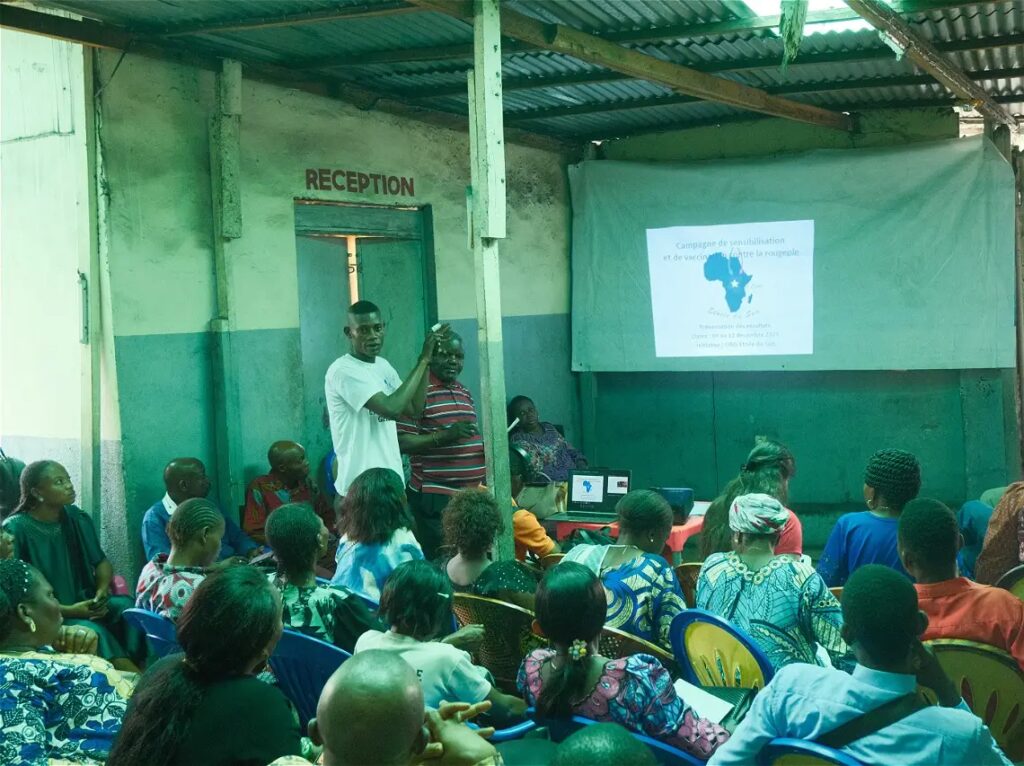
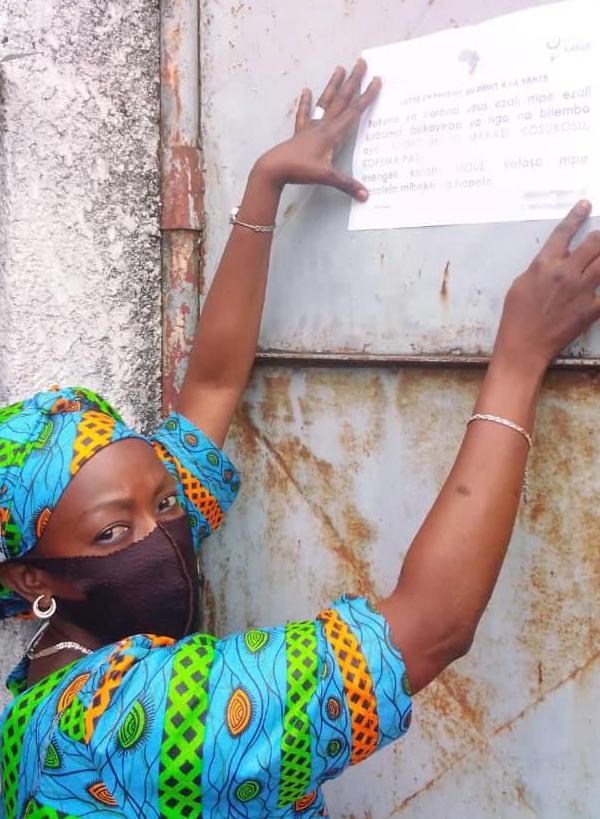
If we wanted to make a difference, we couldn’t just stay at home and do nothing. So, in small groups, we went out to raise awareness amongst our members about this disease. We made posters and banners. We went door-to-door to inform people and explain how to protect themselves from becoming infected.»
How could you convince people to take preventive measures if they don’t even have access to water?
During our prevention campaigns, we realised that not everyone can afford to buy hand sanitiser or a disinfectant. That is why we gave our members this advice: «If you don’t have anything, use ash». Ashes are effective for disinfecting hands, washing up, cleaning toilets or maintaining sanitary facilities. We therefore recommended using ashes. It was the easiest way to reach almost everyone.