The passing of an anti-terrorism law in July 2020 has left human rights activists – who are fighting precisely for a law to protect them – even more vulnerable, particularly given the climate of impunity that currently prevails in the Philippines.
In 2019, alongside other civil society organisations, Karapatan secured a significant victory when a bill protecting human rights defenders was unanimously approved by members of the House of Representatives. This Human Rights Defenders (HRD) Bill aims to oblige the state to protect these individuals and to provide legal remedies in the event of a violation of their rights.
This bill also seeks to provide redress for women human rights defenders and LGBTQIA++ activists who have been victims of gender-based sexual assault. This law was passed against a backdrop of increasing harassment and smear campaigns by the Philippine government against human rights defenders.
The recent murder of Zara Alvarez, a member of Karapatan and a well-known human rights defender, has highlighted the difficult situation facing human rights defenders under the current government. Alvarez is the 13thth Karapatan activist killed under the Duterte administration.
Obstacle to the bill
However, the counterpart bill in the Senate has remained on hold since it was introduced in 2018 by Senator Leila De Lima, herself a human rights activist and a vocal critic of President Duterte. De Lima has now been in detention for three years on charges that rights defenders claim have been fabricated. In the Philippines, bills become laws after approval by both the House of Representatives and the Senate.
Despite this obstacle, Karapatan continued its lobbying efforts with lawmakers to get this bill passed and took the cause to the streets to draw public attention to the plight of human rights defenders. As part of its engagement with United Nations human rights mechanisms, such as the Universal Periodic Review, Karapatan has consistently emphasised the urgent need to put pressure on the Philippine government to enact the Human Rights Defenders Act, given the deteriorating human rights situation in the country.
«This law provides a comprehensive overview of the needs and threats facing human rights work in the face of state-led attacks, and it is a vital measure for the public, communities and human rights defenders to be able to continue our work. We are criminalised and stigmatised as «enemies of the state», «terrorists», «destabilisers» and other such labels to justify the attacks against us, carried out under the guise of counter-insurgency programmes and other repressive policies. This is an orchestrated and systematic effort to discredit human rights defenders, and it is all being done methodically to silence us», said Tinay Palabay of Karapatan.
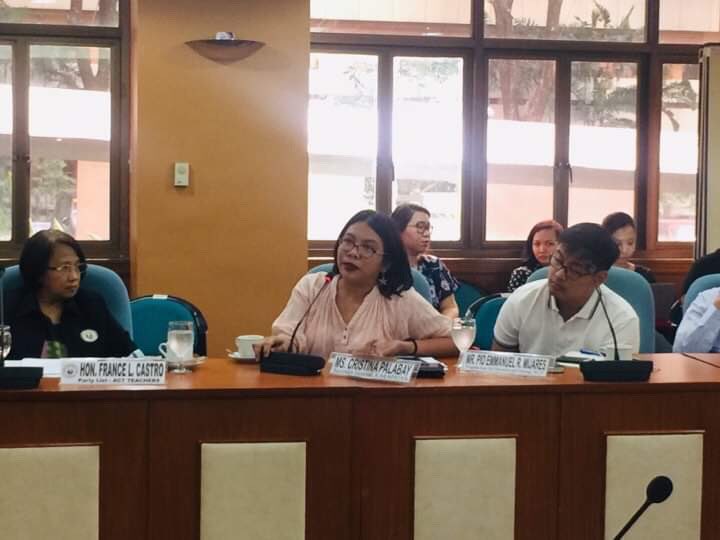
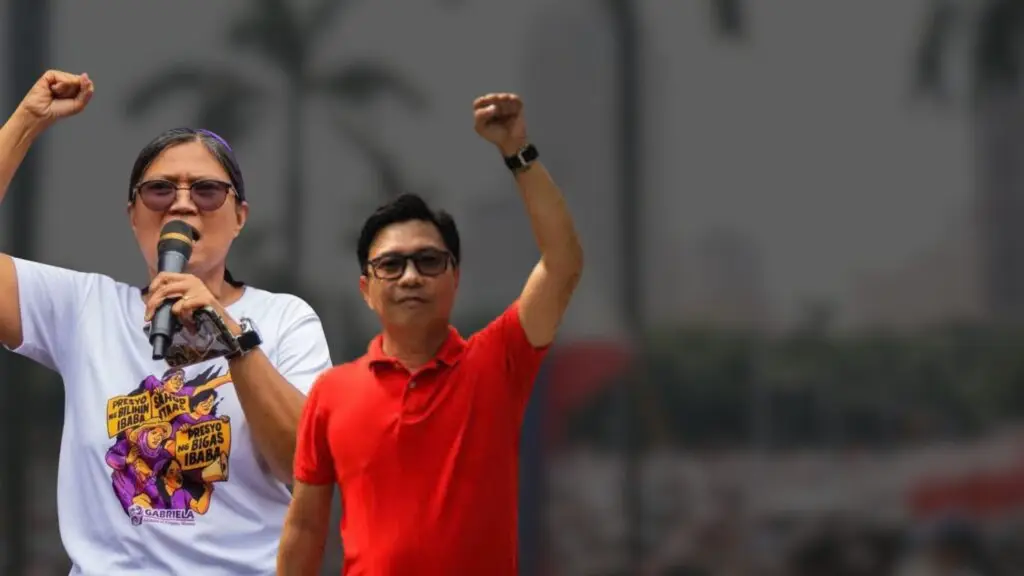
Tinay Palabay, General Secretary of Karapatan, is attending a House of Representatives committee hearing on the Human Rights Defenders Bill as a resource person.
Anti-terrorism Act
In July, whilst the country was battling the COVID-19 pandemic and human rights violations were on the rise due to the government’s militarised response to the health crisis, President Duterte signed the Anti-Terrorism Act. Human rights groups feared that the government would use this law to prosecute opponents and stifle dissent. Whilst they continue to call for the passage of the Human Rights Act, human rights defenders have become more vulnerable following the passing of the Anti-Terrorism Act, particularly given the current climate of impunity in the country.
Impact on human rights defenders
Jigs Clamor, Deputy Secretary-General of Karapatan, explained in detail how this law would affect human rights defenders and their campaigns:
- Under the very broad and vague definition of terrorism, the government can simply disregard the rights guaranteed by the Human Rights Act and its obligations to protect human rights defenders as soon as an activist or an organisation is labelled a terrorist.
- Once labelled a terrorist, a human rights activist may be subjected to surveillance, and may be the victim of unfounded arrest and detention without charge for a period of more than 14 days.
- The government may freeze the bank accounts of individuals or organisations it designates as terrorists and block their sources of funding, both from abroad and within the country.
In this regard, the anti-terrorism law will make it easier for the government to curtail human rights demands and protest. Even before the introduction of this law, Karapatan and other progressive organisations had faced various accusations from the government, whilst the Court continues to ignore their requests to lodge appeals for legal protection and from’habeas corpus against the relentless harassment of human rights activists by state security forces.
Growing opposition
If there is one thing the government failed to anticipate, it is the extent to which the anti-terrorism law has provoked public outrage and brought together different sectors of society in opposition to and criticism of this law: ranging from large industrial groups to small-scale farmers and fishermen, students, members of the clergy, indigenous peoples, poor urban communities, Muslim communities, lawyers, teachers, employees, well-known figures and many others besides. In recent history, no other piece of legislation has met with such strong public opposition.
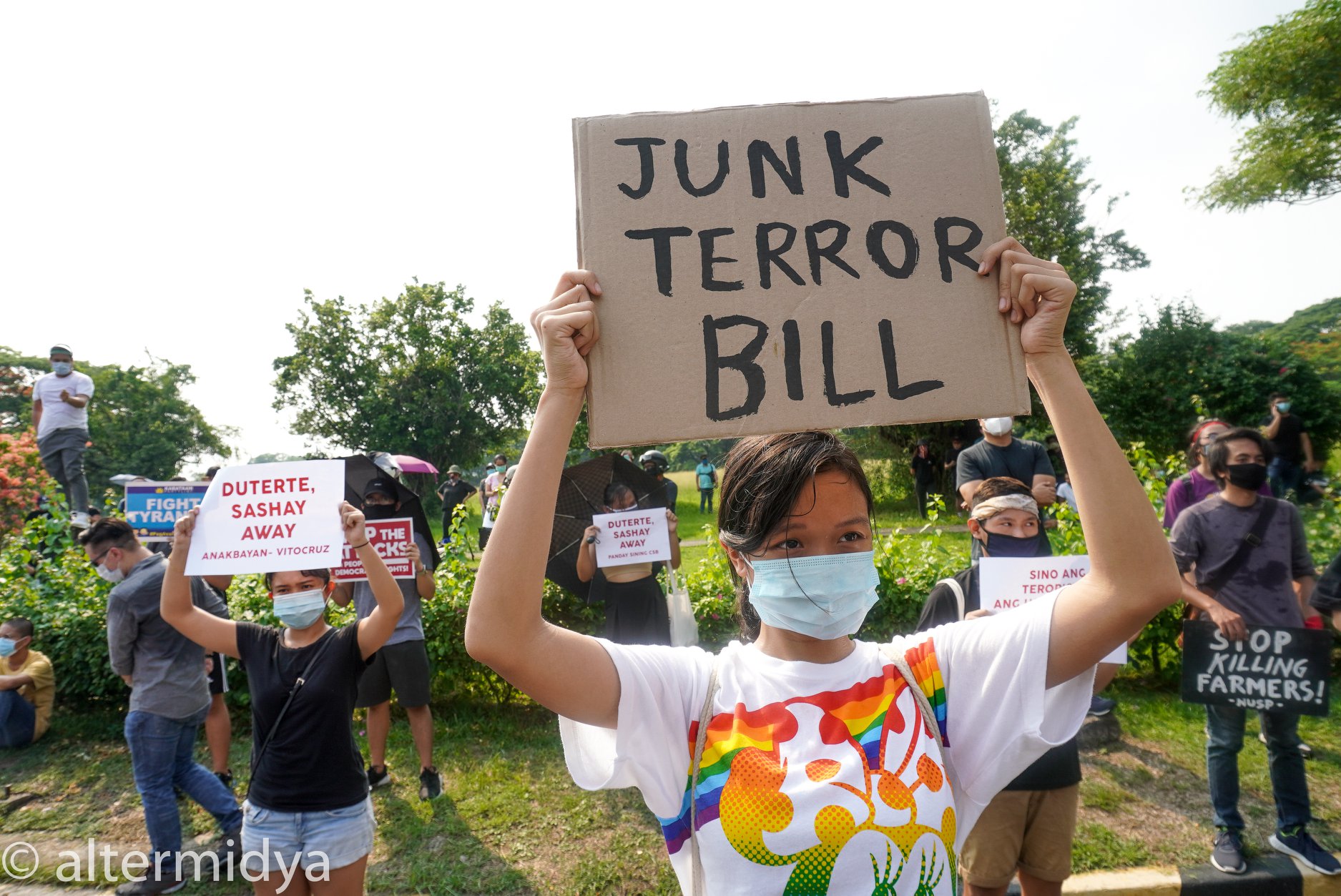
Petitions have poured into the Supreme Court calling for a halt to the implementation of the law. Social media platforms are full of posts detailing the law’s impact and the dangers it poses to human rights and freedom. Activists have defied the COVID-19 restrictions on public gatherings to organise mass protests against the law.
“Despite the government’s efforts to demonise human rights defenders, ultimately we are ordinary Filipinos – teachers, priests, trade unionists, artists, healthcare workers, indigenous leaders, farmers, amongst others. We are not enemies; rather, we are agents of ongoing development in the pursuit of a dignified life for all. We bring human rights violations to light and demand that those in positions of responsibility fulfil their duties. We are witnessing an increasing number of human rights violations, repressive policies and the shrinking of what is known as the civic space, and these are tell-tale signs of the need to fight for the basic rights and fundamental freedoms of the population, in every possible forum, including the legislative arena», says Palabay.