Once again this year, Viva Salud and its partners in Palestine, Cuba, the Philippines and the Congo are campaigning for global sharing of the corona vaccine. In many European countries, the vaccination campaign is running at full speed, while in most other countries it is struggling to get off the ground. We asked Dr Joshua San Pedro and Kat Berza from our partner organisation Council for Health and Development (CHD), how things are going in the Philippines and the challenges they face.
What are the figures for coronavirus contamination in the Philippines?
Dr. Joshua: «According to official figures, there have been 1,750,000 cases of contamination to date (17 August). We know that this is an underestimate and that, in reality, these figures need to be doubled. In 2020, Covid-19 was the seventh leading cause of death. The official figures show a further rise in the number of people infected».»
Are corona tests carried out regularly in the Philippines?
Dr. Joshua: «There are test centres in 31 of the hundred and some provinces, of which 54% are in private hands. In both private and public centres, tests are often more expensive than health insurance will reimburse. Because of this, people are reluctant to be tested».»
Kat: «Families sometimes have to make difficult choices. For example, a family whose father had died of coronavirus could only afford one test to find out who else in the family was infected.»
What measures is the government taking to stem the spread of the virus?
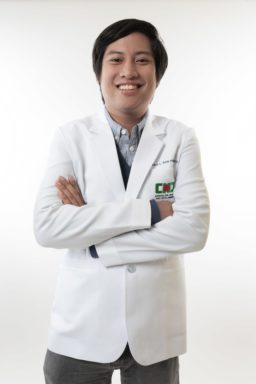
Dr. Joshua: «The government is taking some very strange measures. In the Philippines, it's compulsory to wear a mask or screen in front of your face. Everyone has to buy one. It's also compulsory to keep a distance of 1 to 2 metres from each other, and to show a marriage certificate if you're riding two people on a scooter. Checks are carried out in a military fashion: you are fined if you are caught without wearing a mask or screen. Representatives of the authorities even come to measure the distance between people. In Cebu province, workers are required to wear an air purifier on public transport, even though there is no evidence that it is effective. It could even be harmful.»
Kat: «It's sad. It's the citizens who have to bear the responsibility, when many can't afford to comply with all the measures.»
Dr. Joshua: «The government keeps repeating that it's because of those who don't follow the rules that the pandemic hasn't been contained. Surveys show that 70% of the population of the Philippines believes this to be the case. And yet the government's management of the crisis is so lamentable. Mandatory protective equipment is expensive, people have to look after their families and there is no replacement income for those who can't go to work. For many, there is simply no choice. And people even face prison sentences if they don't play by the rules. Because of this, confidence in the government is low and some even believe that the pandemic is being orchestrated to bring money into the state coffers.»
What is the vaccination rate in the Philippines?
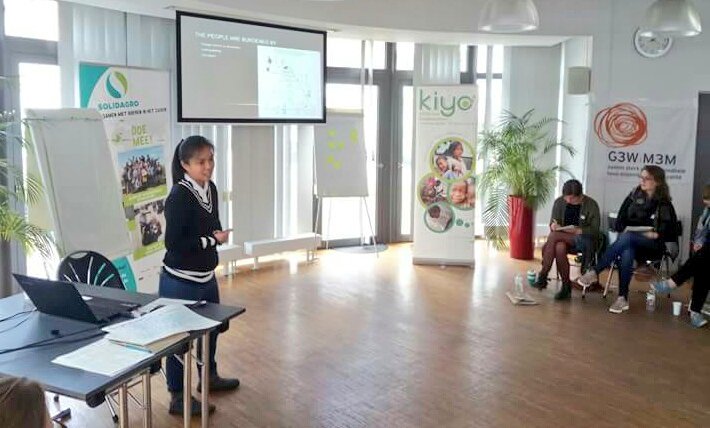
Dr. Joshua: «To date (17 August), 11% of the population has been vaccinated. We are therefore a long way from achieving herd immunity. Our target, which was a vaccination rate of 70% of the total population by the end of the year, has recently been reduced to 70% of the population in the main urban areas. In the Philippines, the choice has been made to vaccinate the people who drive the economy first, before the most vulnerable. The President, his security guards and various representatives of the authorities already received an «unofficial» vaccine in December last year. There is now talk of a third dose for these people, while the majority of the population has not even received one yet. An ordinary member of the public would already have been fined and could even face imprisonment for doing so. Vaccines are delivered erratically, so that some people do not receive their second dose on time. And, of course, it's all part of a political game: deals are struck for donations from the USA and China.»
What role does SMC play in the Philippines' vaccination strategy?
Kat: «We're trying to make people understand that managing the pandemic is the government's responsibility. We're also trying to inform people about the virus and vaccines, as people living in remote areas often have no access to accurate information.»
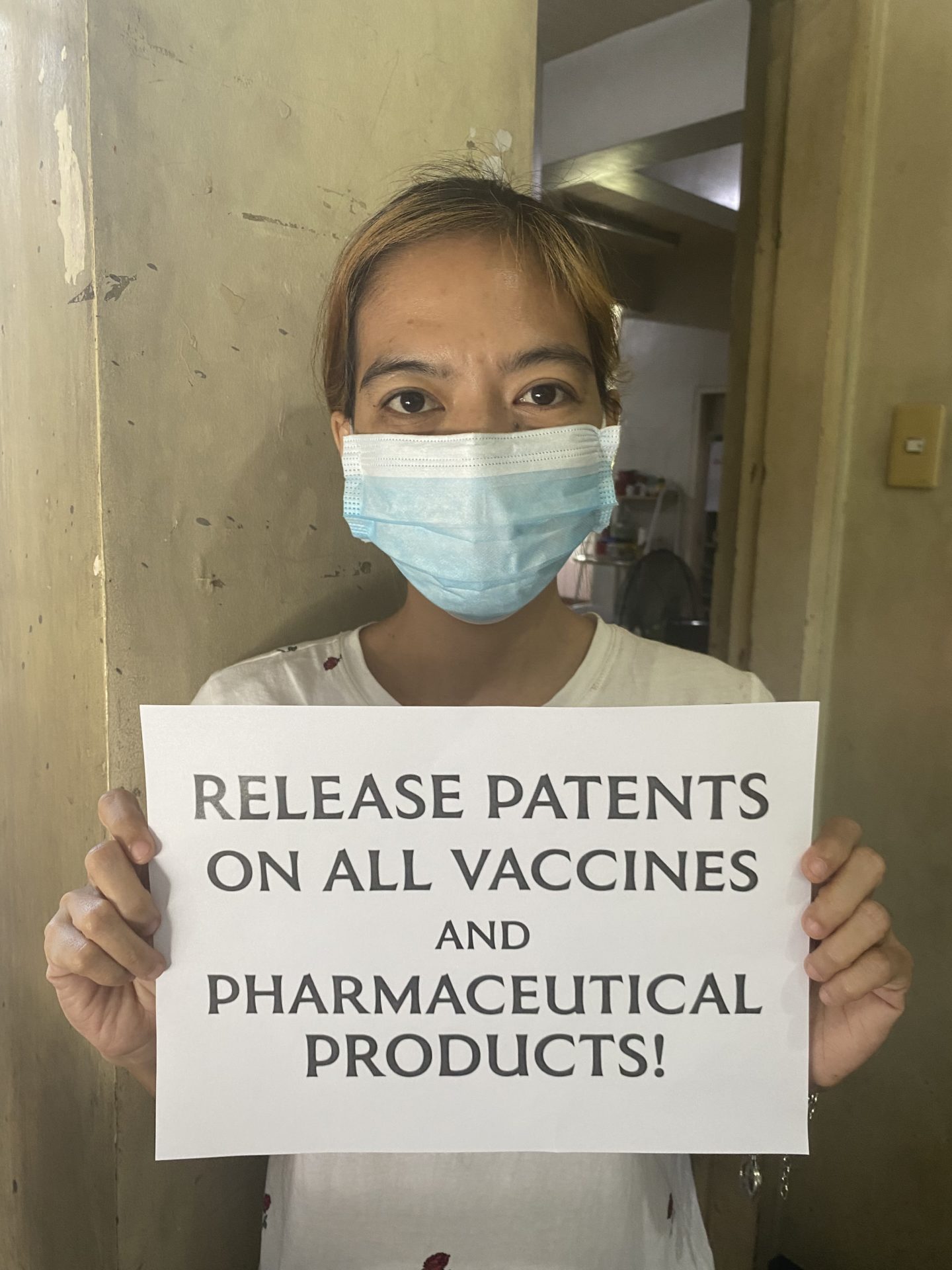
Dr. Joshua: «We are calling for a holistic approach: we need not only vaccination, but also large-scale testing, better contact monitoring, income replacement during quarantine and a strengthening of our health system. We are also asking our government to support cancellation of ownership rights because we are capable of producing our own vaccines if patents on vaccines are lifted or if more countries offer to produce them for us. That's what we're campaigning for. Of course, we're coming up against a lot of opposition: we're often told that there's no money, when we know full well that it's a problem of corruption and unused funds. For our government, the pandemic is a military issue, not a health issue.»
Sign the European citizens' initiative No Profits from the Pandemic and call on the European Commission to lift patents on coronavirus vaccines.
Would you like to invest in the training of community health workers in the Philippines? You can do so by making a donation to account BE15 0010 4517 8030, marked «Don Philippines».
This interview dates from 17 August. Read the updated figures on the WHO website.