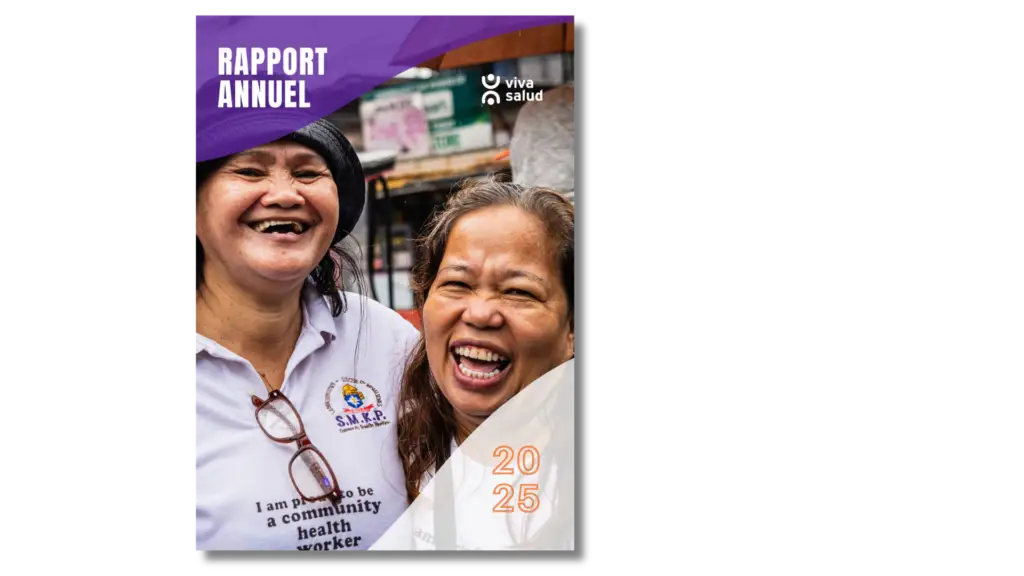
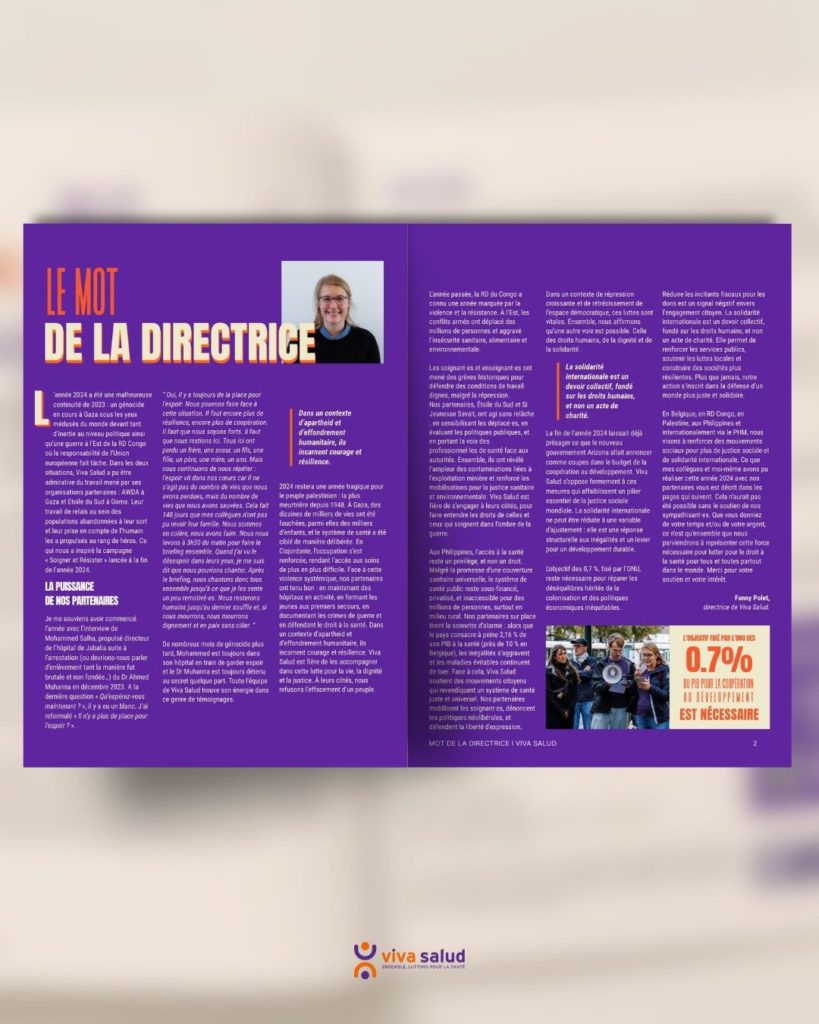
Our 2025 Annual Report is now available. It recounts a year that was both challenging and pivotal for Viva Salud and for all our partners in Palestine, the Democratic Republic of the Congo and the Philippines.
A year marked by genocide and inaction
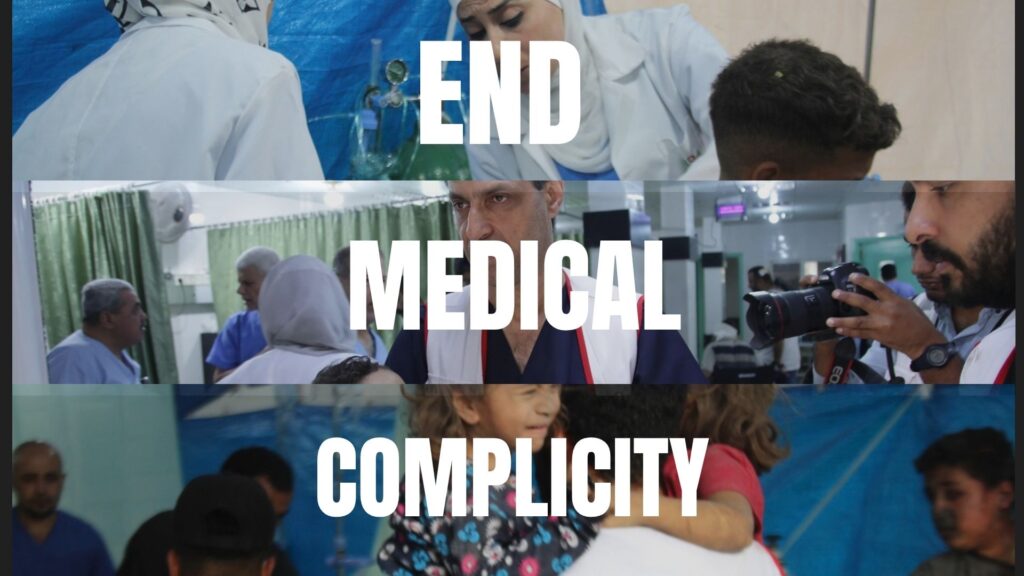
2025 will be remembered as a year in which the Israeli-American alliance demonstrated its violence and impunity, in Iran as well as in Lebanon, whilst the genocide continued in Gaza before our very eyes. Faced with this reality, Belgium, the European Union and the international community have, once again, remained silent bystanders to the expansion of settlement activity in the West Bank and the atrocities committed in Gaza.
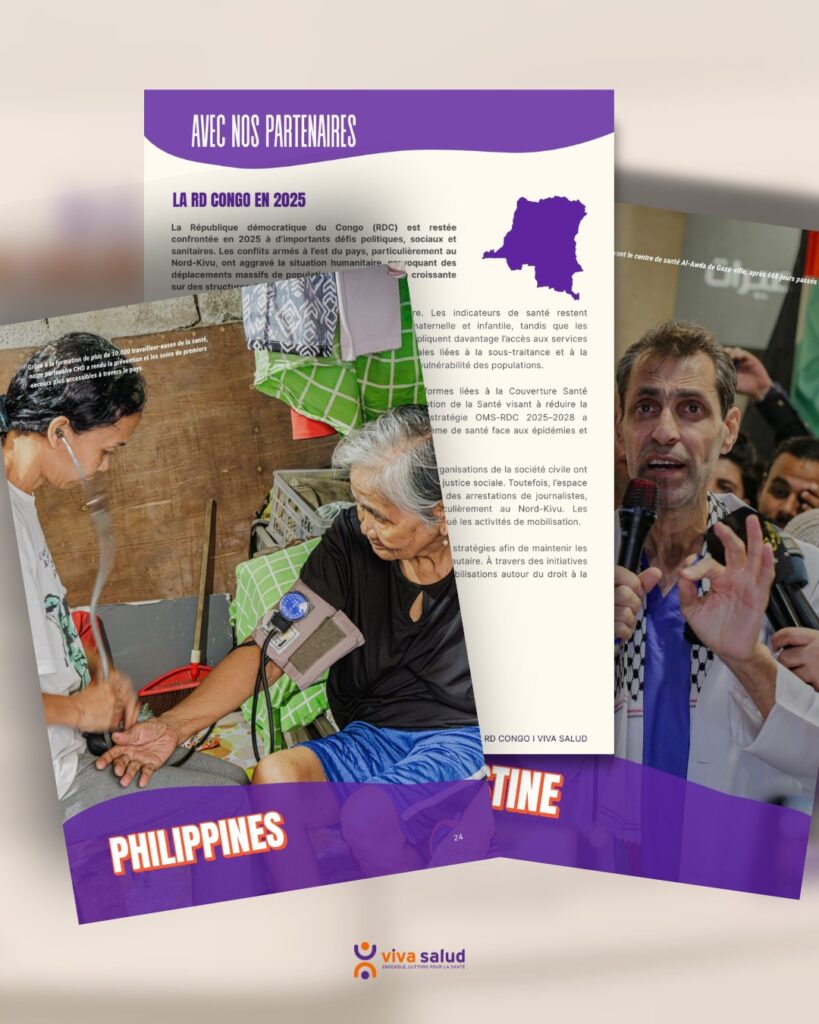
This inaction has not caused us to give up. Quite the contrary: it has strengthened our resolve to deepen our ties with our partners on the ground. Our partners at AWDA in Gaza, as well as the Health Work Committees and Bisan in the West Bank, have continued their work tirelessly under extreme conditions, and we have stood by their side. The release of Dr Ahmed Muhanna, celebrated with immense relief this year, is a concrete example of what collective and international mobilisation can achieve.
Strengthening partnerships, building South-South solidarity
Rather than pulling back, we have chosen to broaden and deepen our collaborations. In December, as we were unable to travel to Palestine, we organised a meeting in Manila between our West Bank partners and our Filipino partners (GABRIELA, CHD, IBON, Karapatan). This meeting gave rise to a shared analysis: that of shameless imperialism and an international community that turns its back on the people suffering as a result, whether in Palestine or the Philippines. This South-South solidarity, born of a shared struggle, has paved the way for new collaborations and campaigns.
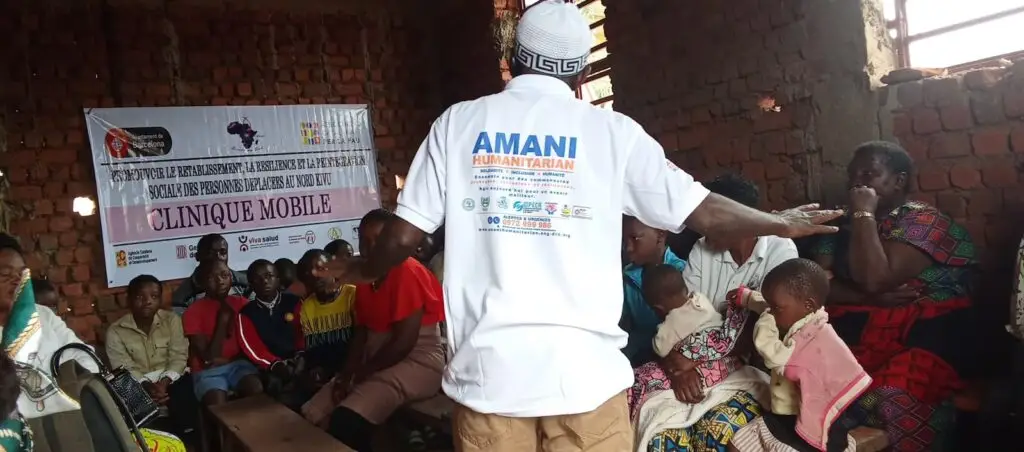
In the Democratic Republic of the Congo, despite the war in the east, epidemics and pressure on democratic freedoms, our partners Étoile du Sud and Si Jeunesse Savait have continued their campaign, stepping up their efforts with the authorities and bringing about tangible improvements in access to healthcare.
A global movement for the right to health
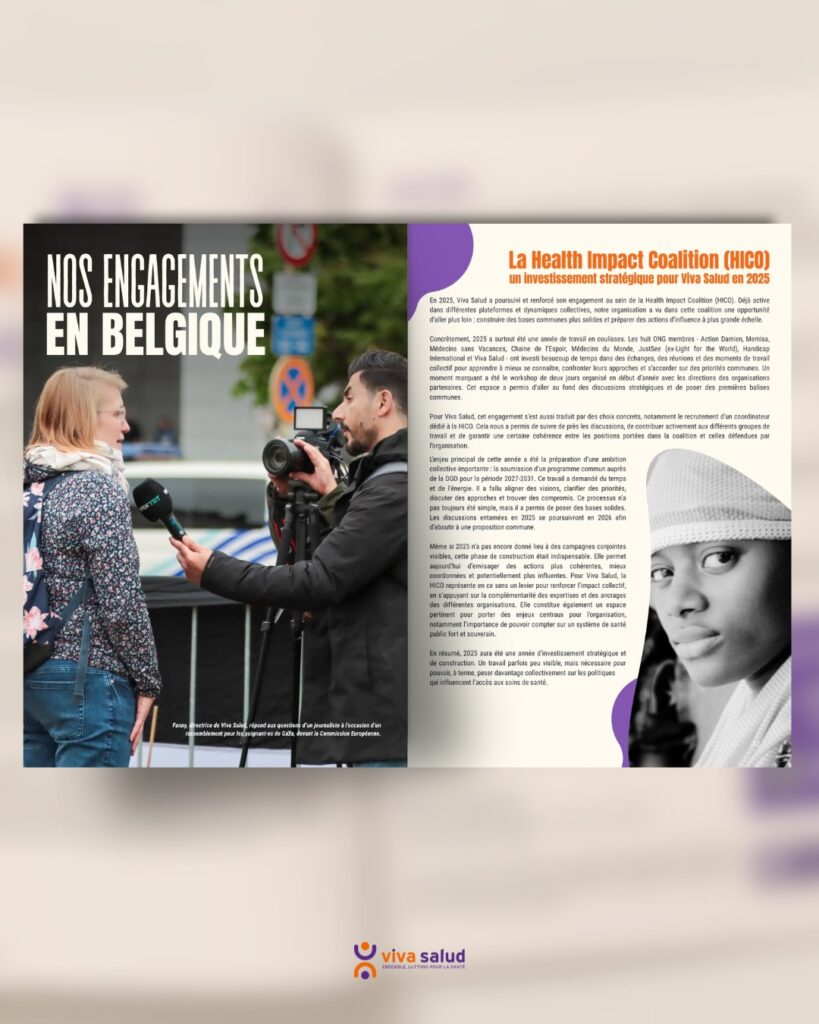
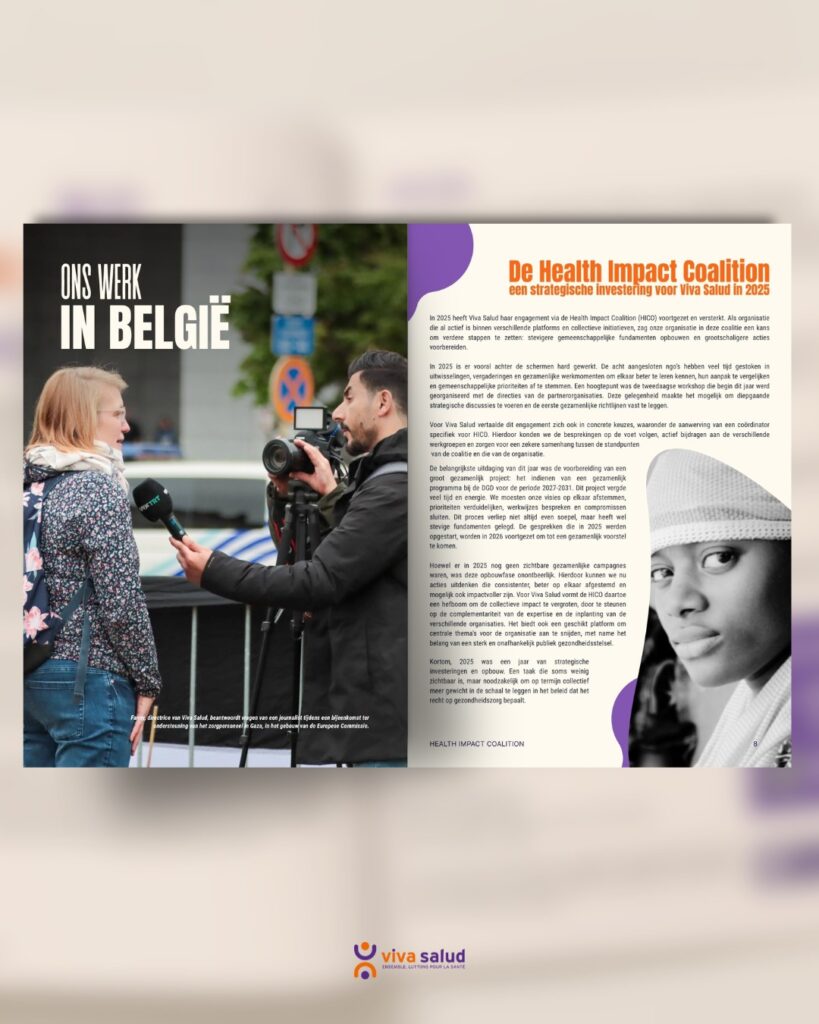
These local struggles form part of a much broader movement. Together with the People’s Health Movement (PHM), the world’s largest network for the right to health, this year we have stepped up our solidarity campaigns with Palestine, helped to disseminate Global Health Watch 7 and continued our advocacy for public, accessible and human rights-based health systems. We have also joined forces with seven other Belgian health NGOs to create the Health Impact Coalition (HICO), so that together we can strengthen health systems in the 16 countries where our organisations are active.
In the face of rising inequality, wars, authoritarianism and the commodification of healthcare, this global movement reminds us of a simple truth: health is inextricably linked to social justice, and change can only be achieved through collective action.
Carrying on, despite the budget cuts
This commitment has been forged against a difficult backdrop in Belgium, marked by the announcement of cuts of 25 % to international cooperation funding by 2027. This sends a clear signal that international solidarity is no longer a priority for our government. It is precisely for this reason that it is up to us, now more than ever, to take action to put solidarity back at the heart of public debate: not as an optional act of charity, but as a historic responsibility and a collective commitment.
Find out about all our activities in Palestine, the Democratic Republic of the Congo, the Philippines and internationally in our full 2025 annual report.
Ons Annual Report 2025 is available. It tells the story of a year that was both challenging and pivotal for Viva Salud and for all our partners in Palestine, the Democratic Republic of the Congo and the Philippines.
A year marked by genocide and inaction
2025 will go down in history as a year in which the Israeli-American alliance demonstrated its violence and impunity, both in Iran and in Lebanon, whilst the genocide in Gaza continued before our very eyes. Faced with this reality, Belgium, the European Union and the international community once again remained silent bystanders to the expansion of colonisation in the West Bank and the atrocities in Gaza.
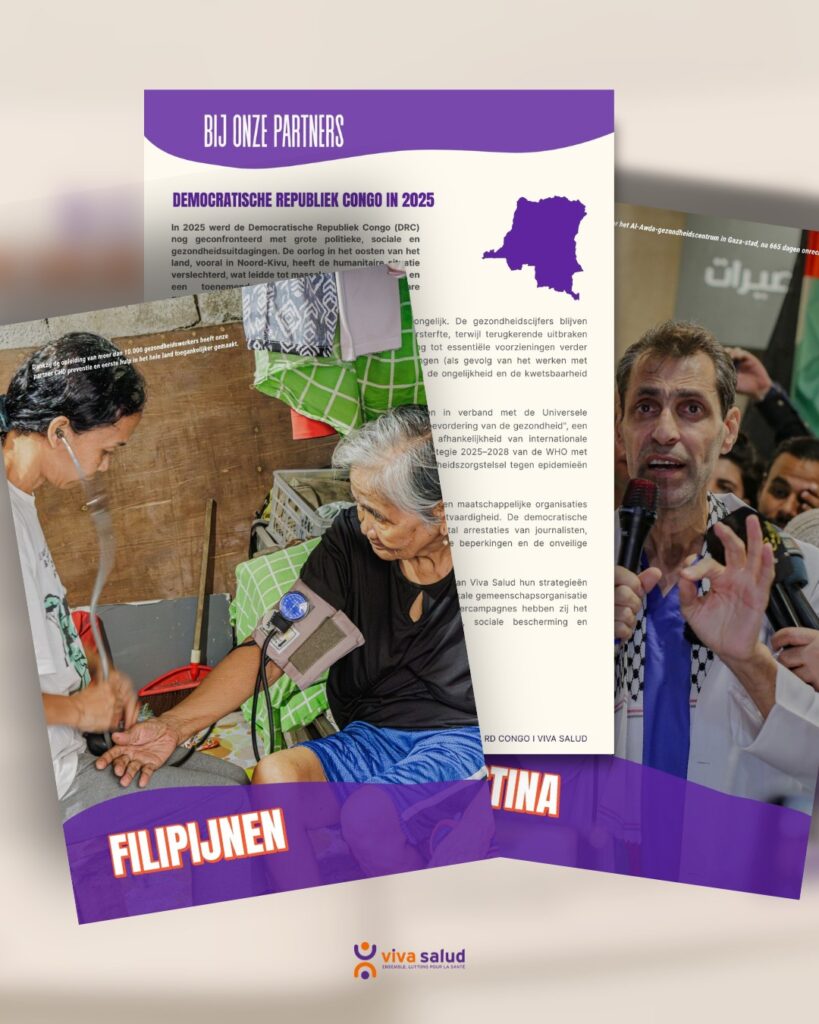
This passivity has not caused us to give up. On the contrary: it has strengthened our resolve to deepen our ties with our partners on the ground. Our partners at AWDA in Gaza, as well as the Health Work Committees and Bisan in the West Bank, have continued their work undeterred under extreme circumstances, and we have stood by their side. The release of Dr Ahmed Muhanna, celebrated with immense relief this year, is a concrete example of what collective, international mobilisation can achieve.
Deepening partnerships, forging South-South solidarity
Instead of withdrawing, we chose to expand and deepen our partnerships. As we were unable to travel to Palestine in December, we organised a meeting in Manila between our partners from the West Bank and our Filipino partners (GABRIELA, CHD, IBON, Karapatan). That meeting gave rise to a shared analysis: that of shameless imperialism and an international community that turns its back on the peoples suffering as a result, whether in Palestine or the Philippines. This South-South solidarity, born of a shared struggle, paved the way for new collaborations and campaigns.
In the Democratic Republic of the Congo, our partners Étoile du Sud and Si Jeunesse Savait have continued their campaigning despite the war in the east, epidemics and pressure on democratic freedoms. They have stepped up their advocacy with the government and made tangible improvements to access to healthcare.
A global movement for the right to health
This local struggle is part of a much broader movement. Together with the People’s Health Movement (PHM), the world’s largest network for the right to health, we have stepped up our solidarity campaigns with Palestine this year, helped disseminate Global Health Watch 7, and continued our advocacy for public, accessible health systems based on human rights. We also joined forces with seven other Belgian health NGOs to establish the Health Impact Coalition (HICO), with the aim of working together to strengthen health systems in the 16 countries where our organisations operate.
In the face of growing inequality, wars, authoritarianism and the commercialisation of health, this global movement reminds us of a simple truth: health is inextricably linked to social justice, and change is brought about through collective organisation.
Carrying on, despite the cutbacks
This commitment came about against the backdrop of a difficult situation in Belgium, marked by the announcement of cuts of 25% to funding for international cooperation by 2027. This is a clear sign that international solidarity is no longer a priority for our government. That is precisely why, now more than ever, it is up to us to mobilise and put solidarity back at the heart of the public debate: not as an optional act of charity, but as a historical responsibility and a collective commitment.
Discover all our projects in Palestine, the Democratic Republic of the Congo, the Philippines and internationally in our full 2025 annual report.