In early March, the member states of the World Trade Organisation will meet to discuss a proposal from India and South Africa. If the proposal is approved, global vaccine production could be increased. In a joint letter, the Belgian members of the European citizens' initiative No Profit on Pandemic are calling on the Belgian government to stop blocking the proposal.
The European Citizens' Initiative No Profit on the Pandemic can be signed here.
Dear,
We are writing to you on behalf of the Belgian coalition of the’European Citizens' Initiative Right to Cure – a broad group of civil society organisations including NGOs, trade unions, health mutuals and other civil society organisations – to draw your attention to a proposal submitted to the World Trade Organisation (WTO) for several weeks. This proposal is a solution to the obstacles created by patents on the production and distribution of vaccines and other medical goods to combat Covid-19. With this letter, we ask you to support the proposal submitted to the WTO and to invite the European Commission to do the same. In this way, the Belgian government can fulfil its promise of global solidarity and rapidly increase the production and accessibility of Covid-19 vaccines worldwide.
At the end of the last century, monopolies on HIV treatment caused a great deal of human suffering. To obtain vital medicines, HIV patients in Africa, Asia and South America had to wait ten years longer than those in Europe, the United States and Japan. Millions of people lost their lives unnecessarily. It was only when patents were lifted and generic drugs became available that the HIV epidemic could be effectively curbed in the poorest regions of the world.
Despite billions of pounds of public investment, pharmaceutical companies are still allowed to patent the end result of their research.
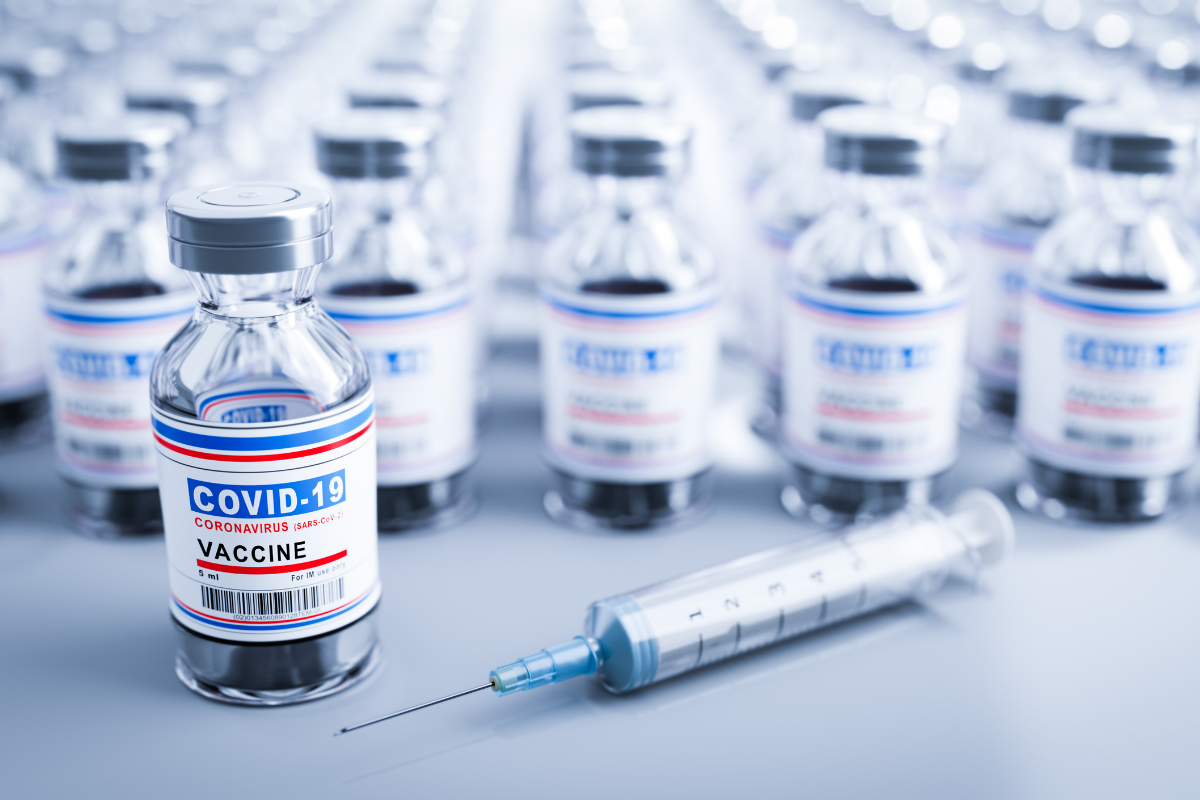
Now that the first Covid-19 vaccines have been administered in our country, we would like to warn you against a repeat of the HIV scenario. According to Dr Tedros, Director-General of the World Health Organisation (WHO), more than three-quarters of the 128 million vaccines administered worldwide as of 10 February came from just 10 rich countries. Nearly 130 countries, with a population of 2.5 billion, had not yet vaccinated their first citizen at that time.i. We are therefore seeing once again that patenting reinforces global inequalities in access to COVID-19 vaccines.
Despite billions of dollars in public investment, pharmaceutical companies are still allowed to patent the end result of their research. This gives them complete control over the production, pricing and distribution of vaccines. According to calculations by the People's Vaccine Alliance, 9 out of 10 people in low-income countries will be denied access to the vaccine this year because of the patent system.iiiii. The three largest vaccine manufacturers will only produce vaccines for barely 1.51% of the global population in 2021.iv. By refusing to share their technology and intellectual property, the largest pharmaceutical companies are artificially limiting the supply of effective vaccines. In doing so, they hope to reap enormous financial benefits. Intellectual property is the biggest obstacle to equal, effective and universal access to vaccines. This was demonstrated in our own country when, in January, Pfizer and AstraZeneca unexpectedly changed their delivery dates and conditions.
The proposal calls for a temporary suspension of the patent system for Covid-19 products until global herd immunity is achieved.
Fortunately, there are alternatives to overcome the limitations of the patent system during this pandemic. On behalf of the signatories of this letter, we would like to ask you to make use of these possibilities and to advocate at European level in favour of this proposal, which has been on the table at the World Trade Organisation (WTO) for several months now.
The proposal, submitted by India and South Africa in early October, aims to allow all countries worldwide to disregard certain intellectual property provisions enshrined in the TRIPS agreement.v without fear of sanctions. The proposal does not constitute an attack on intellectual property rights as such, but calls for a temporary suspension of the patent system for COVID-19 products until global herd immunity is achieved. It is important to emphasise that the proposal resolves the problems posed by the limitations of existing legal options, such as compulsory licences. Currently, a suspension must be requested on a country-by-country and product-by-product basis, which would take too long to respond quickly and effectively to the pandemic. In this exceptional crisis situation, where millions of lives are at stake, there is no time to waste and we need a comprehensive approach.
The longer the coronavirus circulates, the greater the risk of mutations affecting all countries, including those currently opposed to the proposal.
To date, more than 100 countries have welcomed or supported the proposal in some form at the WTO. Nearly 400 civil society organisations from around the worldvi, International organisations such as the WHO, UNAIDS and UNITAID, human rights experts and the African Commission on Human and Peoples' Rights have already urged you to support the proposal for a patent waiver. In addition, in just a few weeks, more than 86,000 Europeans have signed the European Citizens« Initiative »No Profit on the Pandemic", which calls on the European Commission to ensure that intellectual property rights do not hinder the accessibility or availability of a vaccine or treatment for COVID-19.
So far, the European Commission and a small group of WTO member states have chosen not to support the proposal. It is clear that the longer the coronavirus circulates, the greater the risk of mutations affecting all countries, including those currently opposed to the proposal. As a result, the fight against the pandemic will be more complicated, and there will be twice as many victims.vii According to research, the crisis will cause irreparable economic damage. It is therefore not only a matter of international solidarity, but also a duty to protect the European population itself: in the face of a global pandemic, solutions can only be found at the global level.
The proposal by India and South Africa to the WTO offers a unique opportunity to avoid a tragic repeat of the past and to place international solidarity at the heart of policy during this pandemic. With this letter, we call on the Belgian government to support this proposal and to urge the European Commission to do the same, or at least to stop blocking it. The right to health of billions of people is at stake.
Kind regards,
Jan-Piet Bauwens, Federal Secretary for Social Profit SETCa-BBTK
Filip De Bodt, coordinator of Climaxi vzw
Wim De Ceukelaire, Director of Viva Salud
Elisabeth Degryse, Vice-Chair of the Christian Mutual Society
Anne Delespaul, doctor at Médecine pour le Peuple (Medicine for the People) and initiator of the European citizens' initiative No Profit on the Pandemic.
Damien Favresse, Coordinator, Brussels Centre for Health Promotion
Mario Franssen, Director of ManiFiesta
Michel Genet, Chief Executive Officer, Médecins du Monde
Yves Hellendorf, National Secretary, CNE Non-Commercial
Lieve Herijgers, Director of Broederlijk Delen
Jean Hermesse, interim president of the Health and Solidarity Action Platform
Els Hertogen, Director of 11.11.11
André Kiekens, Secretary General of WSM
Danielle Leclercq, Chair of Oxfam in Belgium
Nathalie Lionnet, Federal Secretary, Non-Commercial SETCa-BBTK
Pascale Maquestiau, Project Manager, Le Monde selon les femmes asbl (The World According to Women)
Marijke Persoone, Hart Boven Hard core team
Julie Steendam, coordinator of the European Citizens' Initiative No Profit on the Pandemic
Noémie Van Erps, General Secretary of Femmes Prévoyantes Socialistes (Socialist Women's Welfare Organisation)
Luc Van Gorp, Chairman of Christelijke Mutualiteit
Annuschka Vandewalle, General Secretary of FOS
Michel Vanhoorne, coordinator of Links Ecologisch Forum
Veronique Wemaere, Director of SolSoc
Isabelle Wolff, Head of the Southern Actions Department at Artsen Zonder Vakantie
Peter Wouters, Chairman of Beweging.net
The European Citizens' Initiative No Profit on the Pandemic can be signed here.
i https://www.who.int/news/item/10-02-2021-in-the-covid-19-vaccine-race-we-either-win-together-or-lose-together
ii https://www.oxfam.org/en/press-releases/campaigners-warn-9-out-10-people-poor-countries-are-set-miss-out-covid-19-vaccine
iii The People's Vaccine Alliance is a coalition of organisations and activists campaigning for a “people's vaccine” controlled by citizens rather than Big Pharma. The coalition is coordinated by Oxfam and UNAIDS, and its members include Frontline AIDS, Global Justice Now, Nizami Ganjavi International Centre, STOPAIDS, Wemos, and the Yunus Centre.
iv The three largest vaccine manufacturers in the world are Merck, GSK, and Sanofi: https://www.oxfam.org/en/press-releases/monopolies-causing-artificial-rationing-covid-19-crisis-3-biggest-global-vaccine
v Trade-Related Aspects of Intellectual Property Rights
vi https://www.twn.my/announcement/signonletter/CSOLetter_SupportingWaiverFinal.pdf
vii Chinazzi, M. et al. (2020). Estimating the effect of cooperative versus uncooperative strategies of COVID-19 vaccine allocation: a modelling study. Available at: https://www.mobs-lab.org/uploads/6/7/8/7/6787877/global_vax.pdf