At the current rate of vaccine production, it will be at least 2024 before most low-income countries can achieve herd immunity against Covid-19. How is the vaccination campaign going in the Philippines? We put this question to Dr Joshua San Pedro, who works with our Philippine partner CHD and is co-founder of the Coalition for People’s Right to Health.
How is the vaccination campaign going in the Philippines?
“The vaccination campaign in the Philippines did not begin until 1er As of March 2021, we are in last place amongst the countries in the South-East Asian region. Only two vaccines are in use: Sinovac and AstraZeneca. Almost all of the 525,600 doses of AstraZeneca that we received through the COVAX initiative have been used. Sinovac is therefore the only vaccine available for healthcare workers, the elderly and those with underlying health conditions. As of 13 April, only 162,065 people had received both doses, representing just 0.1% of the population, and 1,093,651 people are awaiting their second dose.»
What are the main obstacles?
“There are several, the most significant being the shortage of vaccines. Unlike our neighbours – Malaysia, Indonesia and Thailand – we do not have the production capacity to manufacture vaccines for our population ourselves. We are therefore reliant on donations and purchases, via aid programmes such as the World Health Organisation’s COVAX initiative. There are also doubts about the safety and effectiveness of the vaccines. Many people are reluctant to be vaccinated due to the trauma caused by the last dengue vaccination campaign (using Dengvaxia) and the government’s highly confusing information campaign. There is too little reassuring information and too little access to healthcare services worthy of the name.
And then there are concerns as to whether Sinovac offers sufficient protection to people at high risk of contracting Covid-19. Some healthcare professionals are arguing in favour of using this vaccine in the absence of any alternatives, whilst others are against it because there is not enough reliable, controlled data. There is a lack of staff and resources needed for the campaign to be rolled out effectively, so the vaccination process is taking time. Furthermore, the order of priority for at-risk groups is not being followed, as the ruling class is being given priority.»
What solutions do you see to these obstacles?
The vaccination campaign must be rolled out more effectively and transparently. Especially when one considers the millions of pesos we have borrowed for this purpose from multilateral organisations and other countries. The public has a right to be properly informed. The state should be playing an active role, yet instead, the Department of Public Health is blaming the public’s reluctance to get vaccinated. As for the government bodies responsible for health matters, they must be held accountable for procedural failings such as failing to prioritise vulnerable groups. However, we must also understand that vaccination is not the solution to the pandemic. A strong and proactive public health service is essential, as is addressing the social determinants of health, given that the pandemic is exacerbating inequalities within society.
What is the role of the CHD and social movements?
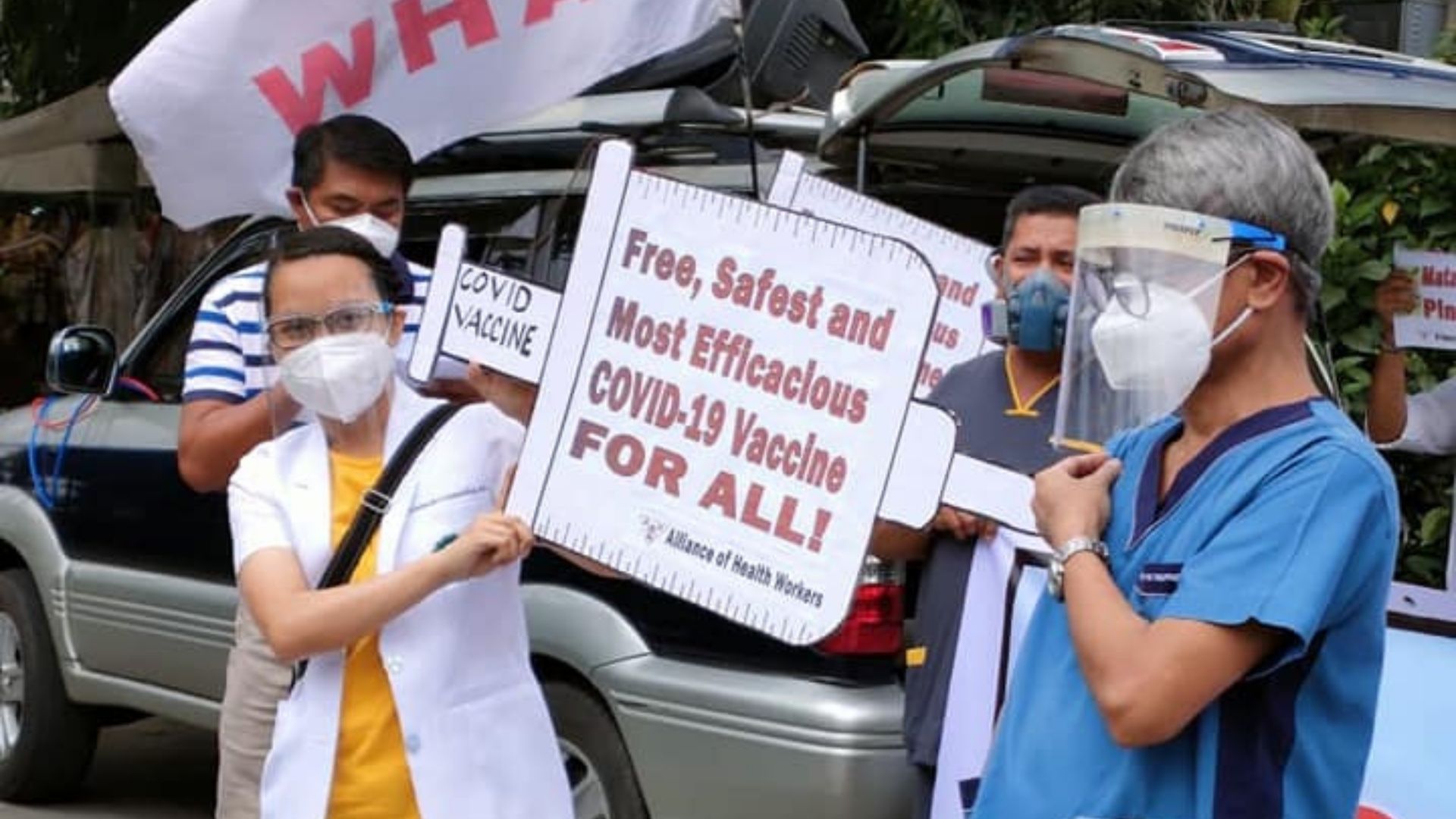
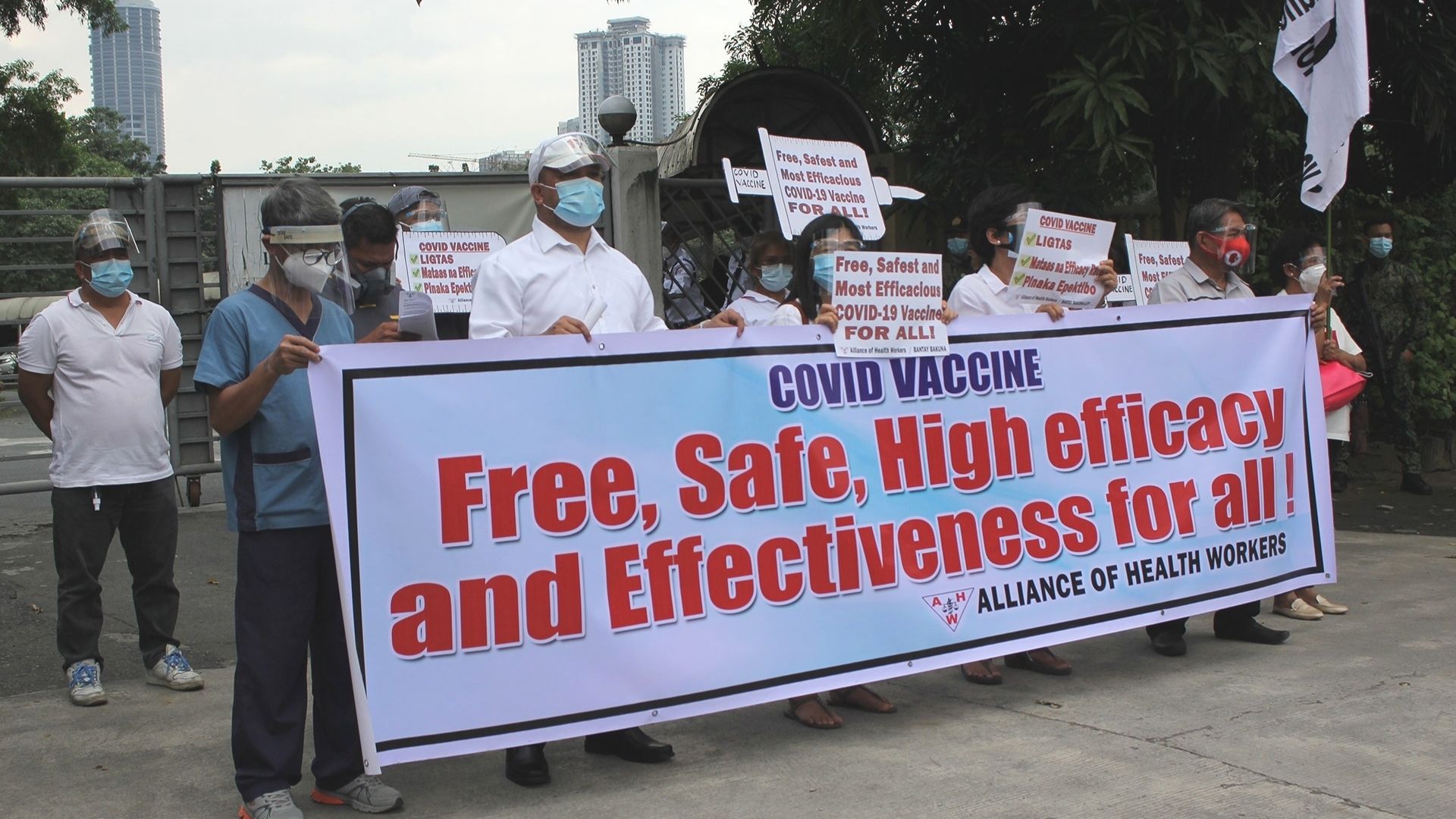
The CHD provides information and critical analysis to the CPRH (Coalition for People’s Right to Health) and monitors the roll-out of the vaccination programme through Bantay Bakuna. Bantay Bakuna, an initiative of the CHD and the CPRH, is a coalition of organisations from various frontline sectors: women, children, young people, farmers, workers, religious groups, healthcare staff, campaigning organisations, local health programmes, scientists and many others. We advocate for reliable information about the vaccine and for transparency, equality, accessibility and accountability in the national Covid-19 vaccination programme. Our organisations are independent and highlight the reality of people’s situations as well as their need to live in a better and healthier society.
Despite the restrictions imposed by health protocols and the abuse of power that goes hand in hand with them, the CHD and Philippine social movements are continuing their work, despite the current dangers and challenges. As long as the right to healthcare remains out of reach for the majority of people and people continue to die from diseases that can be prevented or treated, our work and our struggle for a genuinely public healthcare system remain as relevant as ever.
How can international solidarity provide assistance?
For years, we have been able to rely on our partners in Belgium. Even though we live on the other side of the world, they provide us with both practical and moral support. The financial aid enables the CHD to continue its work within communities, to organise health education, projects focusing on herbal medicine and the responsible use of medicines, to set up health programmes for mothers and children, to improve the environment and hygiene, and to train health leaders.
Alongside training and education for local health committees and healthcare staff, these programmes help to empower people to assert their right to health and to campaign for causes that affect health, amidst the day-to-day economic and political challenges we face.
Even though the democratic space in the Philippines is constantly shrinking and support for social movements is continually being called into question, we very much hope that NGOs, groups and individuals in Belgium will continue to support the CHD and other Filipino organisations, both financially and morally. For us, financial support is much more than just money. It is a form of solidarity between people who experience injustice, wherever they may be in the world. It is a tangible expression of hope that, together, we can build a fairer world.
Interview conducted on 20 April 2021