This article was published (in Dutch) on Sociaal.net, as part of the «Social Work Around the World» feature. All over the world, social work professionals and their organisations are working tirelessly, day in, day out, to improve the lives of the most vulnerable. Yet their knowledge and expertise are not always widely recognised. And this is precisely what Sociaal.net aims to change, in collaboration with 11.11.11, the umbrella organisation for international solidarity.
In the Philippines, working in the healthcare sector is not without its risks, particularly if you are critical of the government and fight for your patients« rights. “ Work on health does not begin or end in hospitals. We must also pay attention to the causes of illness, such as poverty, a lack of education and a lack of housing.». »
The strength of carers in local neighbourhoods
Health is a fundamental right. Access to healthcare and a healthy life are political choices. Healthcare workers at the Council for Health and Development (CHD), a partner of the Belgian NGO Viva Salud in the Philippines, are in complete agreement on this point.
Katherine Berza has been working at the CHD for fifteen years now. As a coordinator and campaigner, she is closely involved in the day-to-day work of care workers in the neighbourhoods, known as ‘’community health workers’.
‘At present, there are more than 10,000 in the Philippines’ carers volunteers.’
“I am interested in community health programmes because they strengthen the resilience of local communities », says Kat in an interview with Viva Salud during a visit to Belgium. « Some people of these soignaha·l·l cannot read or write but have a big heart and the determination to do meaningful work in their neighbourhood, without expecting anything in return.». »
In the Philippines, the first community health projects began in 1973 on the islands of Luzon, Visayas and Mindanao. Inspired by « barefoot doctors »In China, three nuns trained people with no medical background to work as carers. This helped to alleviate the severe shortage of medical staff in these remote areas.".
The great success of these projects has led to their proliferation throughout the Philippines. The CHD is the umbrella organisation for all these different initiatives. Currently, more than 70 programmes are underway and the Philippines has more than 10,000 volunteer carers.
What do these carers do?
They provide healthcare and are, as a result, key figures within their neighbourhood. They are aware of the issues facing the local community and also contribute to social programmes that strengthen ties between residents.
Ideally, each carer looks after fifteen families. This helps to ensure the quality of care. Caregivers are appointed by the residents, which lends them credibility. No distinction is made on the basis of education, religion or economic status.
‘The carers ’People in the neighbourhoods are aware of what the local population is going through.'
They are aware of the gaps in healthcare provision in the Philippines. They are proud to be helping to bridge these gaps and improve the well-being of the local population. They do not receive any salary. They have another paid job or work in the informal sector. Visits to the families in their care therefore take place during their free time.
Healthcare workers in local neighbourhoods do not carry out full medical consultations but focus instead on preventive care. They provide initial support and ensure that people seek medical assistance when necessary, so as to prevent symptoms from worsening unnecessarily.
On the front line
Kat still remembers very clearly the first time she saw healthcare workers at work on the island of Negros. She was impressed. « The carers were proving very enterprising people. They went so far as to build little houses for the patients »who needed to be placed in isolation or whose symptoms required close monitoring."
She had also been impressed by the standard of care they provided and the knowledge they possessed. « They knew exactly where to refer patients. I am convinced that their work saved many lives, because in Negros, you have to travel long distances to reach a hospital. These healthcare workers deserve the utmost respect because they are on the front line.». »
Terrorists
Working as a healthcare professional in these neighbourhoods is not easy, as security in the Philippines continues to deteriorate. As a result, the CHD no longer has unrestricted access to the island of Negros.
‘Every day, we fear for our safety.’
Kat explains that the day-to-day lives of carers, she says, are marked not only by disappointment and frustration, but also by threats. « Every day, we are concerned for our safety, the safety of our families, and that of the organisations and neighbourhoods in which we work.». »
The Philippine government frequently resorts to «red-tagging», which amounts to labelling anyone who opposes the government as a terrorist on the basis of their alleged links to the Communist Party or the New People’s Army.
Being criminalised for speaking out
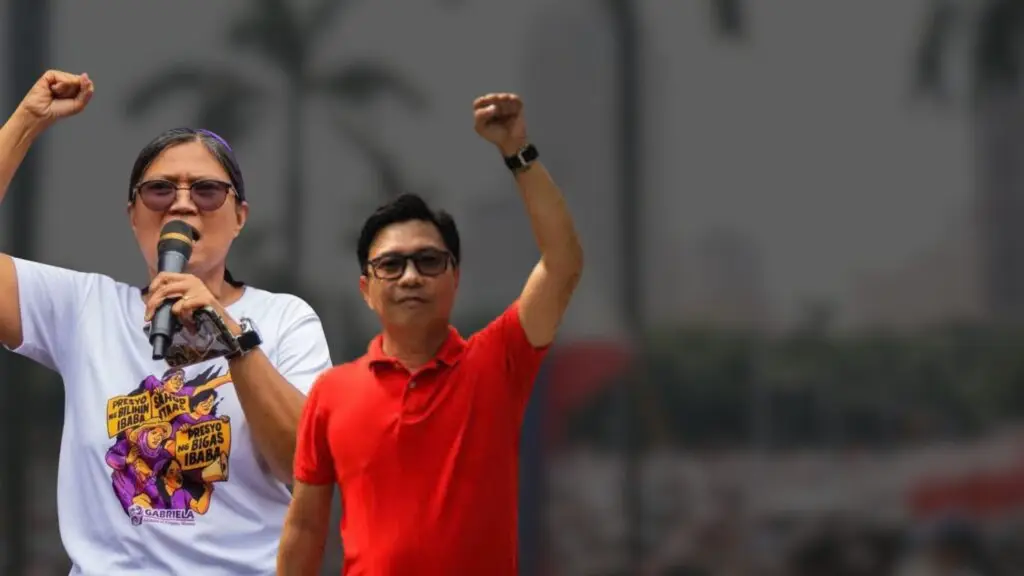
Tinay Palabay, General Secretary of Karapatan, a human rights organisation in the Philippines and a partner of Viva Salud, explains how this «red-tagging’ tactic affects a very wide audience. “ It ranges from TV presenters to beauty pageant winners. Even priests and journalists are targeted. These aren’t necessarily people with progressive views; all it takes is criticising government policy. It’s unbelievable that people are being criminalised for their words. »
When you are affected by red-tagging, you are often the victim of false accusations, such as accusations of murder, for example. The police then conceal « physical evidence »in that person’s home or pays people to give false testimony. Mary Lawlor, the UN Special Rapporteur, has described this tactic as a death threat because those who are «tagged» are often murdered.".
‘I get threats at breakfast, lunch and dinner. And sometimes at teatime, too.’
Tinay Palabay, too, regularly faces repression. « The last seven years have been really tough. I receive threats at breakfast, lunch and dinner. And sometimes at teatime too. They’re getting more and more serious. My safety and that of my family are at risk..». »
Tinay is the subject of several false accusations. « If I am convicted, I will surely have to serve six years in prison. This is a tactic by the Philippine government to silence our organisation. Over the past seven years, 800 innocent Filipinos have been locked up in overcrowded prisons.». »
A questionable career choice
Kat explains that Rose Sancelan, a doctor in Negros, and her former colleague Zara Alvarez were both murdered.
Recently, Naty Castro, also a doctor, was unlawfully arrested. She had been the victim of ‘red-tagging’ for decades and had been falsely accused of murder and kidnapping. Fortunately, after two months, she was released following numerous local and international solidarity campaigns.
Naty Castro is one of the longest-serving doctors at the CHD. As soon as she finished her studies, she began working for a Lumad indigenous community. She is a graduate of a prestigious university in the Philippines. Her decision to practise medicine in a remote area therefore seemed suspicious to the authorities.
International solidarity
Just like Naty, in 2010, 42 healthcare workers from the CHD were arrested whilst attending an emergency care training course. The Philippine military accused them of making bombs after planting «evidence» at the training venue. The healthcare workers were not released until ten months later.
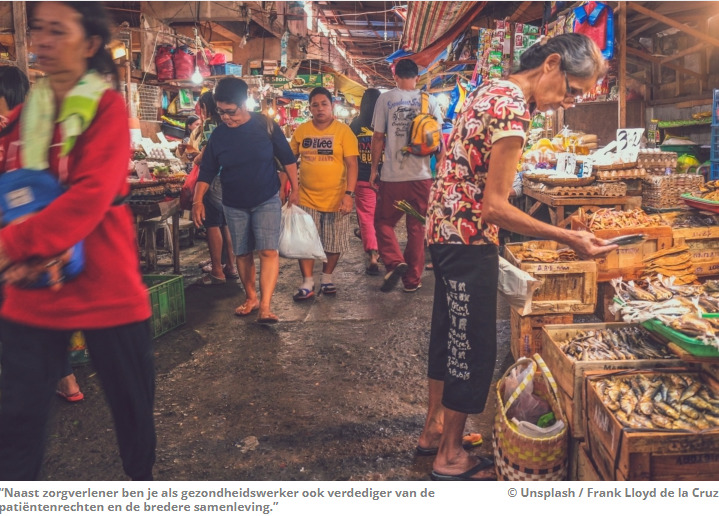
International solidarity played a vital role in securing their release. Indeed, letters flooded into the presidential palace every day demanding the release of these healthcare workers, eventually causing the president’s aides to crack. But even though they were eventually released, the fabrication of evidence and the baseless accusations were never acknowledged and have gone unpunished to this day. « As healthcare professionals, we do more than just provide care; we also defend the rights of patients and society as a whole. »
Social determinants of health
The rights of healthcare workers and activists are constantly being flouted in the Philippines: from the right to freedom of expression to the right to a defence. And yet these are universal rights enshrined in the Philippine Constitution.
Trade unions and their members, such as the Alliance of Health Workers, who take part in demonstrations are regarded as terrorists. Hospital management advises its unionised staff against taking part in activities directed against the government.
‘Healthcare does not begin or end in hospitals. We must also be mindful of what makes people ill.’
Kat argues that carers do much more than just provide care. « As carers, we cannot We must not limit ourselves to medical work in hospitals or in local communities. We must also take a critical stance on the political situation. Not just by challenging the prevailing narrative, but also by defending the rights of our patients.». »
« We must be mindful of the factors that make people ill, such as poverty, lack of education, homelessness and all the other factors that enable people to live with dignity. This is what we call the social determinants of health. It is why poor people are more often ill than the wealthier.». »
Privatisation
Meanwhile, the quality of healthcare in the Philippines continues to decline. The newly elected president, Ferdinand Marcos Jr., the son of the dictator of the same name, has said that he wants to attract more private investment into the healthcare sector.
« »This worries us because it will lower the quality of care,« says Kat. "If we open up a public good such as healthcare to private investments, the priority will be profit. And this will be at the expense of patients.». »
«Privatisation is taking place at the expense of the patients.». »
For Kat, behind the growing social unrest and the resulting increase in repression, there are first and foremost socio-economic reasons. In the Philippines, a great many people live in extreme poverty. Healthcare workers, too, are paid far too little, and some are even paid below the minimum wage.
For this reason, those with medical training are forced to work in other sectors, even though there is a real shortage of healthcare workers. During the Covid-19 pandemic, they were made numerous promises to compensate them for the risks they took on a daily basis. To date, thousands of healthcare workers have still received nothing.
Significant consequences
The crackdown on healthcare workers is having a severe impact on the population. In the Philippines, there is just one doctor for every 33,000 people. This figure is well below the standard set by the World Health Organisation, which is one doctor for every 1,000 people.
Furthermore, most Filipinos do not have access to medicines; they are either unaffordable or simply not available. Many die from illnesses that could have been prevented or treated, such as tuberculosis, for example.
A case for the politicisation of healthcare
The CHD’s work goes beyond a purely biomedical approach to health. The CHD campaigns on all issues that affect the health of the Filipino people, opposing rising energy prices, inflation and the repression of healthcare workers.
Kat explains, « If we were not concerned about unlawful arrests and killings, how could we persuade more doctors, nurses and’students to provide healthcare in remote areas, where iels are the most needed, but where iels aren’t safe? »
« It is the job of health campaigners to show what this is really all about. It gives people food for thought and, ultimately, it will improve the health of a·ll. Our times demand carers that’iels are also activists. »

PODCAST: BEING A HEALTH ACTIVIST IN THE PHILIPPINES
In September, Viva Salud launched the #NotATarget campaign. On Spotify, a podcast was launched under the same name, where you can hear more testimonials from Kat, Tinay, and other health activists.
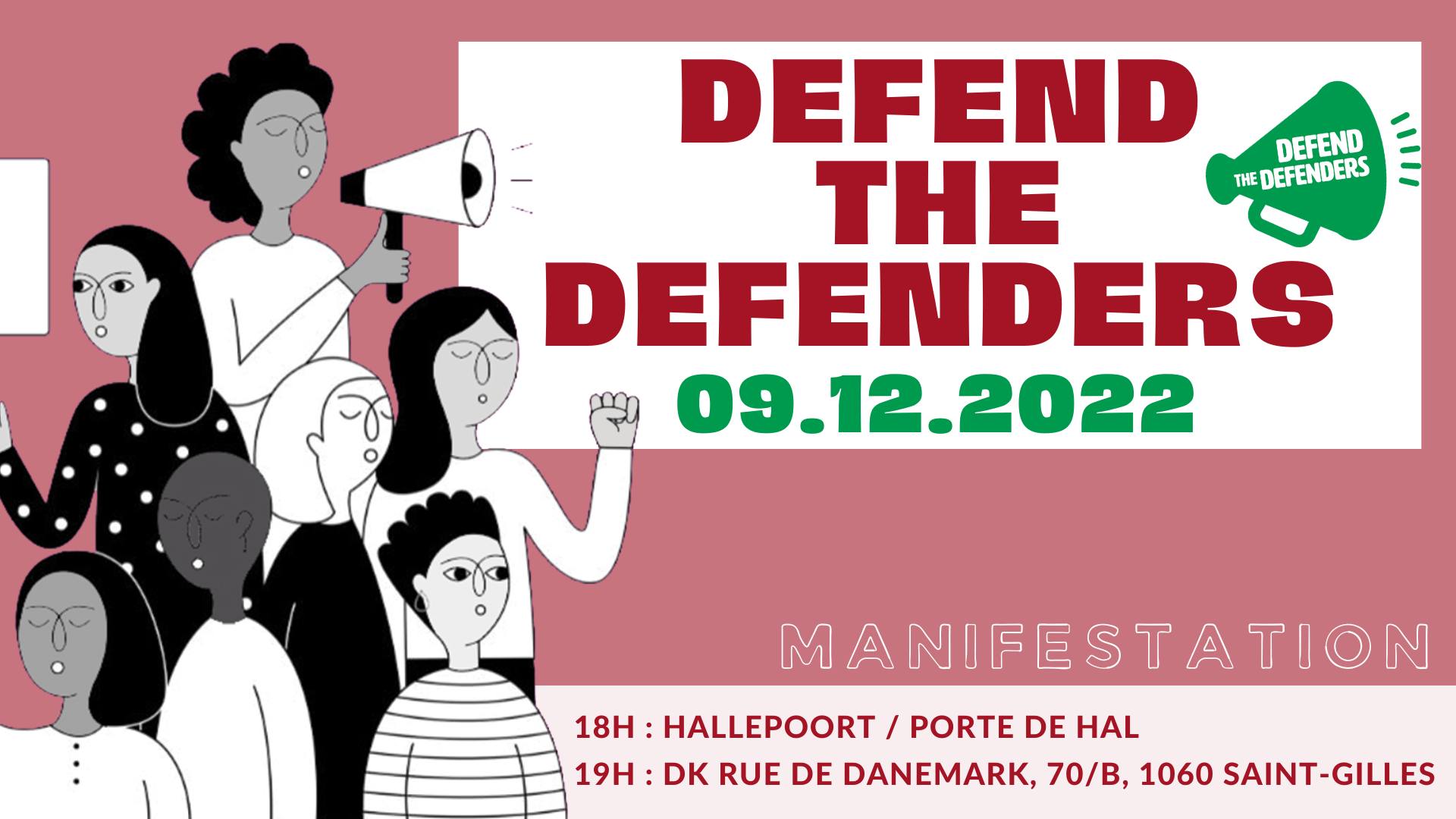
On 9 December, various social movements and trade unions will take to the streets in Brussels to mark Defend the Defenders to mark International Human Rights Day. At 6 pm, we will make our voices heard at the Porte de Hal, to amplify the voices of human rights campaigners. Please come along in large numbers!