«No one will be safe until everyone is safe». Dr Tedros, Director-General of the World Health Organisation (WHO), has often warned us. Until the coronavirus pandemic is brought under control worldwide, the danger will persist. We can turn the tide.
The vaccination campaign in Belgium and Europe is well under way. The rich countries, which bought the limited stock of vaccines, are now vaccinating their populations en masse. Nurses, teachers, grandparents, young people... Everyone is being vaccinated, one at a time. Elsewhere in the world, however, countries are facing a serious shortage of vaccines. This means that young, healthy Belgians are being vaccinated more quickly than frail elderly people and care staff who are on the front line elsewhere in the world.
A glance at the figures for the global vaccination campaign tells us more than long speeches. By the end of June, only 23 % of the world's population had received a first dose. In low-income countries, this rate drops to a staggering 0.9 %. According to the People's Vaccine Alliance, a coalition that wants to make the coronavirus vaccine a public good, at the current rate it will take 57 years to vaccinate everyone. We can't afford to wait that long.
Deadly variants
Public health experts have been stressing the importance of global immunity for some time now. This can be achieved if at least 70 % of the world's population is protected against the virus. If we remain below this percentage, the risk of new epidemic episodes and the appearance of more contagious variants remains high. In a survey carried out by the People's Vaccine Alliance, two out of three virologists questioned warn that current vaccines will no longer offer protection against new mutations of the virus within a year or two.
Virologist Steven Van Gucht explains how this works: «Virus variants come and go. That's not unusual; it's also the case for the flu virus. They are constantly trying to supplant each other and, every X months, a new variant becomes the dominant one. Even the British alpha variant, whose contagion rate was already 50 % higher than that of the original virus, gave in to the delta variant, which originated in India. The contagion rate of the delta variant is on average 55 % higher».»
When the variant delta first appeared in December 2020, in the Indian state of Maharashtra, it didn't seem all that unusual. But when it spread a few months later to New Delhi, it had a devastating impact. By the end of April, almost 30,000 infections were being reported every day. Hospitals were at their wits' end and facing a serious shortage of oxygen.
Since then, the delta variant has become responsible for a new wave of contaminations around the world. Australian cities are under lockdown, Indonesia is setting up emergency tents next to hospitals, and numerous outbreaks of the virus are occurring on the African continent. The proportion of the new variant is increasing extremely rapidly in our country too. By the end of August, it could be responsible for 90 % of all cases in the European Union. This is a major problem, because the delta variant sends unprotected people to hospital twice as fast. A potential tragedy for countries with vulnerable public health systems.
Intentional dishonesty
How is it possible that COVID-19 is claiming more victims when we have developed vaccines that could protect them? Strive Masiyiwa, who heads the African Working Group on Vaccination, can tell you: «We don't have access to vaccines, we can't buy them. We are faced with a global architecture of deliberate dishonesty».»
While the virus is spreading in more than 20 African countries, only 1 % of the African population has been vaccinated. Barely 1.5 % of all the vaccines have been sent to the African continent. The global vaccination campaign has therefore been a complete failure. The pharmaceutical industry and the political leaders of rich countries bear an overwhelming responsibility in this respect.
To begin with, the European Commission is sabotaging the proposal by India and South Africa to temporarily lift patents on vaccines, tests and treatments. Such a measure would enable the production of vaccines to be increased. The majority of the world's countries, Nobel Prize winners, scientists, trade unions, mutual societies, NGOs and millions of citizens are in favour. However, for the European Commission, the profits of the pharmaceutical industry come first.
The pharmaceutical giants have also received billions of euros in subsidies to develop a vaccine. For example, the public authorities paid 97 % of the development costs of the Astra Zeneca vaccine. Despite this, the industry refuses to share its knowledge and technology with other factories. C-TAP, A WHO initiative, in which companies can participate on a voluntary basis and which aims to increase vaccine production worldwide, has been completely ignored.
At the same time, rich countries are offering money and vaccines to COVAX, a mechanism designed to distribute vaccines around the world. But because Moderna, Pfizer and Astra Zeneca are keeping their knowledge secret, and because rich countries have bought up all the vaccines available, COVAX is failing to meet its modest target of vaccinating 20 % of the population of low-income countries this year.
The urgency is greater than ever
Fortunately, there is also good news. For over a year, citizens and social movements around the world have been fighting for universal access to the coronavirus vaccine. They are demanding that the vaccine be placed under public control, and not in the hands of the pharmaceutical industry. Their struggle is gaining momentum. The European Citizens' Initiative No Profit on Pandemics has already collected over 200,000 signatures. In Belgium, the right-wing parties are increasingly isolated. But now, more than ever, we need to keep up the pressure. The urgency is there. Until we take control of the virus worldwide, the waves of infections will continue.
Dr Joshua, from the Council for Health and Development, a Viva Salud partner in the Philippines, puts it this way: «As long as the right to health remains inaccessible for the majority of people, and people continue to die from diseases that can be prevented or cured, our work and our fight for a truly public health system will remain essential.»
Jasper Thys
Article published on 7 July 2021 on In solidarity.
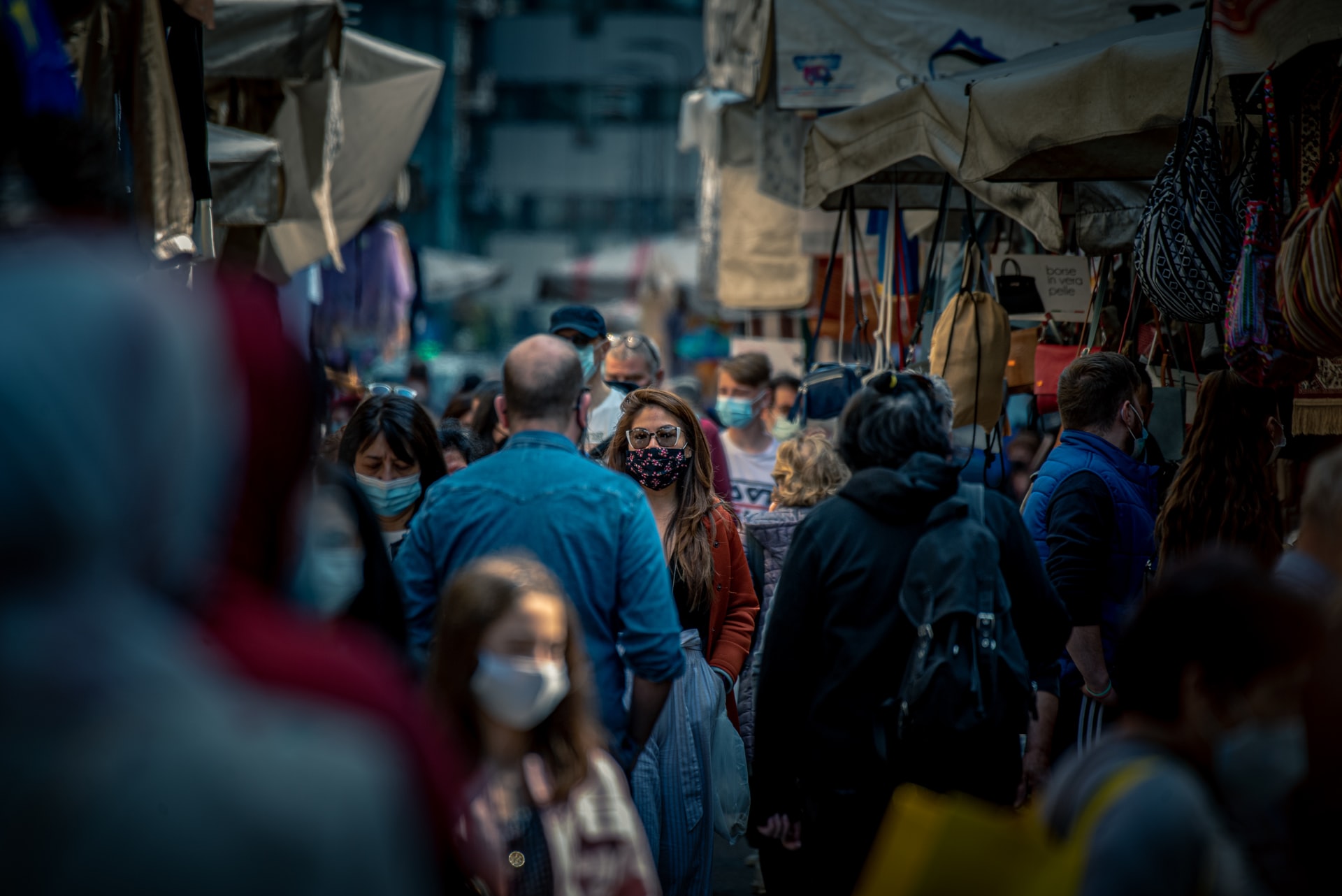
Photo by Matteo Jorjoson on Unsplash.