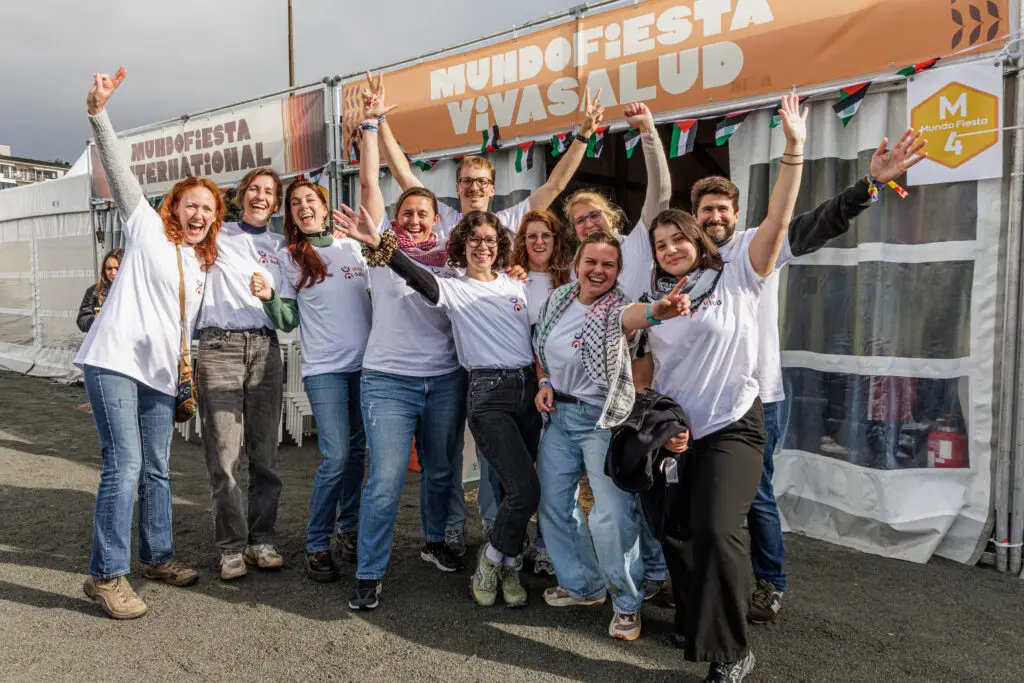
Alongside social movements, health activists, trade unions, mutual societies and NGOs, we have been fighting for over a year for a People's Vaccine, a vaccine that is in public hands. We are lobbying politicians to lift patents on coronavirus vaccines and to share knowledge and technology, so that the vaccine can be made available worldwide. But thanks to these six myths, Big Pharma and the politicians are blocking a solution to the pandemic.
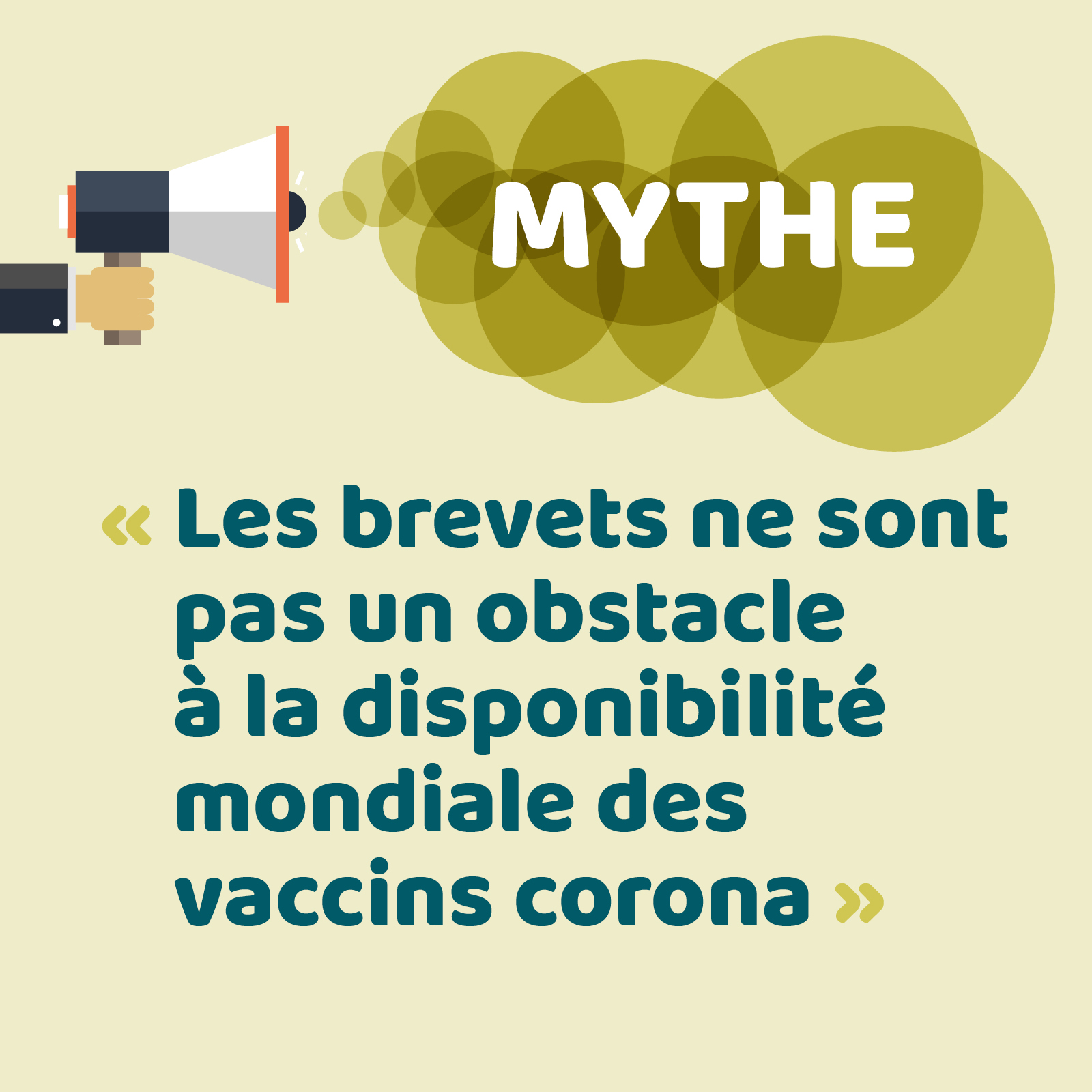
“Patents are not an obstacle to the global availability of corona vaccines”.”
Patents form a kind of wall between new remedies and the people who need them, in two ways. The same applies to corona vaccines.
On the one hand, patents allow pharmaceutical companies to determine the price of their products themselves. This makes some drugs extremely expensive, or even unaffordable for many people. Just think of baby Pia and her life-saving injection costing €1.9 million. During the pandemic, some low-income countries paid more for corona vaccines than a wealthy region like the European Union.
On the other hand, patents prevent corona vaccines from being produced on a large scale. They limit production to a few suppliers who cannot fully meet the urgent global demand.
This benefits the pharmaceutical companies. By keeping the global supply of vaccines artificially low, they can count on high profit margins.
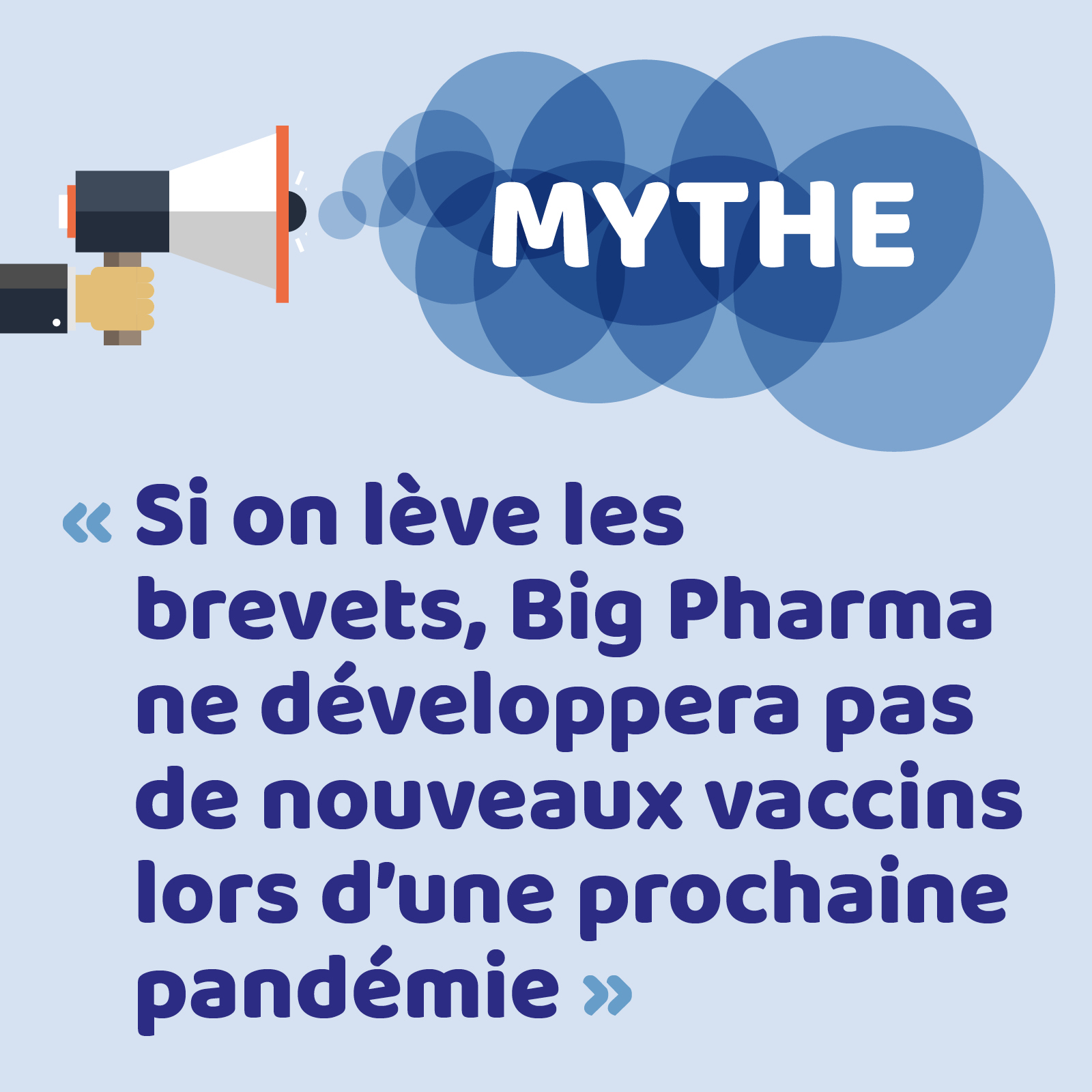
“If we lift the patents, Big Pharma won't be developing new vaccines for the next pandemic”.”
The heads of the major pharmaceutical companies are making no secret of the fact. If the patents on corona vaccines are lifted, they are threatening not to develop new vaccines for the next pandemic. The Liberal parties in government are happy to follow suit. But they are forgetting one crucial detail: Big Pharma received billions of euros in subsidies to develop a corona vaccine. The authorities compensated for the investment risk by making pre-purchases and invested large sums of tax revenue to speed up vaccine development. Moderna received €7 billion from the US government, and other companies also benefited from public money. The AstraZeneca vaccine was paid for with 97% tax money.
Without basic research in public universities and the billions donated by the authorities, we would not have had a vaccine as quickly as we did. It will be the same for the next pandemic.
“The lifting of patents goes too far, compulsory licences are enough”.”
In October 2020, South Africa and India made a strong appeal to the World Trade Organisation: temporarily lift the patents on all the remedies that can help us in the fight against the coronavirus. The logic is simple: by removing the patent barrier, we enable faster and greater production of vaccines and test materials. The TRIPS waiver (Trade-Related Aspects of Intellectual Property Rights), the name of this proposal, has meanwhile been endorsed by over a hundred countries, scientists, millions of citizens, Dr Tedros (Director General of the WHO), trade unions, mutual societies and NGOs.
Despite this, the European Union and the Belgian government remain resolutely opposed. They believe that compulsory licences are the solution to the shortage of vaccines. A compulsory licence allows the government to force the manufacturer of a patented drug to allow others to manufacture it too. The problem with compulsory licences is that they have to be applied for, country by country and patent by patent. But today's corona vaccines are covered by dozens of different patents, for every stage in the manufacturing process. Applying for compulsory licences therefore takes far too long. It's a laborious legal process that we can't afford given the urgency.
“Voluntary initiatives and cooperation with the pharmaceutical industry can help to overcome the shortage of vaccines”.”
On 23 September, the Vivaldi majority voted for a weak resolution in the Federal Parliament that will do nothing to remedy the global shortage of vaccines against the coronavirus. The text is silent on a temporary lifting of patents, and in no way obliges the pharmaceutical sector to share its knowledge and technology. On the contrary, the federal government is relying on consultation with the pharmaceutical industry to strengthen mutual cooperation between manufacturers.
Until now, consultation and voluntary cooperation have never worked. In May 2020, the World Health Organisation (WHO) launched C-TAP, a platform for the voluntary sharing of knowledge and technology. Almost 18 months later, the platform remains empty. The government may be hoping for a U-turn from the pharmaceutical industry, but in the meantime we are wasting precious time.
We need strong action, not velvet gloves.
“Global vaccine production is running at full speed”.”
«Nowhere in the world is there an unused vaccine factory that can suddenly start producing vaccines with the wave of a magic wand». With these words in an interview, Bill Gates dismissed out of hand the proposal to share knowledge and technology on a global scale. Political leaders and pharmaceutical companies believe that global production of corona vaccines is running at full capacity. Production capacity is just too low to meet the enormous global demand.
However, companies in countries such as Canada, Bangladesh, South Africa and Denmark, among others, are eager to act. GSK, Sanofi and Merck, the world's three largest vaccine producers, will this year produce vaccines for just 1.5% of the world's population. So there's plenty of room to expand production. What's more, production capacity can be increased by building or training new plants. Pfizer/BioNTech succeeded in doing this in just 4.5 months.
According to the United Nations and the WHO, 60% of the world's population can be vaccinated this year if all production capacity is used.
“Charity and donations to COVAX will help us out of the crisis”.”
COVAX is the global vaccine distribution mechanism. For some months now, the leaders of rich countries have been saying that this is the solution to the pandemic. They are offering money and vaccines to COVAX in the hope of speeding up the global vaccination campaign.
But because Moderna, Pfizer and AstraZeneca are jealously guarding their knowledge, and rich countries have bought up all the vaccines available, COVAX is unable to achieve its modest target of vaccinating 20% of the population in low-income countries this year. COVAX should be able to deliver 2 billion vaccines by the end of 2021. But as of July, it had only distributed 83 million doses. That's far short of what's needed. So this mechanism does nothing to change the global shortage of vaccines, nor does it affect the pharmaceutical industry's profit model. This can only lead to bad results.
Charity won't get us out of this. We need an approach based on human rights and international solidarity.
Find out more about COVAX in our interview with expert Prasanna Saligram of the Mouvement Populaire pour la Santé and in our article Share the vaccine, not the virus: complicated concepts explained simply.